
Last Updated on September 19, 2026 by Jeremy
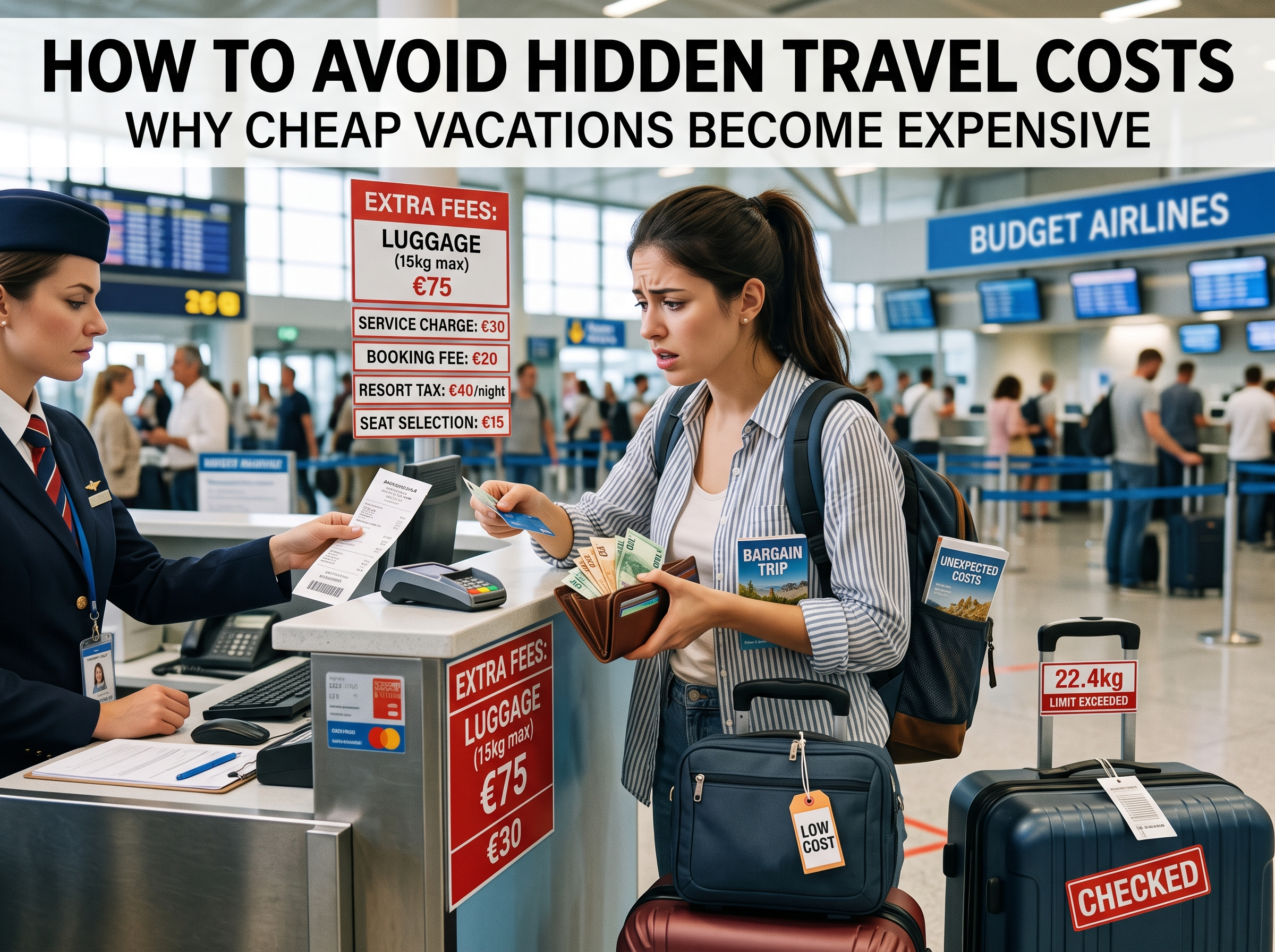
A $499 flight can become a $760 flight. A hotel advertised at $180 per night can cost far more once parking, resort fees and taxes appear. Then come the airport transfer, roaming charges, exchange-rate markups and the meal you buy because the “convenient” hotel is nowhere near anything else.
That does not mean every extra cost is deceptive. Some are optional, some are imposed by governments and some are simply easy to overlook. Learning how to avoid hidden travel costs means comparing the trip you will actually take—not the first number displayed in a search result.
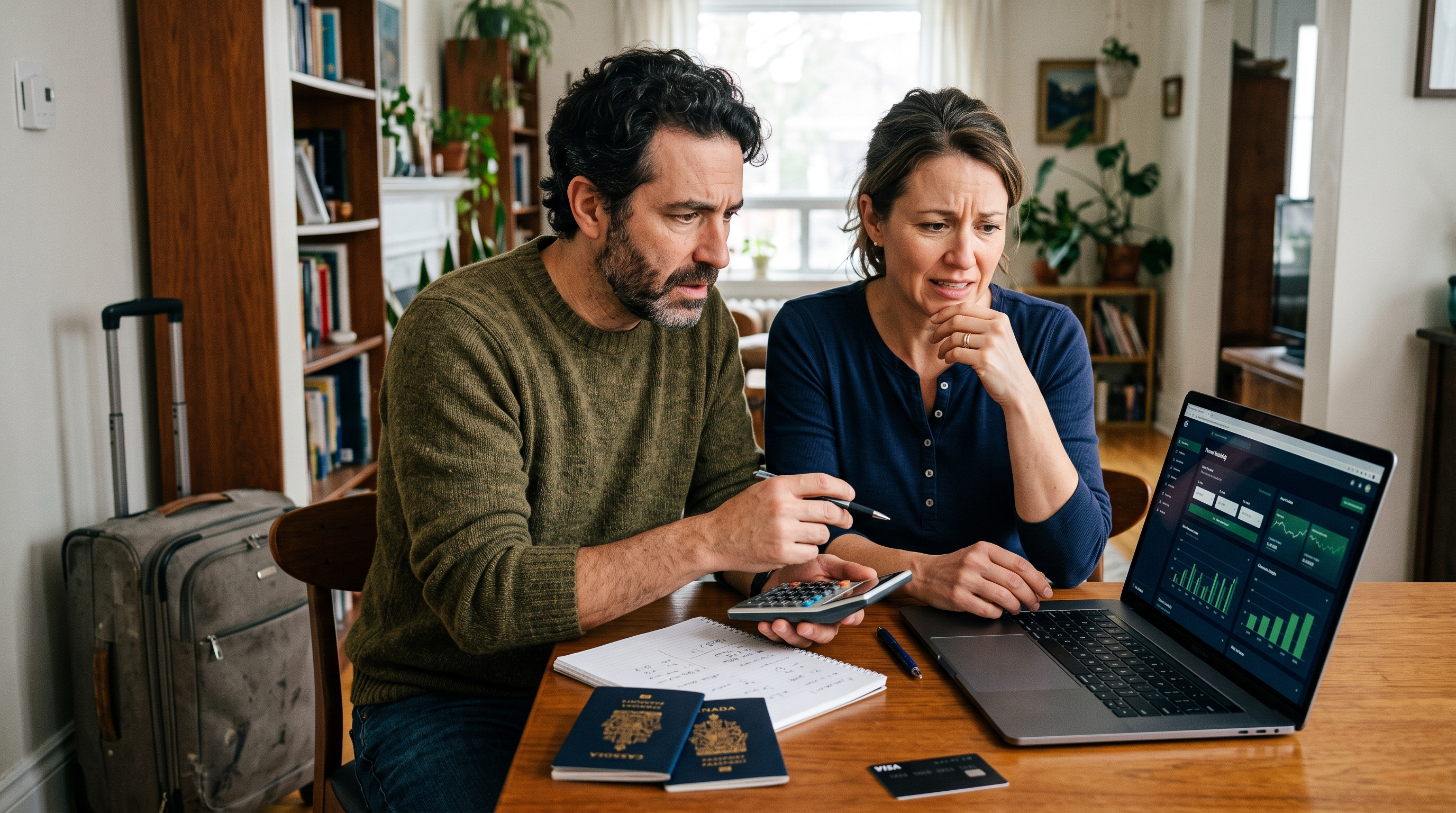
Image transparency: The four editorial travel images in this article were generated with AI to illustrate realistic trip-planning situations.
Quick answer: Compare door-to-door totals. Include baggage, seat selection, transfers, parking, mandatory property fees, taxes, food access, local transportation, insurance, connectivity, currency conversion and a contingency fund. Take screenshots before payment, read the cancellation terms and perform one final total-cost check before the free-cancellation deadline.
What are hidden travel costs?
For planning purposes, a hidden cost is any predictable expense missing from your first comparison. It may be a mandatory fee revealed later, an optional add-on you realistically need or a consequence of the booking—such as paying for taxis because the cheaper hotel is poorly located.
The Competition Bureau of Canada describes drip pricing as a situation in which the true total is not displayed upfront and mandatory charges appear later. It distinguishes those charges from fixed government-imposed amounts such as sales tax. Travellers should still separate three different categories:
Mandatory
Property, booking, cleaning or service fees you cannot remove from the reservation.
Optional but realistic
A checked bag, assigned family seating or parking that your trip genuinely requires.
Trip consequences
Transfers, meals, tolls or lost time created by the location and schedule you chose.
The total-trip-cost method
Do not ask, “Which flight is cheapest?” Ask, “What will it cost to leave home, complete this trip and return?” Put each serious option into the same worksheet and use the same assumptions.
| Cost layer | What to include | Where travellers miss it |
|---|---|---|
| Getting there | Fare, bags, seats, meals, parking, train, fuel and airport transfer | Comparing base fares instead of usable fares |
| Sleeping | Room total, taxes, mandatory fees, parking, breakfast and deposits | Multiplying the nightly display by the number of nights |
| Moving locally | Transit, rental, fuel, tolls, insurance and one-way charges | Choosing a remote property because its room is cheaper |
| Daily life | Meals, water, tips, laundry, attraction access and connectivity | Budgeting ordinary home spending for a tourist area |
| Risk | Insurance, change costs, emergency transport and contingency | Assuming a credit card covers every traveller and event |
Use one currency: Convert every option with the same conservative exchange rate. A comparison built from mixed currencies, pre-tax prices and optimistic conversions is not a comparison.
Airline costs that change the “cheap” fare
Unbundle the flight before deciding. Open the baggage and seat pages for the exact fare class, route and operating carrier. A basic fare may be perfectly suitable for a solo traveller with one small bag and a flexible seat preference. It can be poor value for a family that needs checked luggage and adjacent seats.
- Carry-on and checked-bag charges in both directions
- Seat selection for each flight segment
- Meals, lounge access or overnight accommodation during a long connection
- Payment, phone-booking or partner-airline differences
- Transportation to a secondary airport and its parking cost
- Change or cancellation limits attached to the fare
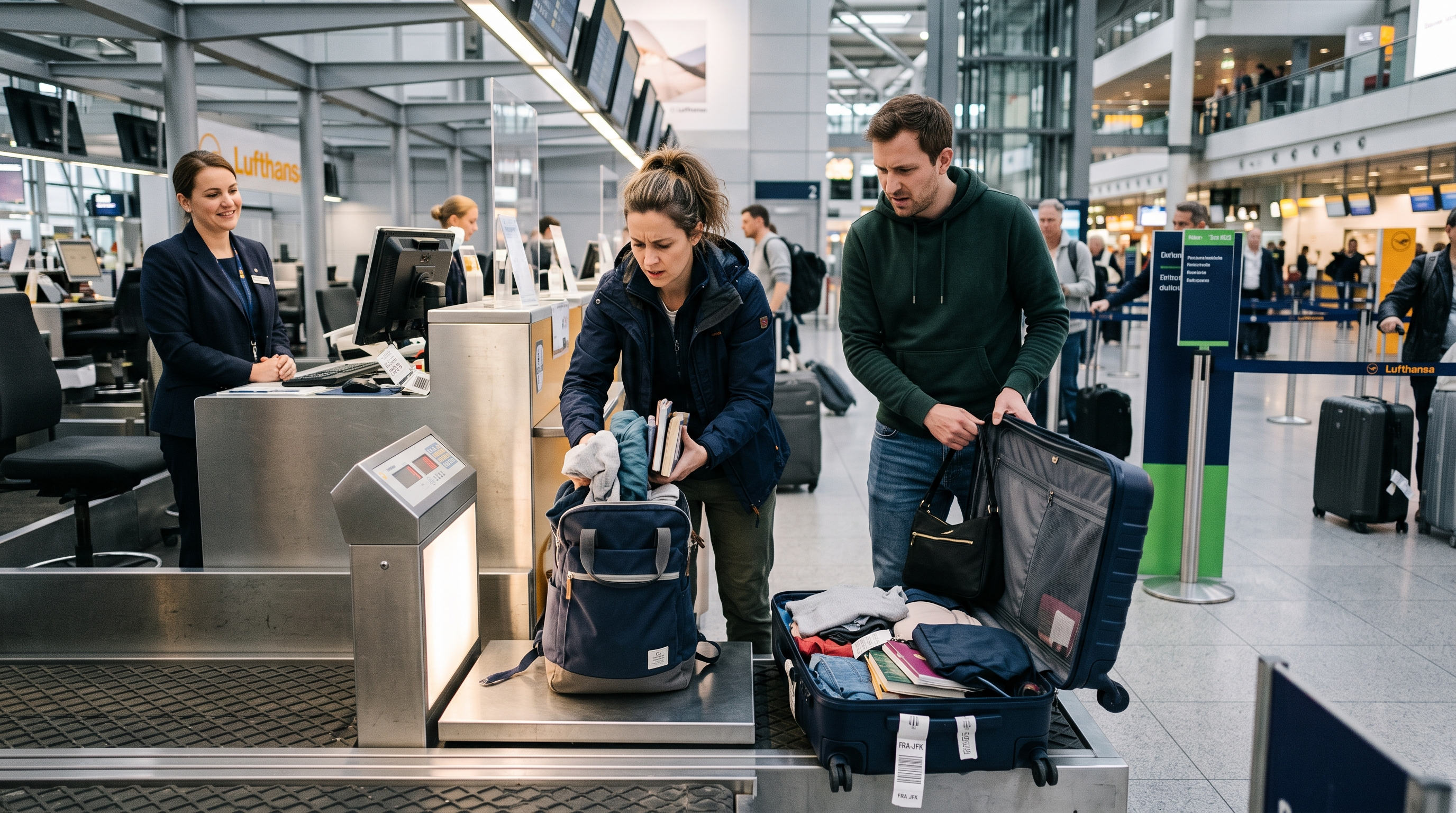
A nonstop flight at a higher displayed price may save an overnight hotel, meals, ground transfers and a day of usable vacation. Price the schedule as well as the seat.
Hotel and vacation-rental surprises
For hotels, compare the final stay total—not the nightly rate. Check mandatory property or destination fees, parking, breakfast, extra-person charges, local taxes and the amount temporarily held on your card. For rentals, look for cleaning, service, linen, utility and late-arrival charges.
Location is a cost. Before booking, map the property to the airport, main activities, groceries and evening meals. A savings of $200 disappears quickly if it requires four airport transfers and daily ride-hailing.

Rental cars: the rate is only the beginning
Rental-car comparisons need the same pickup location, times, vehicle class, mileage and protection assumptions. Check airport surcharges, additional-driver fees, young-driver fees, one-way charges, child seats, toll programs, fuel rules and the deposit.
Do not decline insurance merely because a credit card mentions rental coverage. Confirm the country, vehicle type, rental length, authorized drivers, exclusions and claim process with the issuer. In some destinations, forms of local liability coverage may be compulsory.
Currency, cards, ATMs and phones
A card can charge a foreign-transaction fee, an ATM can add an operator fee and a merchant can offer to convert the purchase into your home currency. That last convenience—dynamic currency conversion—may use an unfavourable rate. Review your bank’s terms before travel and choose the transaction currency deliberately.
Also price your phone plan. Compare roaming passes with an eSIM or local SIM, and check whether authentication texts will still arrive. Download maps, confirmations and emergency contacts for offline use.
Travel insurance is not a magic refund button. Read the policy’s covered reasons, exclusions, benefit limits, pre-existing-condition language and claim documentation. Government of Canada guidance recommends arranging appropriate coverage and understanding what it actually includes.
How much should you budget for unexpected travel expenses?
There is no universal percentage. A short domestic road trip with refundable rooms needs a different reserve from an international family itinerary with ferries, prepaid tours and several connections.
Build the buffer from plausible events: one extra hotel night, replacement transportation, a missed transfer, urgent medication, an insurance deductible or a change in plans. Keep that money accessible rather than relying on the trip’s daily meal budget.

A 15-minute hidden-cost audit
- Copy the final checkout total before entering payment details.
- Add bags, seats, parking and door-to-door transportation.
- Confirm accommodation fees, taxes, deposits and meal inclusions.
- Map the property and estimate local transportation.
- Check currency, card, ATM and phone costs.
- Read the cancellation and change terms—not just the badge.
- Confirm insurance coverage and exclusions.
- Add a reserve based on the actual failure points in the itinerary.
Then compare the new total with the next-best option. Sometimes the “expensive” organized tour includes transfers, admissions and support that the lower DIY price omitted. Sometimes a self-guided plan is still clearly better. Our guided versus self-guided comparison helps separate those choices.
Use the right level of planning help
A simple trip may need only a good checklist and a reliable booking platform. A multigenerational, multi-country or accessibility-sensitive itinerary has more places for costs and responsibilities to hide. If several households are involved, pair this audit with our guide to planning a multigenerational family vacation.
Compare the whole trip—not the teaser price
Use Earthbound’s vetted booking resources for straightforward reservations, or ask for human planning help when the itinerary has too many moving parts to price confidently.
Explore Booking Tools Get Planning HelpFrequently asked questions
What are the most common hidden travel costs?
Common examples include airline bags and seats, hotel or rental fees, parking, airport transfers, local transportation, rental-car add-ons, foreign-transaction charges, roaming and cancellation costs.
How can I compare two travel deals fairly?
Use one currency and the same assumptions. Compare the final checkout price plus the transport, meals, baggage, local movement and protection each option requires.
Are all fees shown later illegal?
No. Laws vary, government taxes may be treated differently and optional services are not the same as unavoidable fees. The practical goal is to identify every required or realistic cost before committing.
How much emergency money should I bring?
Build the amount from your itinerary’s risks rather than using one universal percentage. Consider the cost of an extra night, replacement transport, a deductible or an urgent change.
Does travel insurance cover unexpected costs?
Only costs covered by the specific policy and circumstances. Read the definitions, exclusions, limits and documentation requirements before purchasing.
When should I use a travel advisor?
Human help can be valuable for complex routes, multiple households, accessibility needs, cruises, group payments or expensive non-refundable components.
Leave a Reply