

Last Updated on September 10, 2026 by Jeremy
A multigenerational trip can put grandparents, adult children, teenagers and younger kids in the same place long enough to create memories they would never make during a hurried holiday visit. It can also turn into a week of waiting, negotiating and quietly wearing each other out.
The difference is rarely the destination alone. It is the structure. Learning how to plan a multigenerational family vacation means designing a trip around different energy levels, budgets, sleep schedules and definitions of fun—without appointing one exhausted person as everybody’s unpaid tour manager.
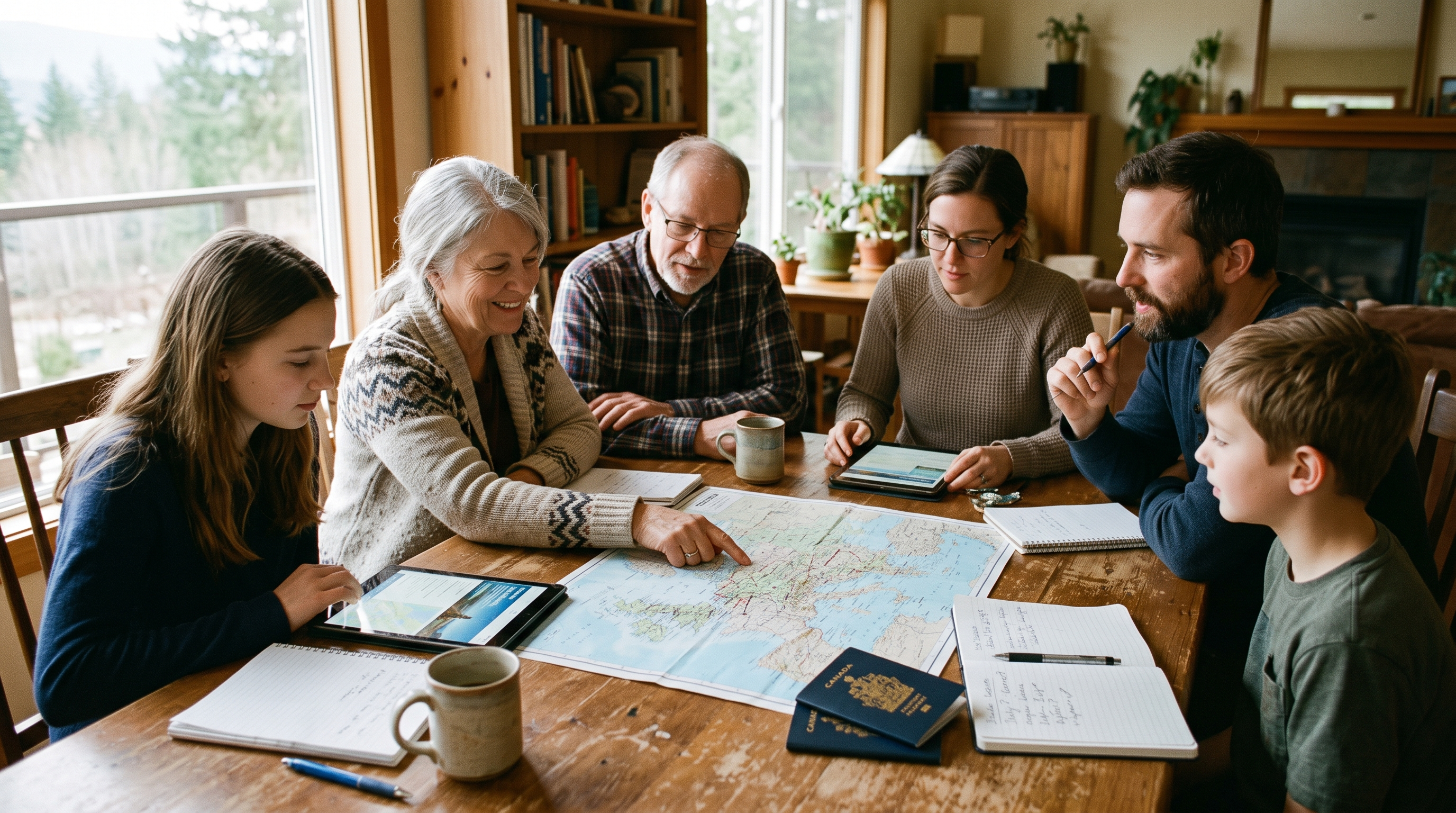
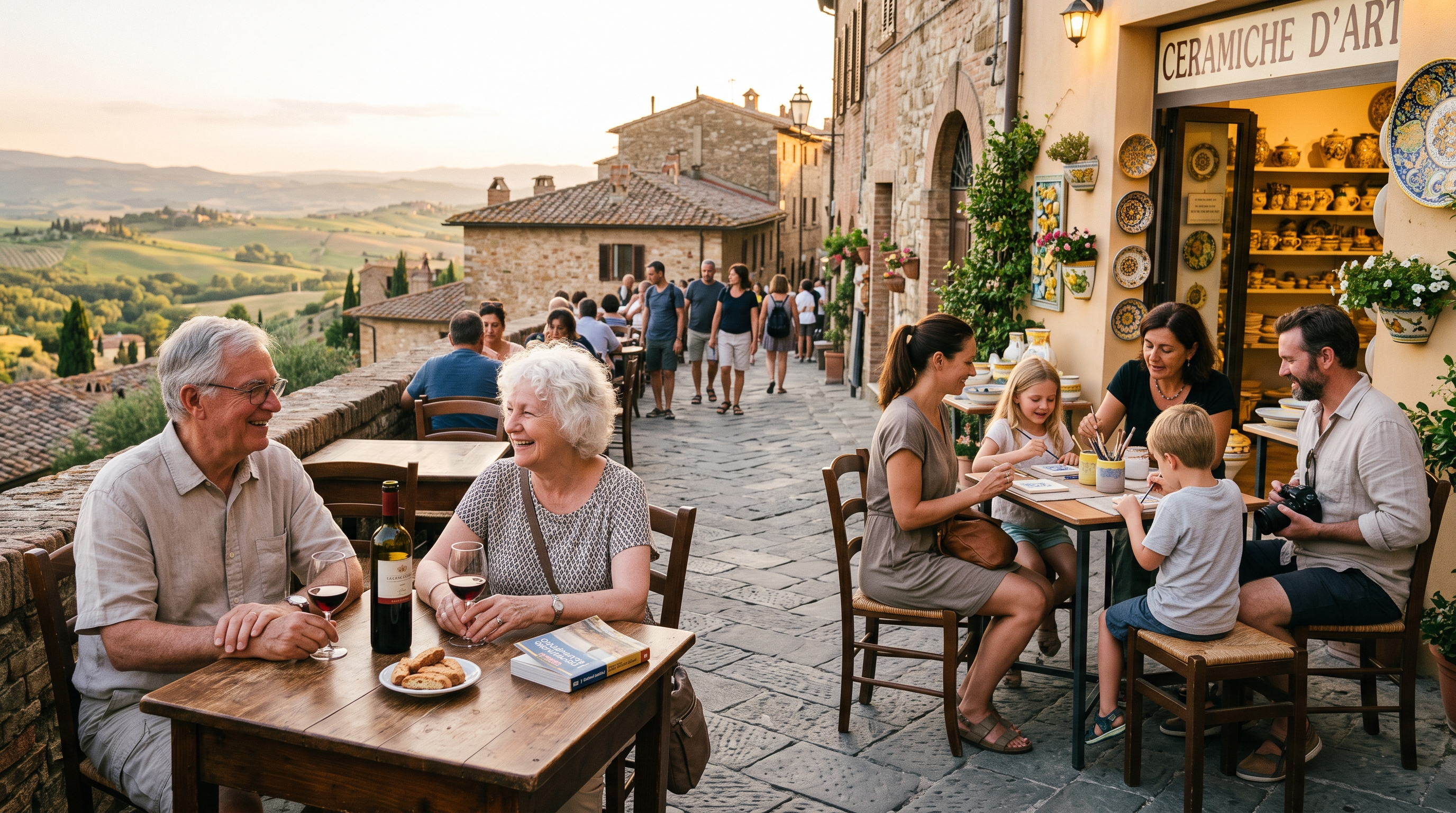
Image transparency: The four editorial travel illustrations in this article were generated with AI to represent realistic multigenerational planning situations.
Quick answer: Agree on the purpose and budget first. Collect each traveller’s non-negotiables privately. Choose an accessible base with flexible rooms, limit the number of mandatory activities, schedule recovery time, divide responsibilities and keep part of each day optional. A successful multigenerational vacation gives people ways to come together—and permission to separate.
Start with the purpose, not the place
Before debating Europe, Costa Rica, a cruise or a cottage, finish one sentence:
“We are taking this trip because we want to…”
The answer may be to celebrate an anniversary, let grandchildren know their grandparents better, revisit a family homeland or simply spend unhurried time together. That purpose becomes the filter for later decisions. If connection is the goal, a complicated five-city itinerary may work against it.
One shared goal
Agree on the main reason for travelling so the loudest preference does not take over the entire plan.
One planning lead
Choose a coordinator, then assign specific jobs so that person is not responsible for every reservation and answer.
One source of truth
Keep confirmations, costs, mobility notes and the current itinerary in one shared document or folder.
Ask every traveller the same five questions
Group calls often reward whoever speaks first or loudest. A short private questionnaire gives children, introverts and older relatives a better chance to be honest.
- What is the one experience you most want from this trip?
- What physical, dietary, sensory or scheduling need should the group understand?
- How much walking and how many active hours feel comfortable?
- What total amount can you comfortably spend?
- What would make the trip feel exhausting rather than enjoyable?
Treat the answers as planning requirements, not complaints. A traveller who needs an afternoon rest is giving you information early enough to prevent a problem.
Set the money rules before anyone books
“We will work it out later” is not a budget. Decide whether accommodations are split per room, per adult or covered by one host. Then do the same for transportation, meals, activities, tips and cancellation costs.
| Expense | Decision to make | Potentially fair approach |
|---|---|---|
| Accommodation | Are some rooms materially larger or more private? | Price by room, with upgrades paid by the travellers choosing them. |
| Transportation | Is one person driving or does the group need transfers? | Share the base cost; price optional private transport separately. |
| Meals | How many meals must be together? | Plan a few shared meals and leave the rest flexible. |
| Activities | Will everyone participate? | Each household pays for its optional excursions. |
| Deposits | What happens if one branch cancels? | Write down cancellation responsibility before payment. |
Important: Do not pressure one family member to stretch beyond a stated budget to preserve the group plan. Change the plan before creating a debt or resentment that lasts longer than the vacation.
Choose a destination by friction, not fame
The best destinations for multigenerational travel reduce daily negotiation. Look for a compact base, reliable transportation, medical access, food variety and activities at more than one intensity level.
A destination is a stronger fit when:
- travellers can reach it without several punishing connections;
- the accommodation is close to meals and at least two activities;
- someone can return to the room without ending everyone else’s day;
- weather alternatives exist;
- the group can split safely and reunite easily;
- mobility equipment, child seats or dietary needs can be confirmed in writing.

Book accommodations for privacy as well as togetherness
A beautiful rental can fail if it has steep stairs, too few bathrooms or no quiet room. A hotel can fail if the family is scattered across separate floors. Before paying, ask the property—not just a search filter—about:
- step-free access from arrival point to room;
- elevators and their actual dimensions;
- walk-in showers, grab bars and bathroom layout;
- connecting or adjacent rooms;
- cribs, bed rails and refrigeration for medication;
- noise, stairs, pool barriers and room distance from common areas;
- the exact cancellation terms for multiple rooms.

Use the one-anchor-per-day rule
An anchor is the one activity or meal the group intends to share. Everything else remains optional. On a travel day, arrival may be the anchor. On an excursion day, the morning tour may be the anchor and the afternoon stays open.
A realistic three-day rhythm
Day 1: Arrival, groceries and an easy shared dinner.
Day 2: Morning guided activity, free afternoon, optional group meal.
Day 3: Separate choices—museum, pool, hike or rest—followed by one evening gathering.
This is especially useful when deciding between a guided and self-guided travel style. A guide can remove navigation and ticket friction for the shared anchor, while free time protects individual choice.
Manage different age groups without infantilizing anyone
Age alone does not predict ability or interest. A grandparent may outwalk the teenagers; a child may love history; an adult may need sensory downtime. Ask individuals what works instead of assigning roles based on generation.
Useful planning practices include:
- publishing start times the night before;
- identifying the nearest washrooms and seating;
- carrying the accommodation address offline;
- giving teenagers meaningful choices rather than compulsory enthusiasm;
- building in snack, medication and rest windows;
- allowing any adult to opt out without defending the decision.
Divide the invisible work
Assign jobs by category: one person holds accommodation confirmations, another watches flights, another handles shared groceries and another researches accessible activities. Name a backup contact for emergencies.
Parents remain responsible for their children unless the family explicitly agrees otherwise. Grandparents should not discover after arrival that they were expected to provide unpaid childcare every evening.
Planning test: If the itinerary only works when every flight is punctual, every child is cheerful and every adult can maintain the same pace, it does not work yet. Add slack before you add another attraction.
Should you use a travel advisor?
A straightforward road trip or single rental may be manageable independently. A travel advisor becomes more valuable when the trip involves multiple rooms, cruises, international connections, accessibility requests, private transfers or several households paying separately.
Earthbound lets you choose the level of help you actually need. You can use our booking tools, compare organized tours, or request a human planning handoff for a more complicated family trip.
Build a trip the whole family can live with
Start with pace, rooms and budget. Once those are honest, the exciting parts become much easier to choose.
Open Booking Tools Ask for Planning HelpFrequently asked questions
How far ahead should we plan a multigenerational family vacation?
Begin early enough to secure suitable rooms and transportation, especially for school holidays, cruises or accessible accommodations. The more households, fixed dates and special requirements involved, the earlier the planning should begin.
Should everyone be included in planning?
Everyone should have a clear way to state priorities, limitations and budget. That does not mean every person must attend every planning call or approve every small decision.
How many activities should we schedule each day?
For mixed ages and energy levels, one shared anchor activity per day is a useful starting point. Add optional choices rather than making a full day mandatory.
What accommodation works best for several generations?
The best choice depends on the family. Villas provide shared space and kitchens; hotels provide privacy, services and separate rooms; cruises reduce transportation decisions. Confirm accessibility and room layout directly.
How should families divide vacation costs?
Agree in advance whether major costs are split by room, household or traveller. Optional upgrades and excursions are often easiest to price separately.
What if someone does not want to join an activity?
Make optional participation part of the original plan. Provide a safe alternative and a clear reunion time without treating the decision as rejection of the family.
Leave a Reply