Last Updated on December 9, 2025 by Jeremy
This article may contain affiliate links. If you click through and make a booking or purchase, we may earn a commission at no extra cost to you. It helps us keep creating free travel resources.

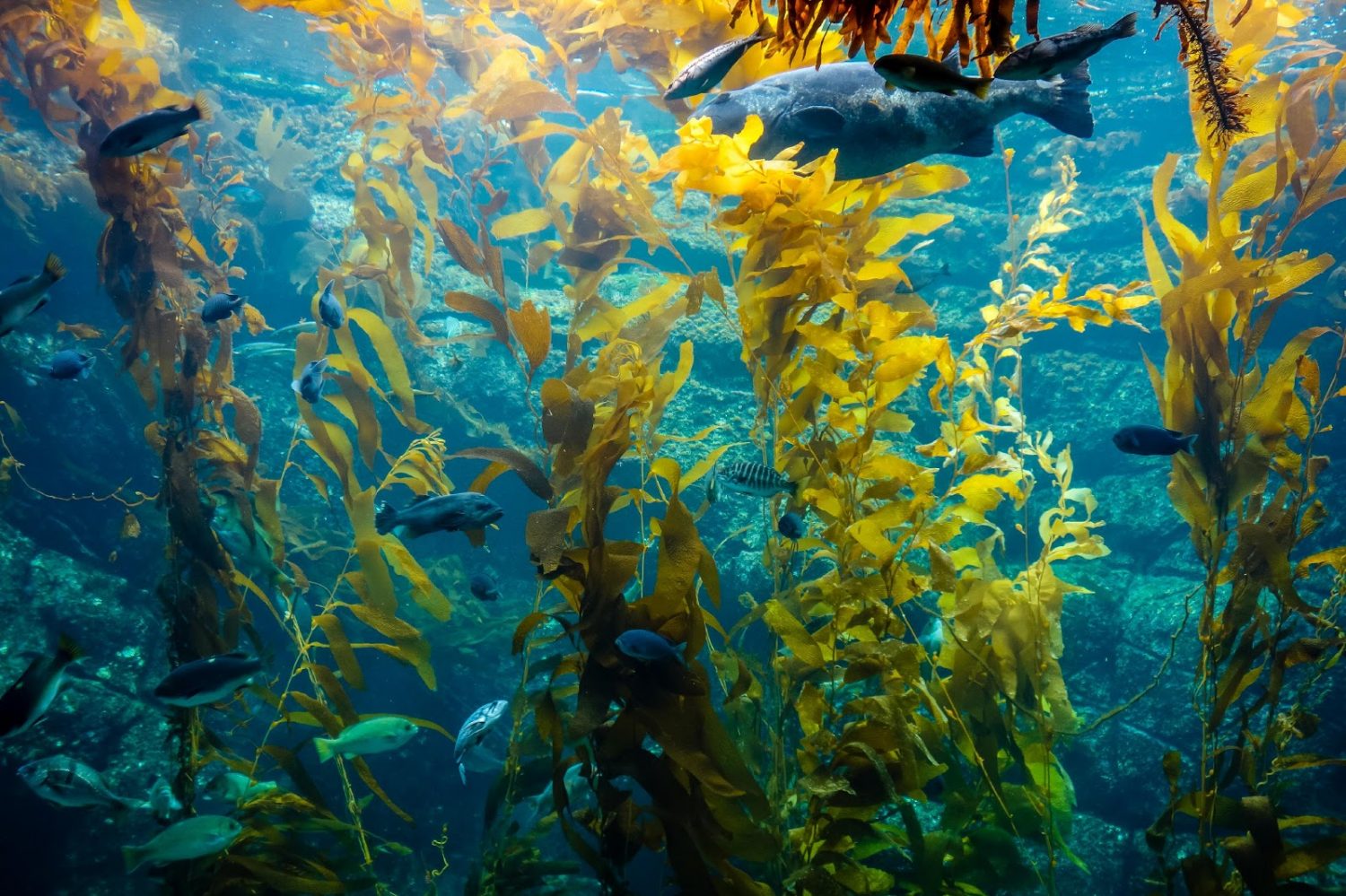
Kelp forests are underwater ecosystems made of large brown algae that grow in cool, nutrient rich coastal waters. They form dense underwater forests that provide food, shelter, and breeding grounds for many marine species. Classic kelp forest regions include California, British Columbia, Japan, South Africa, Australia, and New Zealand.
A different kind of forest
When most people picture a forest, they think of redwoods, cedar, or dense tropical jungle. Trees, soil, sunlight. Simple.
Kelp forests flip that idea on its head. Under the surface of cold coastal water there are places where towering strands of kelp reach up toward the light. Fish move through the fronds like birds through branches. Sea lions twist and roll between them. In some regions, sea otters float on their backs right in the middle of it all.
I have not explored a kelp forest in person yet. No fogged mask, no cold wetsuit, no sea lion photobombing my dive. But the more I learn about these places, the clearer it becomes that they are every bit as complex and important as forests on land.
If you are curious what kelp forests are, where they are found, and how you can experience them without harming them, this guide is a good place to start.
What are kelp forests
Kelp forests are underwater communities built around large brown algae called kelp. Even though kelp looks like a plant, it is technically a type of seaweed rather than a true land plant.
These forests usually grow in:
- Cool, nutrient rich coastal waters
- Areas with hard surfaces such as rock where kelp can anchor
- Zones with enough sunlight in the upper water column
Under the right conditions, some kelp species grow very quickly. Giant kelp has been recorded growing around half a metre in a single day, which makes it one of the fastest growing organisms on the planet.
Kelp forests do many of the jobs land forests do. They provide food and shelter for fish, invertebrates, birds, and marine mammals. They create structure from the seafloor to the surface, help buffer coasts by absorbing wave energy, and play a role in local carbon and nutrient cycles.

How a kelp plant is built
Reader Edmond mentioned that a labeled diagram would help make sense of kelp structure. The illustration below does exactly that and turns a single strand of kelp into something you can read like a tree.
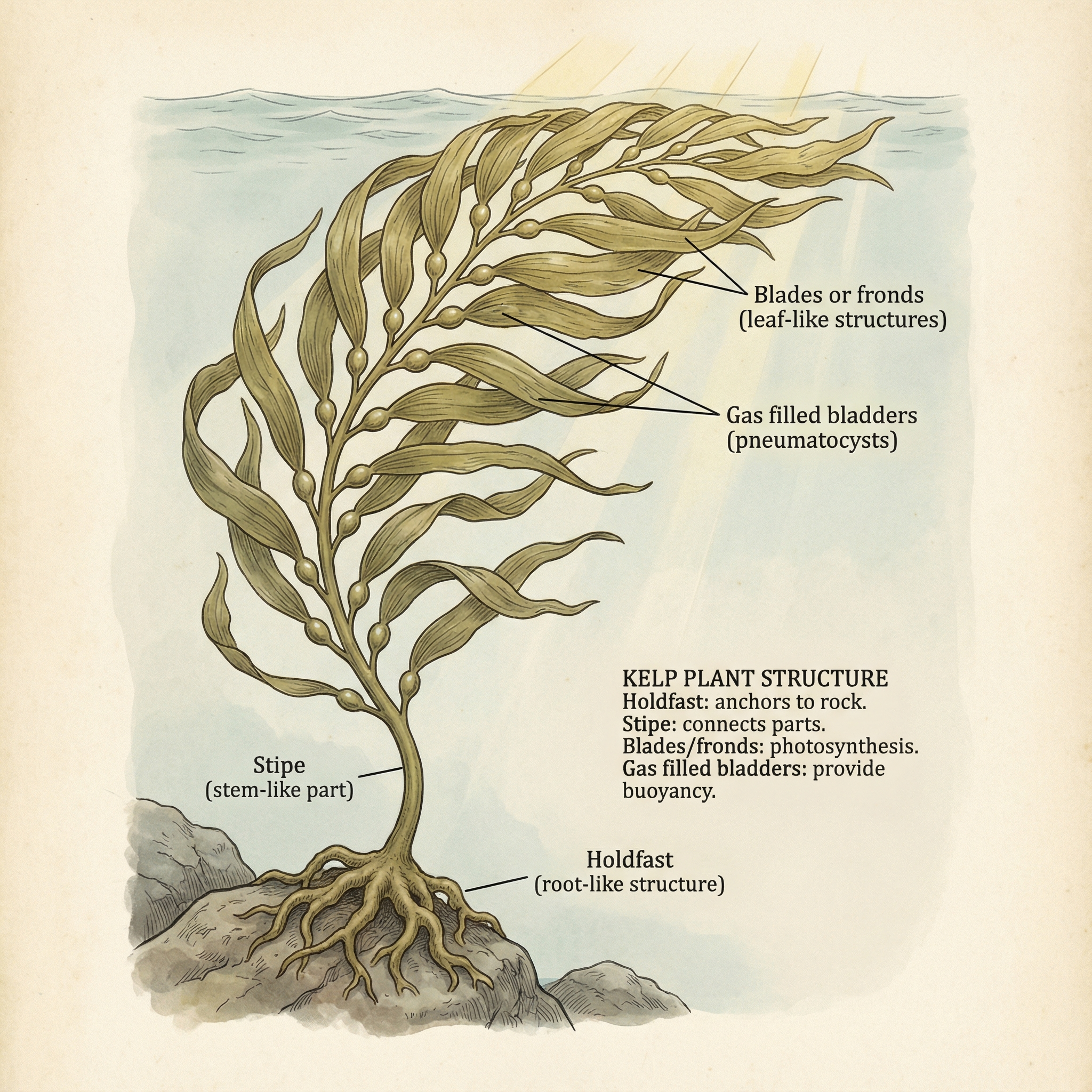
Most large kelp species share four main parts.
- Holdfast A root like structure that grips rock or other hard surfaces. It holds the kelp in place but does not pull nutrients from the rock the way tree roots draw from soil.
- Stipe The main stem like part of the kelp that runs upward from the holdfast.
- Blades or fronds Leaf like structures that extend from the stipe. They capture sunlight and do most of the photosynthesis work.
- Gas filled bladders Small air filled pockets, often called pneumatocysts, that help blades float upward and lift the canopy toward the surface.
Once you know those four pieces, photos and videos of kelp forests stop being a tangle of green and brown. They start to look like a three dimensional forest with trunks, branches, and a canopy.
Where can you find kelp forests
Kelp forests thrive in temperate and some polar waters. They generally avoid both the warmest tropical seas and the coldest, darkest polar extremes. Some of the best known regions include:
- California, United States Giant kelp forests along the Pacific Coast, especially around Monterey Bay, the Channel Islands, and central California. Reader Anastazja, who lives twenty minutes from Monterey Bay, has a front row seat to one of the most studied kelp ecosystems on the planet.
- British Columbia, Canada Cold water forests around Vancouver Island and the outer coast, rich with marine life that attracts divers, kayakers, and wildlife enthusiasts.
- Japan Home to long standing kelp fisheries where seaweed is used in broths, snacks, and garnishes, tying coastal ecology directly into food culture.
- South Africa The Great African Sea Forest off Cape Town is a dense kelp ecosystem that has gained global attention through films and conservation work.
- Australia and New Zealand Expansive underwater forests that support unique southern hemisphere species. Some areas are on the front lines of marine heatwaves and changing currents.
You will also find important kelp regions along parts of the Chilean coast, Scandinavia, and the North Atlantic. The common ingredients are cool coastal water, rocky bottoms, and strong nutrient rich currents.
Who lives in kelp forests
Kelp forests are biodiversity hotspots. In many ways they function like underwater versions of rainforests, with layers of life from the seafloor to the surface.
You can find:
- Invertebrates such as crabs, sea stars, snails, and sea urchins
- Many fish species that hide, hunt, and breed among the fronds
- Marine mammals such as seals, sea lions, and in some regions sea otters
- Birds including cormorants and penguins that hunt around the edges
Well known residents include leopard sharks in California, bright orange garibaldi in the Pacific, African penguins near South African kelp forests, and sea lions and seals that treat the forest as their playground and hunting ground.

Sea urchins, sea otters, and the balance of the forest
The central tension in many kelp forests is not between good kelp and bad kelp. It is between how much kelp can grow and how many things are eating it.
Two of the most important players are sea urchins and the animals that eat them.
- Sea urchins In normal numbers, urchins graze on loose kelp pieces and help recycle material on the seafloor. When their populations explode, they chew through living holdfasts and stipes. That can turn rich forests into urchin barrens, where little kelp remains.
- Sea otters and other predators Sea otters are famous for eating urchins. In healthy systems they keep urchin numbers in check. Other predators, such as certain fish and sea stars, also help hold the line.
Historical hunting for sea otter fur removed many otters from parts of the North Pacific. Without those predators, urchin numbers surged and kelp forests declined. As protection efforts allowed otter populations to recover in some areas, kelp forests began to rebound.
The lesson is simple. Kelp forests can handle storms and natural change, but long term loss of key predators or chronic stress from heat and pollution can push them beyond what they can recover from on their own.
How overfishing and climate change affect kelp forests
Sea otters and urchins are only part of the story. Human activity strongly shapes kelp forests through fishing, coastal development, and climate change.
- Overfishing When large predatory fish are heavily fished, their prey can increase and put extra pressure on kelp. Removing too many top predators changes who eats whom, and those changes ripple through the food web.
- Climate change and marine heatwaves Warmer water and marine heatwaves can stress kelp, reduce growth, and favour grazers that damage kelp. In some regions, heatwaves paired with urchin outbreaks have wiped out large areas of forest.
Conservation efforts that help kelp forests include marine protected areas, protection for species such as sea otters and key fish, monitoring urchin numbers, and supporting local stewardship groups. Choosing tour operators that respect wildlife and anchoring rules is part of that story too.

How to experience a kelp forest for yourself
Reading about kelp forests is one thing. Floating in the water column while light filters down through the canopy is another. Depending on your comfort level and swimming ability, there are several ways to get close.
- Snorkeling in shallow kelp beds on calm days, with a mask, snorkel, fins, and a proper wetsuit in cold water.
- Scuba diving for deeper forests and longer bottom times, with certification and cold water training.
- Freediving for fit and experienced water people, using breath hold techniques and strict safety protocols.
- Kayak or small boat tours for travelers who prefer to stay on the surface but still want to look down through the canopy and watch wildlife at the edges.

Find guided kelp forest tours
To experience kelp forests safely and responsibly, it helps to travel with operators who know local currents, wildlife patterns, and conservation guidelines. Start by browsing kelp focused snorkeling and diving tours here.
Plan a yacht or live aboard trip
In some regions, the best kelp forests sit a little offshore. If you want to combine diving with a sailing or yacht experience, you can compare crewed yachts and bareboat charters through SeaRadar. Look for itineraries that include time near rocky coasts and cool water upwelling zones, and always confirm that diving or snorkeling is supported on board.
Basic gear and safety tips
Even if you join a guided trip, understanding the basics makes kelp forest adventures safer and more enjoyable.
- Use a wetsuit or drysuit rated for local water temperatures.
- Choose a mask that fits your face well so you are not fighting leaks.
- Select fins that give you enough power without exhausting you.
- Listen carefully to guides about currents, entry and exit points, and how to move around kelp without getting tangled.
- Follow wildlife guidelines and keep respectful distances from seals, sea lions, and other animals.
Kelp forests are beautiful but they are still wild environments. Good preparation and good guides are the difference between a stressful trip and one you talk about for the rest of your life.
Final thoughts
Kelp forests are not just backdrops for nature documentaries. They are complex, living systems that support everything from sea otters and penguins to coastal fisheries and local food cultures.
Readers like Anastazja, who lives near Monterey Bay, and Edmond, who wanted a clearer look at kelp structure, are reminders that these ecosystems connect science, everyday life, and personal curiosity.
Whether you eventually snorkel through a kelp canopy, paddle a kayak along the edges, or simply pay more attention to coastal ecosystems on your next trip, kelp forests are worth your time. They are underwater forests we still have a chance to protect while they are thriving, not just remember after they are gone.
Frequently asked questions about kelp forests
What is a kelp forest
A kelp forest is an underwater ecosystem built around large brown algae called kelp. These forests grow in cool, nutrient rich coastal waters and provide food and shelter for a wide range of marine life.
Where are the best places to see kelp forests
Classic kelp forest destinations include the Pacific Coast of California, the waters around Vancouver Island in British Columbia, parts of Japan, the Great African Sea Forest near Cape Town, and selected coastal regions in Australia and New Zealand.
How are kelp forests similar to forests on land
Like land forests, kelp forests create vertical structure, provide habitat and food for many species, help buffer their surroundings, and play a role in carbon and nutrient cycles. The main difference is that they are built from seaweed instead of trees.
Why are sea otters important to kelp forests
Sea otters eat sea urchins and other invertebrates that graze on kelp. By keeping urchin populations in check, otters help prevent overgrazing and allow kelp forests to remain healthy and dense.
How do sea urchins damage kelp forests
When sea urchin populations become too large, they start chewing through living kelp holdfasts and stipes instead of just eating loose pieces. This can strip large areas of kelp and create urchin barrens with little plant life left.
How are kelp forests affected by climate change
Rising ocean temperatures and marine heatwaves can stress kelp, reduce growth, and favour grazers that damage kelp. In some regions, prolonged warm events have combined with urchin outbreaks to cause significant kelp loss.
Can beginners safely snorkel in a kelp forest
Yes, beginners can snorkel in suitable kelp areas if conditions are calm and they join a reputable guided tour. Proper wetsuits, well fitting masks, and clear safety briefings are essential, especially in cold water.
What is the best time of year to visit kelp forests
Timing varies by region, but many kelp forests are at their thickest and most photogenic in late spring through early autumn, when daylight hours are longer and marine life is especially active. Local operators can advise on the best seasonal window for each destination.



Leave a Reply