
Last Updated on August 29, 2026 by Jeremy
A European Christmas market trip looks easy until you try to connect the dates, cities, trains, hotels, luggage, and opening hours. Then you discover that some markets close on December 23 or 24, others continue into January, and the hotel beside the postcard-perfect square costs twice as much on Friday as it did on Tuesday.
The solution is not to visit the greatest number of markets. It is to build a route where the travel days are short, the dates are confirmed, and you still have enough time to enjoy the lights after dark.
Quick planning answer
- For the widest choice, aim for late November through about December 20, 2026.
- Use two or three bases for a 7–10 night trip; avoid changing hotels every day.
- Book central, refundable hotels early and confirm each market on its official site before paying non-refundable costs.
- Choose a guided tour if you value simple transfers and logistics; choose rail if you want more control over evenings and pacing.
Confirmed European Christmas market dates for
Dates are not identical across Europe. A city can also have several markets with different schedules, so “the Vienna market” or “the Prague market” may refer to more than one location.
| Destination | Published 2026 dates | Why build around it |
|---|---|---|
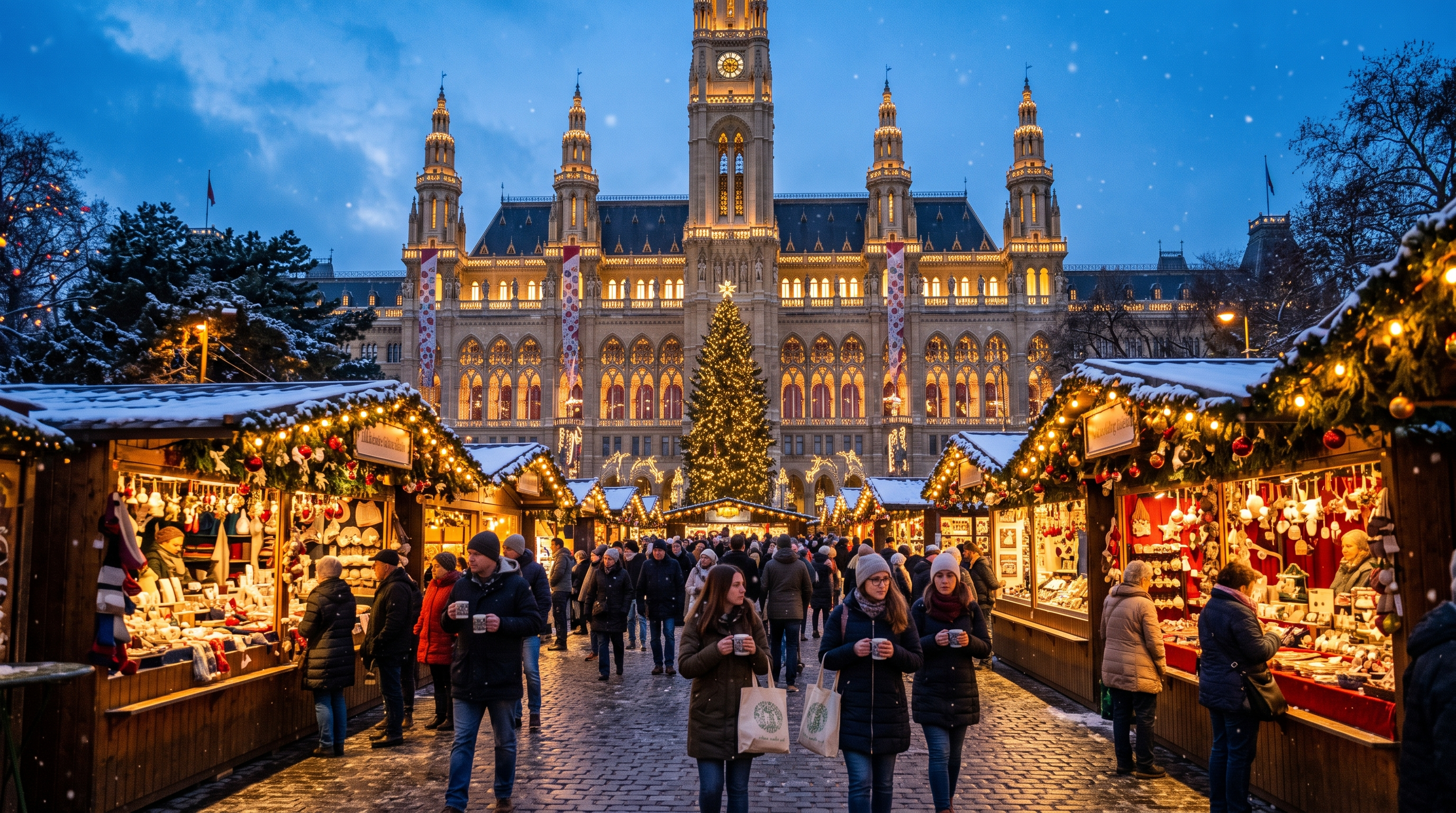
| Vienna, Austria | Rathausplatz: Nov. 13–Dec. 26 Schönbrunn: Nov. 6–Jan. 6 | Multiple markets, strong public transport, palaces, cafés, and easy air/rail connections. |
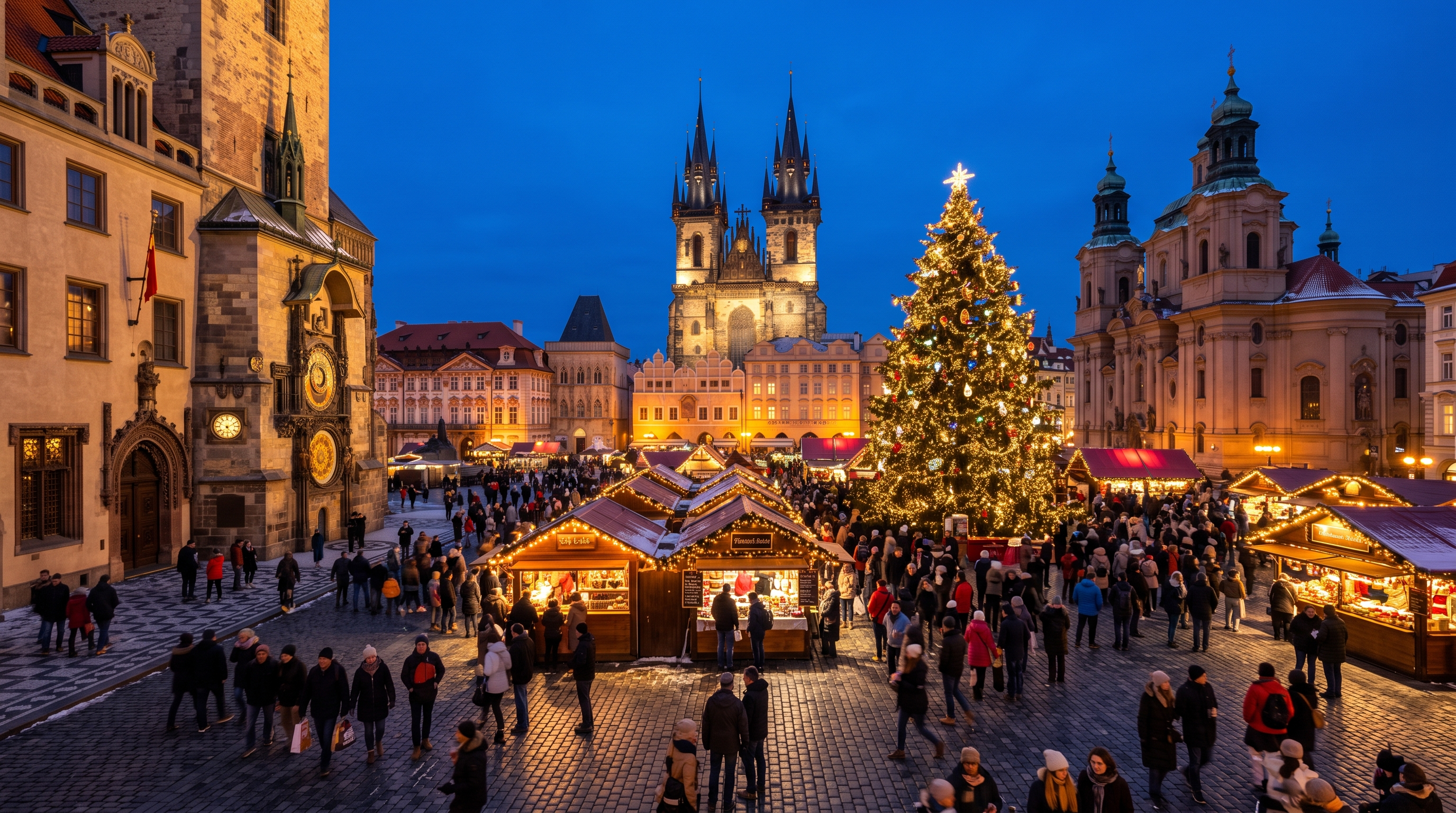
| Prague, Czechia | Old Town Square: Nov. 28, 2026–Jan. 6, 2027 | A dramatic historic core and one of the better options for a post-Christmas itinerary. |
| Nuremberg, Germany | Nov. 27–Dec. 24 | A classic German market with strong rail links to Munich and other Bavarian cities. |
| Dresden, Germany | Nov. 25–Dec. 24 | Historic Striezelmarkt traditions and a useful link between Prague and Berlin. |
| Salzburg, Austria | Nov. 19, 2026–Jan. 1, 2027 | Compact old town, mountain scenery, music heritage, and easy pairing with Munich. |
| Strasbourg, France | Final 2026 program was still pending when checked July 29 | One of Europe’s signature Christmas cities and the hub for an Alsace village route. |
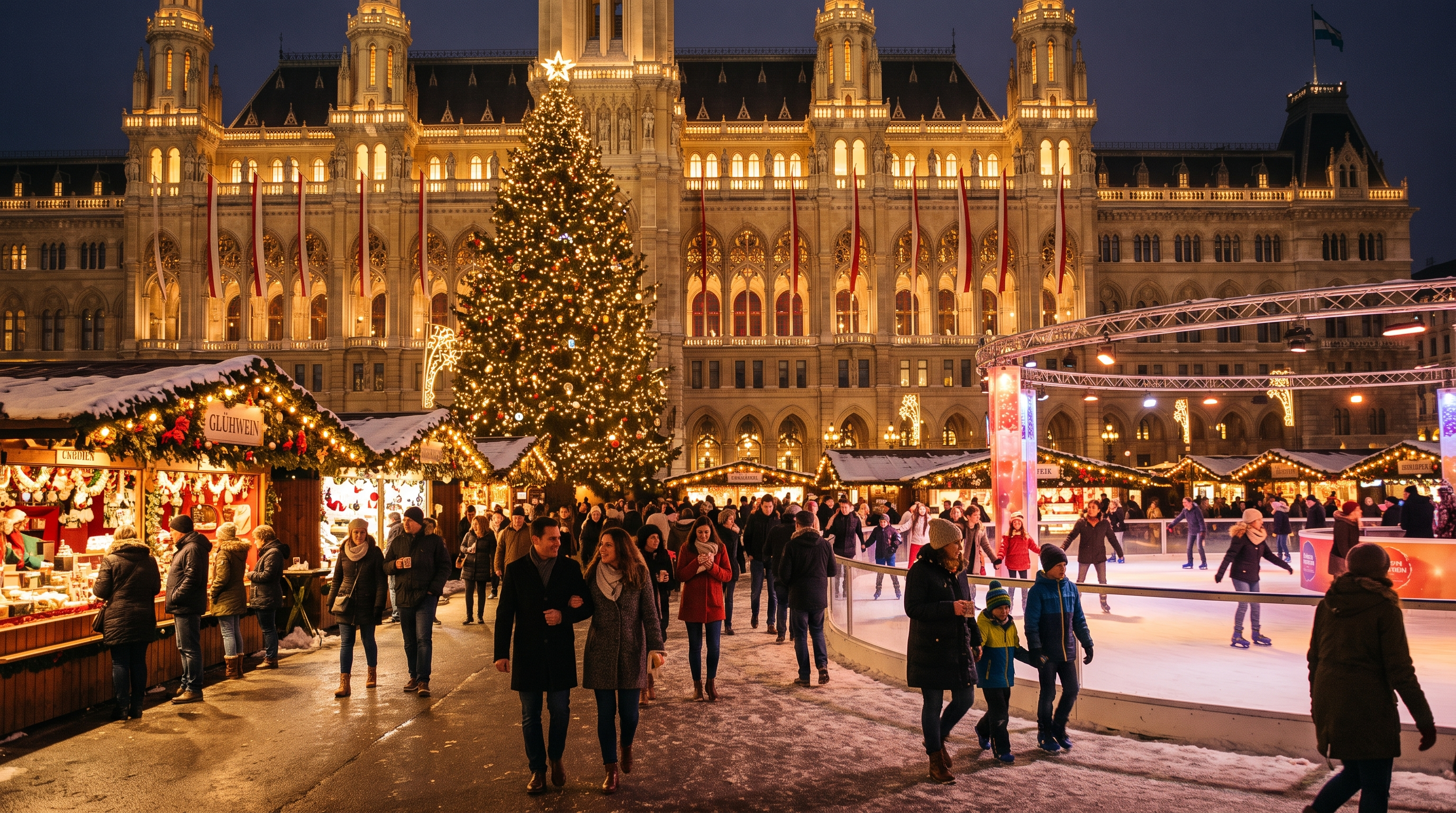
A good route is built around short connections and confirmed operating dates.
The best European Christmas market routes
Vienna, Prague and Budapest
Best for: first-time visitors who want grand architecture, cafés, and easy rail travel.
Use three nights in Vienna, three in Prague, and two or three in Budapest. The Vienna–Prague journey is long enough to deserve a real travel block; avoid pretending it is a quick morning hop.
Munich, Nuremberg and Salzburg
Best for: classic German and Austrian atmosphere with manageable train connections.
Base in Munich or Nuremberg, add Salzburg for two or three nights, and use day trips selectively. This is a strong choice for a seven-night trip.
Strasbourg and the Alsace villages
Best for: storybook streets, food, wine, and travelers willing to plan local transport carefully.
Stay in Strasbourg or Colmar, then visit smaller towns such as Kaysersberg, Riquewihr, or Eguisheim when confirmed seasonal shuttles and opening dates align.
Prague, Dresden and Berlin
Best for: travelers who want traditional markets plus museums, history, and big-city variety.
The cities form a logical northbound rail route. Place Dresden in the middle for two nights instead of treating it as a rushed station stop.
A realistic 9-night itinerary
This Vienna–Prague–Budapest outline gives each destination enough room to breathe. Reverse it if flight prices or hotel availability are better in the opposite direction.
- Arrive in Vienna. Keep the first evening light. Visit one nearby market rather than crossing the city while jet-lagged.
- Central Vienna. See the Rathaus area, historic centre, and a smaller neighbourhood market after dark.
- Schönbrunn and a slower evening. Reserve palace entry separately if wanted; the market itself does not replace a timed attraction ticket.
- Train to Prague. Choose a direct service where possible and keep food, medication, and one warm layer accessible.
- Old Town and Wenceslas Square. Start early for landmarks, return after dark for the lights.
- Prague beyond the main square. Add a castle-area walk, neighbourhood market, food tour, or free afternoon.
- Travel to Budapest. This is the longest transfer in the outline; flying may occasionally beat rail after schedule and fare comparisons.
- Budapest markets and thermal-bath option. Confirm the 2026 event schedule before finalizing this segment.
- Flexible Budapest day. Use it for weather recovery, a Danube experience, or the market you missed.
- Fly home. Avoid a separate-city airport transfer on departure morning.
Guided tour, river cruise or independent rail?
| Trip style | Main advantage | Main tradeoff | Best fit |
|---|---|---|---|
| Guided coach tour | Hotels, transfers, and much of the route are handled. | Fixed departure times and less control over evenings. | Travelers who value simplicity and a social group. |
| River cruise | Unpack once while visiting several towns. | Port times, water conditions, and excursion schedules shape the trip. | Couples and multi-generational travelers who prefer a floating hotel. |
| Independent rail | Control over hotels, pace, meals, and evening market time. | You manage stations, luggage, tickets, and disruptions. | Confident travelers who enjoy planning. |
| Hybrid trip | Combine a guided core with independent nights before or after. | Requires careful connection timing. | Travelers who want both structure and freedom. |
Compare a structured itinerary through Trafalgar, then price the same dates independently. Do not compare only the headline price. Include transfers, breakfasts, checked luggage, tours, and the value of someone else managing the route.
What a Christmas market trip actually costs
There is no honest single price. Your departure city, exchange rates, room type, weekends, and route matter too much. A useful budget separates the trip into parts:
- Flights: compare open-jaw tickets, such as arriving Vienna and leaving Budapest, against a round trip plus backtracking.
- Hotels: central rooms cost more but may reduce taxis, late-night transfers, and wasted time.
- Rail: advance fares can be attractive, but the cheapest ticket may be restrictive.
- Food and market spending: small purchases add up quickly; mug deposits may be refundable if you return the souvenir cup.
- Activities: concerts, palaces, food tours, thermal baths, and day trips should be budgeted separately.
- Insurance and disruption buffer: winter weather is part of the experience and part of the risk.
How to choose the right hotel
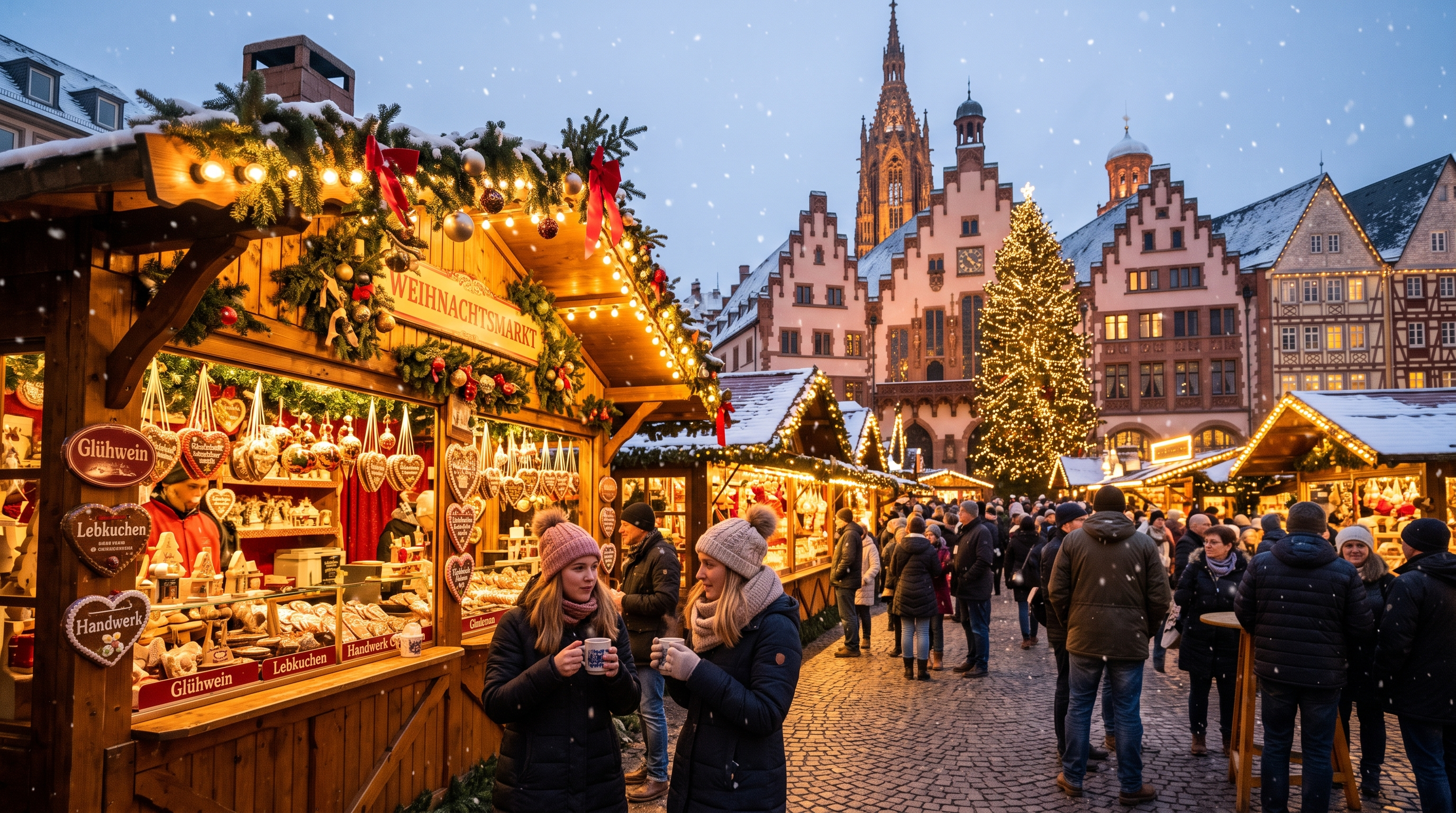
The closest room to the main square is not automatically the best room. Market streets can be loud, crowded, and difficult for taxis. Look for a hotel within a comfortable walk of both the market area and a useful transit stop.
Check the route at night, not just the straight-line distance. Cobblestones, stairs, bridges, and station platforms feel different with luggage and winter weather.
Use Booking.com or Expedia to compare refundable options. Verify cancellation deadlines in the final checkout terms.
When should you book?
Now through early autumn
Reserve refundable central hotels and map the route. Compare flights and guided departures. If one perfect room anchors the trip, secure it before the weekends fill.
Two to three months before departure
Confirm official market dates, book key rail segments, reserve major timed attractions, and arrange airport transfers if arrival is late.
Two weeks before departure
Check weather trends, transit works, strikes, event changes, baggage rules, and every cancellation deadline. Download tickets and store copies offline.
What to pack without overpacking
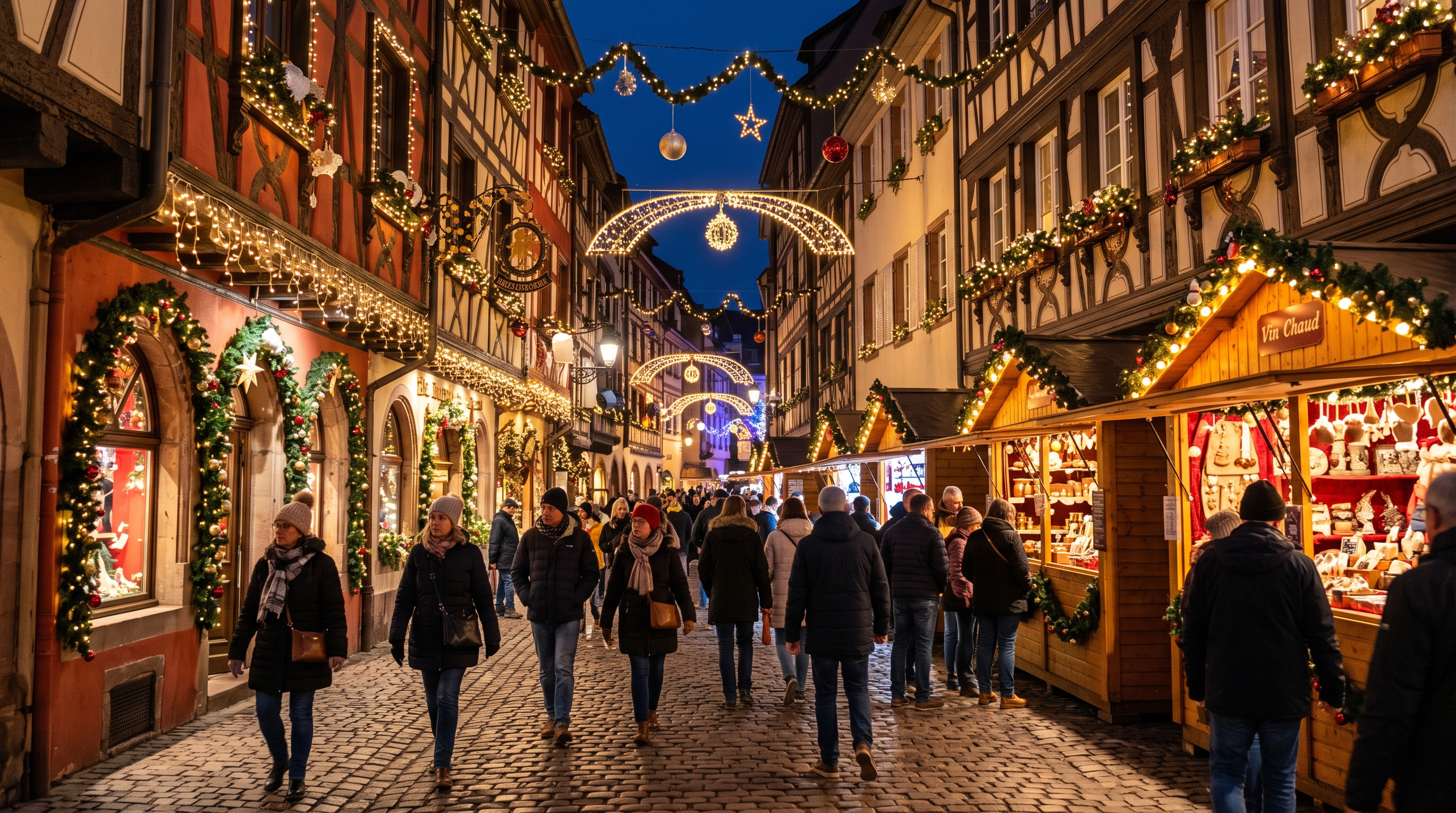
- Water-resistant walking shoes or boots already broken in.
- Warm socks, gloves that allow phone use, a hat, and layered clothing.
- A weather-resistant outer layer rather than one bulky item for every condition.
- A compact day bag with secure closures.
- A small reusable tote for market purchases.
- Medication and essentials in your personal item.
- A power bank and the correct plug adapter.
Leave suitcase space. Christmas ornaments, ceramics, food gifts, and souvenir mugs have a mysterious ability to multiply by the third city.
Common planning mistakes
- Traveling on December 24 without checking closures. Many markets end that day and transport or shops may operate reduced schedules.
- Changing hotels every night. You lose the best evening hours to packing and check-in.
- Assuming every market opens in mid-November. Major markets often start on different weekends.
- Booking only non-refundable rates. The small saving can become expensive when dates or routes change.
- Planning every minute. Weather, crowds, and a good food stall will alter the schedule. Leave recovery time.
Build your Christmas market trip
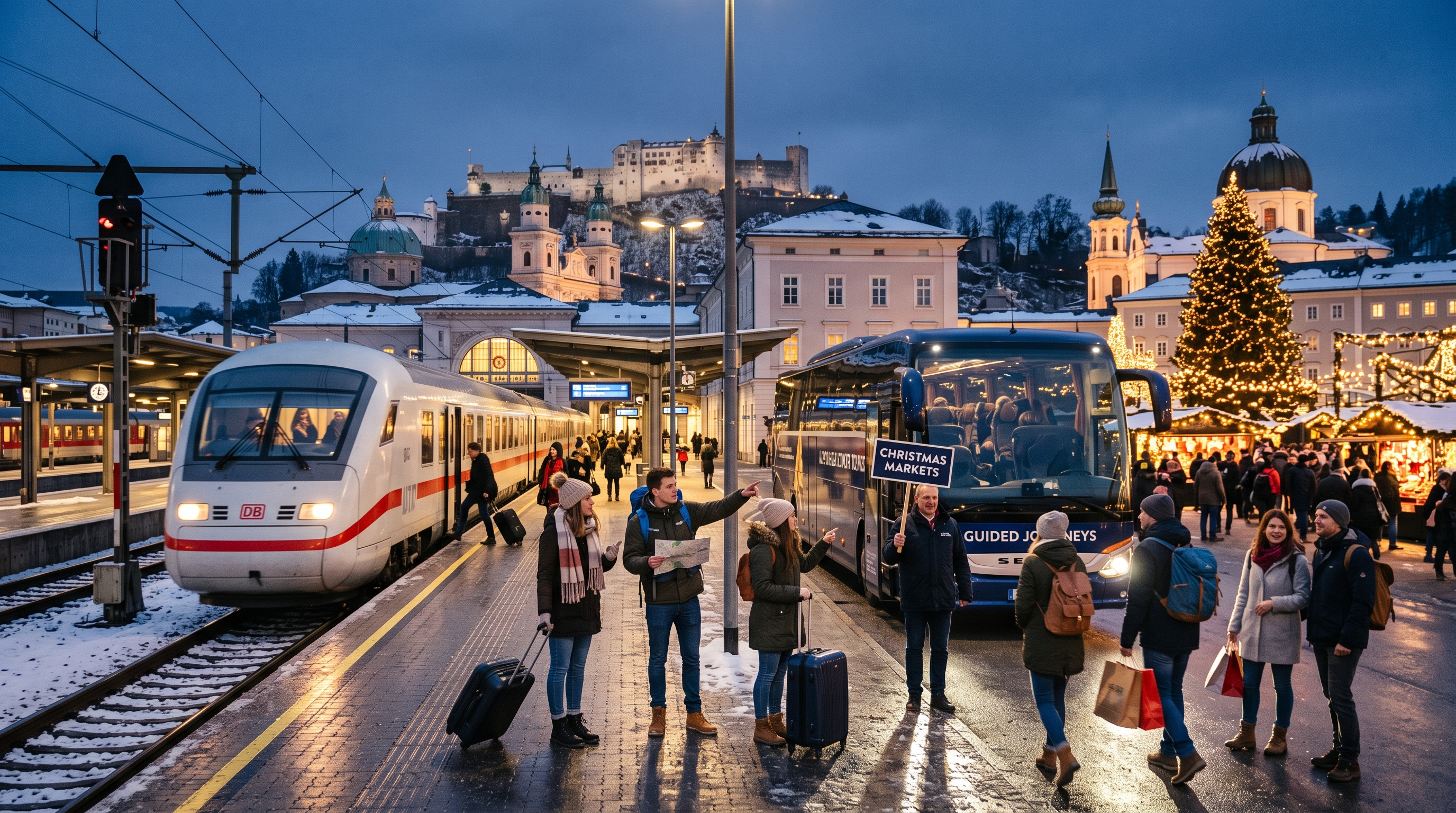
Start with the route, secure refundable stays, then add tours and transfers after the dates line up.
Open the booking tools Browse curated travel Compare market tours Find local experiencesFinal planning advice
The best European Christmas market tour is not automatically the one with the most cities. It is the one that protects your evenings, keeps transfers reasonable, and matches the way you actually like to travel.
Choose one strong route. Book flexible rooms. Confirm official dates. Then leave enough empty space in the itinerary for the moment that makes these trips worthwhile: finding a small market you did not expect, ordering something you cannot pronounce, and realizing nobody needs to rush to the next station.
Connect This Trip to the Right Tour Style
For a fully organized multi-city itinerary, compare our small group tours guide. Travelers who want winter scenery from the rails can explore scenic train journeys, while an unpack-once alternative is covered in our guide to Central Europe river cruises.
Frequently asked questions
When do European Christmas markets open?
Many major markets open between mid-November and the final weekend of November. Dates differ by city and individual market. Several close December 23 or 24, while selected markets in Vienna, Prague, and Salzburg continue later.
What is the best route for a first Christmas market trip?
Vienna, Prague, and Budapest offer a strong mix of architecture and rail access. Munich, Nuremberg, and Salzburg are another manageable route for classic German and Austrian markets.
Are guided Christmas market tours worth it?
They can be worth it if you value handled transfers, a planned route, and group travel. Compare the full inclusions and daily pace against an independent trip, not just the headline price.
How many nights do I need?
Allow at least seven nights for two or three bases. Nine or ten nights is more comfortable for a three-city route, especially when one connection takes most of a day.
Should I visit before or after Christmas?
Before Christmas offers the widest choice. After Christmas is quieter in some places, but many traditional markets have closed. Choose destinations with officially published late dates if traveling after December 24.
Do I need cash at European Christmas markets?
Card acceptance is improving, but small stalls, deposits, and local vendors may still prefer cash. Carry a modest amount of local currency and use secure payment practices.
Leave a Reply