
Last Updated on January 27, 2026 by Jeremy
If you’re planning the 2026 World Cup, you’re not just booking a match. You’re building a moving puzzle: flights, sleep, transport, budgets, and what to do in between. This guide is built for real travelers — the ones who want a smooth trip, not a spreadsheet nightmare.
We’ll keep it practical: a simple planning order, ways to move between cities without losing your mind, and experience ideas that actually feel like travel (not just waiting for kickoff).
How To Plan Your 2026 World Cup Trip (Step-By-Step)
The planning order that prevents expensive mistakes
- Decide your “match city strategy”: one base city, a two-city split, or a multi-city hop.
- Lock your flights early enough that prices don’t punish you, but flexible enough that you can pivot.
- Book stays with good cancellation (especially for families and groups).
- Build your transport plan: airport transfers, inter-city travel, and “game day” movement.
- Layer experiences between matches: tours, museums, food, day trips, and recovery time.
Pick your travel style first (then everything gets easier)
Less chaos. Better sleep. Great for families and first-timers.
Best balance: variety without turning the trip into constant transit.
For the “once-in-a-lifetime” crowd. Needs strong planning and buffer days.
If you want a broader “where do I even start?” view, use our regions as your launch point: Earthbound Destinations. You can also steal some experience-planning tactics from this guide: How to Find Authentic Local Experiences While Traveling in 2026 .
Best Flights For The 2026 World Cup
The best flight strategy depends on your travel style. Base-city travelers can go simple. City-hoppers need multi-city routing that doesn’t blow up your budget. Either way, the goal is the same: reduce connection risk and keep your arrival timing sane.
Useful for multi-city routing, comparisons, and finding reasonable options when prices start acting like they’ve had too much coffee.
Search flightsMajor events are peak disruption season. If a flight delay or cancellation qualifies, AirHelp can help with claims in many cases.
Check AirHelp- Arrive at least one day before the first match you care about. Same-day arrivals are asking for trouble.
- For city-hoppers: schedule “buffer mornings” for travel and “buffer evenings” for rest.
- Choose airports with options. If something breaks, you want alternatives, not a single flight per day.
Where To Stay: VRBO, Hostels, and Smart Base-City Choices
Groups & families: use “space” as a strategy
When the city is packed, the cheapest option isn’t always the best value. A stay with a kitchen and room to breathe often saves money (and arguments) over a week.
Great for families, groups, longer stays, and people who’d prefer a fridge over a hotel mini-bar that charges for oxygen.
Browse VRBOBudget travelers: hostels can be the cheat code
If you’re traveling solo or you’re doing the full fan experience, hostels often put you close to the action and surrounded by other travelers who already know what’s going on.
Best for solo travelers, social stays, and keeping costs under control.
Search hostels- Stay near transit, not “near the stadium.” Stadium zones are often expensive and logistically awkward.
- Book cancellable options if you’re still deciding between two cities.
- Think like a local: groceries + breakfasts at “home base” can free budget for tours and experiences.
How To Get Around During The 2026 World Cup

Airport arrivals: remove friction first
After a flight, the goal is simple: get to your bed without drama. Pre-booked transfers are especially useful if you arrive late, you’re traveling with kids, or you’re landing in a city you’ve never navigated before.
Airport-to-stay transfers that reduce “where do we go now?” moments.
Book a transferInter-city travel: when renting a car makes sense
If you’re doing day trips, countryside stops, or you’re traveling as a group, a rental can be a practical move. Just remember: game day traffic is its own creature. Park-and-ride planning matters.
Helpful for day trips, multi-stop routes, and families who want control over timing.
Compare rentals- Game day rule: plan your arrival window early, and your exit plan even earlier.
- Don’t over-stack cities. If you’re moving every 2 days, you’ll see airports more than you see culture.
- Build “no plans” time. The best travel moments usually happen in the gaps.
2026 World Cup Travel Budget: A Realistic Way To Plan
A simple budget model that holds up
- Fixed: flights, stays, local transport basics
- Flexible: food, experiences, day trips, nightlife
- Protection: buffer money for sudden changes (delays, surge pricing, last-minute transport)
The mistake most people make is spending everything on “getting there,” then treating experiences like an afterthought. Earthbound’s take: budget for experiences on purpose. That’s the stuff you’ll remember.
Packages vs DIY (quick comparison)
- DIY wins when you want flexibility and you’re comfortable planning.
- Packages can win when you’re short on time and want fewer moving parts.
- Hybrid often wins: lock your core logistics, then choose experiences as you go.
Earthbound leans hybrid. You keep control, but you’re not forcing every decision months in advance.
Fan Zones, City Experiences & Things To Do Between Matches
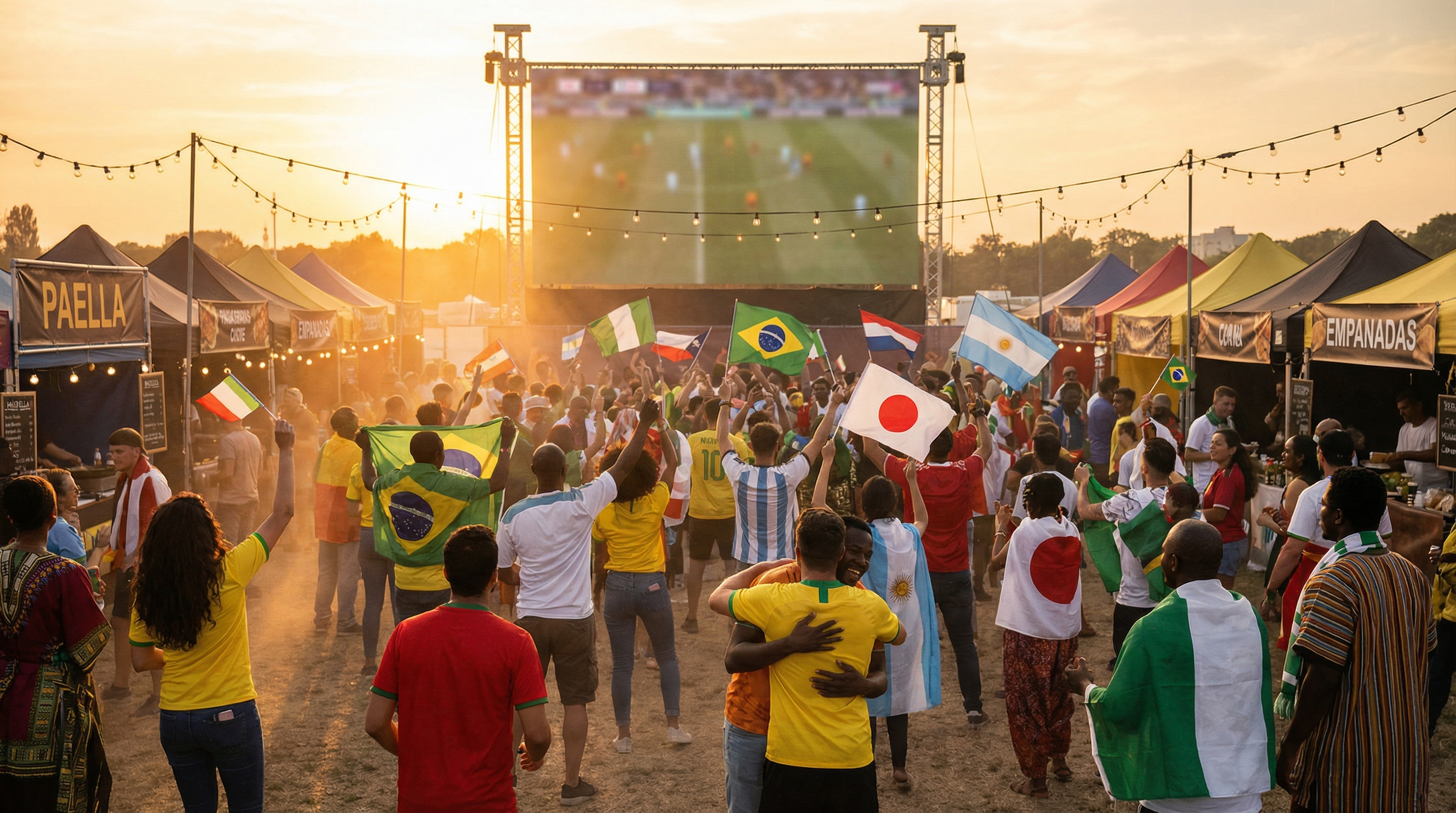
The 10 best “between match” experiences (that travel well)
- Food tour in your base city
- Guided walking tour (first day is best)
- Local market + cooking class
- Museum / cultural landmark day
- Half-day nature escape outside the city
- Neighborhood “self-guided” route with audio
- Street art tour
- Day trip to a nearby town
- Rooftop / skyline experience
- Recovery day: parks, baths, beaches (where available), slow morning
Bookable options (without turning this into an ad)
If you’re the type who likes to keep things simple: book one anchor experience early, then leave room for spontaneous finds. If you want the “authentic” angle, pull tactics from this Earthbound piece: authentic local experiences in 2026 .

Great for walking tours, food tours, day trips, and structured experiences between matches.
Browse GetYourGuideUseful when you want freedom, but still want the “local context” that makes places feel real.
Browse WeGoTrip2026 World Cup Travel Guide For Families

Family planning checklist
- Choose one base city if the kids are young (two-city split only if it’s truly worth it).
- Prioritize transit + calm neighborhoods over “closest to the stadium.”
- Plan one “kid win” per day: parks, aquariums, museums, simple activities.
- Use a kitchen when possible (snacks and breakfasts save the day).
Family stays & arrival strategy
- Stays: VRBO tends to fit families and groups better than a single hotel room.
- Arrivals: pre-booking transfers avoids late-night “how do we get there?” stress.
- Buffer: one rest day mid-trip can reset everyone.
Special Earthbound Highlight: Switzerland, Zurich & The FIFA Museum
Why this belongs in a World Cup planning guide
Even though the 2026 tournament is hosted in North America, the FIFA Museum in Zurich is one of those “if you’re a true fan, you’ll remember this forever” stops. If you ever build a World Cup travel bucket list beyond a single tournament, this is a clean anchor experience.
- Works well as a separate long weekend trip or a Europe add-on.
- Good for families and casual fans too — not just hardcore supporters.
- Easy win when you want “football history” without overcomplicating logistics.
Ticket option

Official-style ticket listing via Tiqets link you provided.
View ticketNext Steps: Build Your Trip On Earthbound
Start with destinations
If you want to explore regions and ideas beyond the match schedule, start here: Earthbound Destinations. This is also where we’ll keep expanding travel articles and region-based planning.
Keep it authentic (even during a mega-event)
Big events can turn travel into a checklist. This guide helps you avoid that: How to Find Authentic Local Experiences While Traveling in 2026 .
2026 World Cup Travel FAQs
When should I book flights for the 2026 World Cup?
As soon as you’re confident about your base city (or two-city split). If you’re still undecided, focus on flexible booking options and avoid tight same-day connections. Arriving at least one day early is the simplest safety move.
What is the cheapest way to travel between host cities?
Usually a mix: public transit inside cities, and carefully planned inter-city travel (flight, rail, or rental) only when it adds real value. The cheapest plan often becomes expensive if it forces extra hotel nights, long transfers, or missed plans.
How much should I budget for a 2026 World Cup trip?
Budget in three layers: fixed costs (flights + stays), flexible costs (food + experiences), and protection (buffer for disruptions). The most common mistake is spending everything on logistics and leaving experiences unfunded.
Are World Cup travel packages worth it?
Packages can be worth it if you want fewer moving parts and you’re short on time. DIY can be better if you want control. A hybrid approach often wins: lock flights and stays, then choose experiences as the trip takes shape.
What cities are best for first-time fans?
First-time fans usually do best with a base-city plan and strong transit access. Choose a city where you can comfortably explore between matches — it reduces stress and makes the trip feel like travel, not logistics.
Can families attend the World Cup safely?
Yes — family success usually comes down to planning: choosing calm neighborhoods with transit access, arriving early on match days, and building rest time into the schedule. VRBO-style stays and pre-booked transfers can reduce friction.
How do I find official fan events and zones?
Start with official tournament sources and host city event pages, then verify times and locations closer to your travel dates. Keep one “open day” for local discovery — fan zones are great, but they’re not the only story.
What documents are needed to cross borders?
Requirements depend on your passport and route (USA/Canada/Mexico). Confirm documentation and entry rules using official government travel advisory resources for the countries you’re visiting, and verify again closer to departure.



Leave a Reply