
Last Updated on December 25, 2025 by Jeremy
Introduction: Reading the Stories Written in the Ground
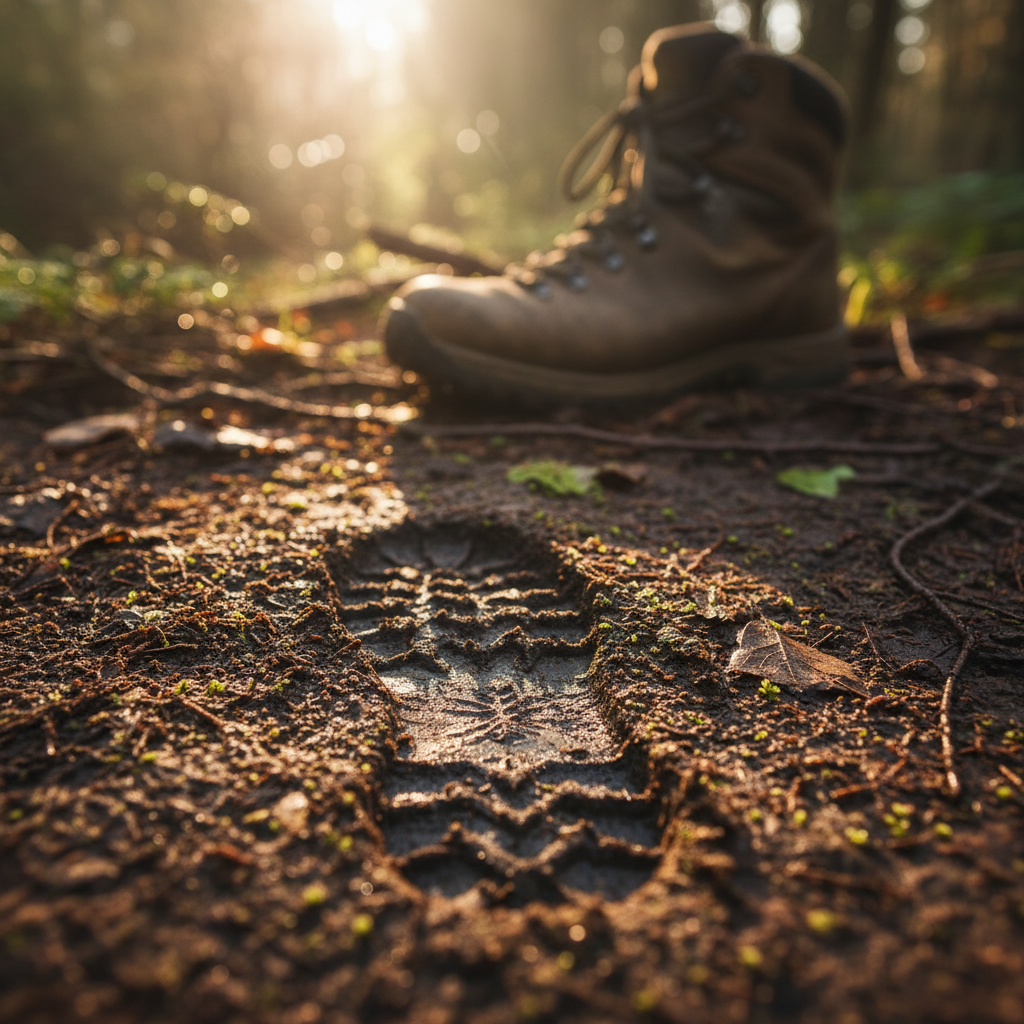
Have you ever walked through the woods, spotted a line of prints in the mud, and wondered who passed by before you? Learning to read tracks turns any trail into a story. You start to see where deer fed overnight, where foxes hunted along the edge of a meadow, and where a bear padded quietly down to the river.
I have spent seasons in the parks of British Columbia, driven the length of the Rockies, and traveled through Mexico, Guatemala, and Costa Rica. In every landscape, tracks have been the constant: silent clues that wildlife is closer than it seems.
In this guide, we will look at the basics of animal tracking, then walk through 20 common animal tracks you can find on real trips across North America and beyond. Along the way, you will see how to turn this skill into part of your next hiking or wildlife tour.
Animal Tracking Basics: What to Look For
Before you start naming tracks, it helps to slow down and look at a few fundamentals. Most misidentifications happen because people rush past these basics.
Number of toes
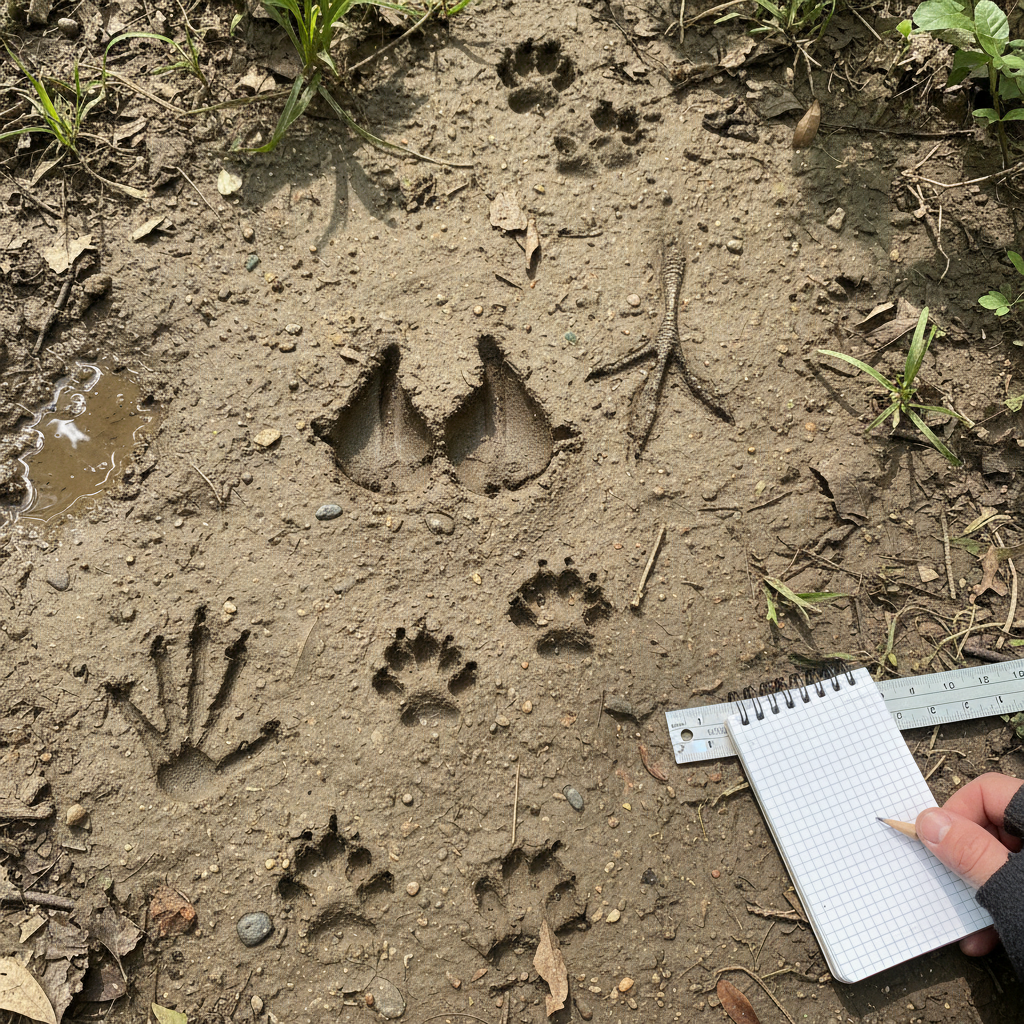
Count the toes on the front and hind feet. Many canine and feline tracks show four toes, while species such as raccoons, bears, and some small mammals show five. Birds typically show three forward-facing toes and one smaller toe pointing back.
Claw marks
Look closely for claw impressions. Dogs, coyotes, foxes, bears, and raccoons usually show claws. Cats, including bobcats and mountain lions, have retractable claws and often leave no claw marks unless they are slipping or moving on very soft ground.
Track shape
Overall shape is a quick way to narrow things down:
- Heart-shaped and cloven: hoofed animals such as deer, elk, or moose
- Oval or round with four toes: canines and felines
- Hand-like impressions: raccoons, opossums, and a few other small mammals
- Webbing between toes: aquatic mammals such as beavers, otters, and muskrats
Gait and stride
Instead of looking at one perfect print, step back and study the pattern:
- Straight, efficient lines often belong to predators such as foxes and coyotes.
- Hoppers such as rabbits and hares leave sets of larger hind prints ahead of smaller front prints.
- Weasels, otters, and mink often show a bounding pattern, with tracks grouped in pairs.
Ground conditions
The surface you are reading matters as much as the animal:
- Mud records deep, detailed impressions.
- Sand and dry soil lose edges quickly and are easily distorted by wind.
- Shallow snow preserves crisp detail, while deep snow can stretch or blur the print.
Once these basics feel familiar, you are ready to start identifying who is actually moving through the landscape.
20 Common Animal Tracks and Where to Find Them
1. Deer

Where to look
- Great Smoky Mountains National Park, USA
- Banff National Park and the Canadian Rockies
How to recognise the track
- Heart-shaped, cloven hoof print.
- Often found in forest openings, meadows, and along creek crossings.
2. Moose
Where to look
- Newfoundland and Labrador, Canada
- Interior Alaska and northern tundra regions
How to recognise the track
- Similar to deer but much larger, often 5–7 inches long.
- Common in swampy ground, willow thickets, and lakeshore margins.
3. Raccoon
Where to look
- Everglades National Park, Florida
- Coastal forests of the Pacific Northwest
How to recognise the track
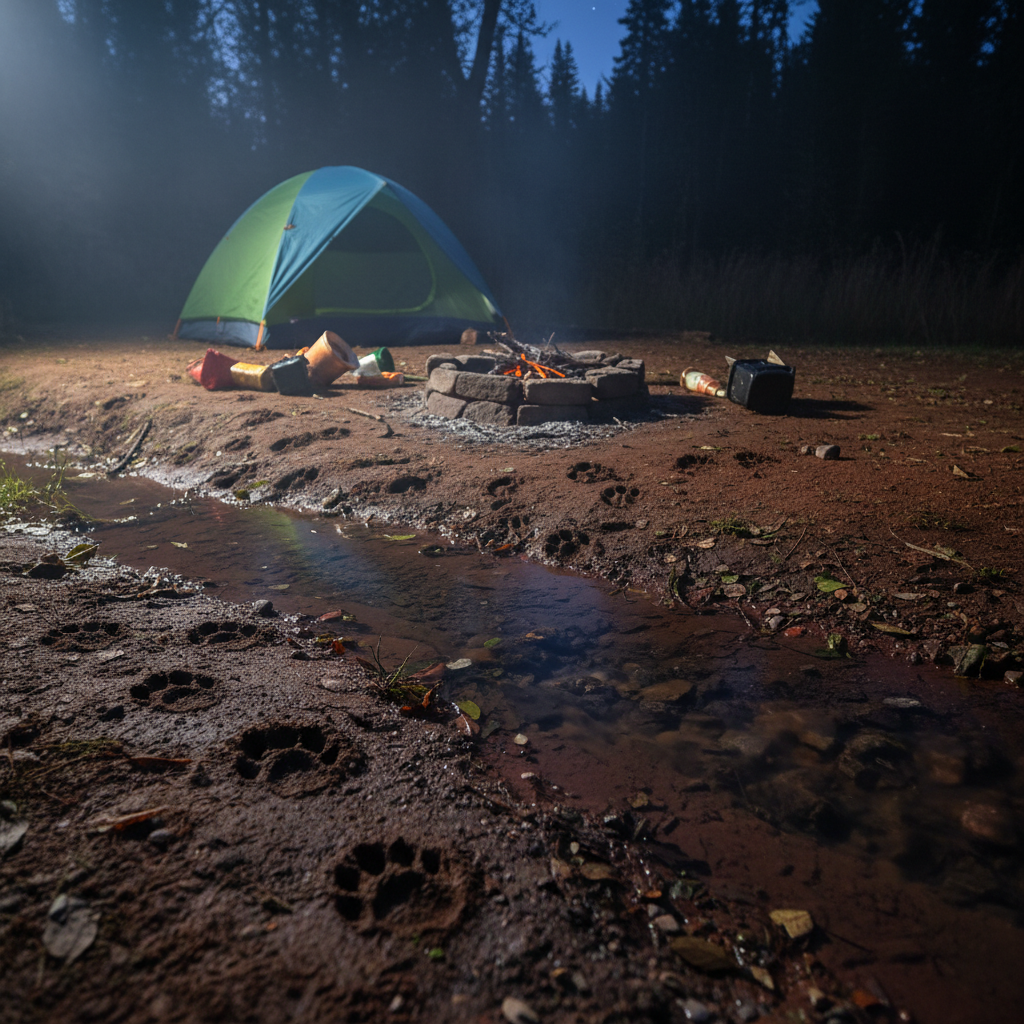
- Five toes on both front and hind feet, shaped like tiny human hands.
- Frequently found near water, campgrounds, and forest edges.
4. Coyote
Where to look
- Yellowstone National Park
- Desert trails in Arizona and New Mexico
How to recognise the track
- Oval canine print with four toes and visible claws.
- Tracks often form a straight line as coyotes move with an efficient, purposeful gait.
5. Red or Gray Fox
Where to look
- Grand Teton National Park, Wyoming
- Boreal forests across much of Canada
How to recognise the track
- Small, narrow, oval prints.
- Claw marks are usually faint, and tracks also tend to line up in straight, direct paths.
6. Black Bear or Grizzly Bear
Where to look
- Denali National Park, Alaska
- Backcountry regions of British Columbia and the Yukon
How to recognise the track
- Large, wide paw print with five toes and long claws.
- Often found near rivers, berry patches, avalanche slides, or along game trails.
7. Bobcat
Where to look
- Sierra Nevada of California
- Forested hills and canyon country in the Southwest
How to recognise the track
- Round print with four toes and no claw marks.
- About 2 inches wide, often found in remote, rocky, or brushy terrain.
8. Mountain Lion (Cougar)
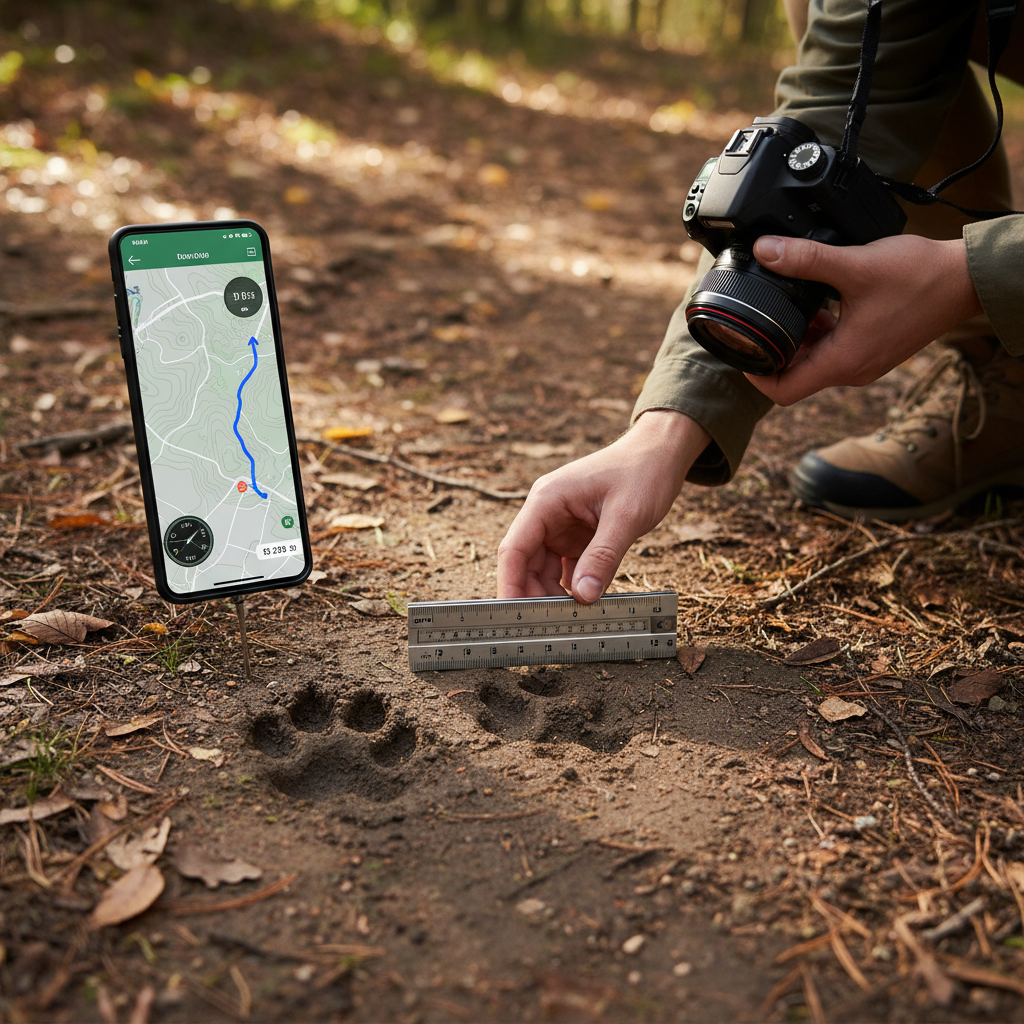
Where to look
- Rocky Mountain National Park, Colorado
- California wilderness areas and canyon systems
How to recognise the track
- Four toes, no visible claws, and a larger, more elongated heel pad than a bobcat.
- Tracks are usually around 4 inches wide and spaced farther apart, showing a long stride.
9. Rabbit
Where to look
- Rocky Mountain National Park and many North American forests
- New England woodlands and field edges
How to recognise the track
- Two larger hind feet land ahead of the smaller front feet, forming a Y or T pattern.
- Common in brushy edges, gardens, and snow-covered fields.
10. Hare (Snowshoe Hare, Jackrabbit)

Where to look
- Arctic and subarctic forests for snowshoe hares
- Western grasslands and deserts for jackrabbits
How to recognise the track
- Large, elongated hind footprints with smaller front prints.
- Tracks often appear in pairs due to long, fast leaps across open ground.
11. Wild Turkey
Where to look
- Great Smoky Mountains and Appalachian foothills
- Grasslands and mixed forests of the Midwest
How to recognise the track
- Three long, forward-facing toes and a smaller rear toe, creating an X-shaped outline.
- Tracks can be up to 4 inches long and are common on dirt roads, field margins, and forest clearings.
12. Beaver
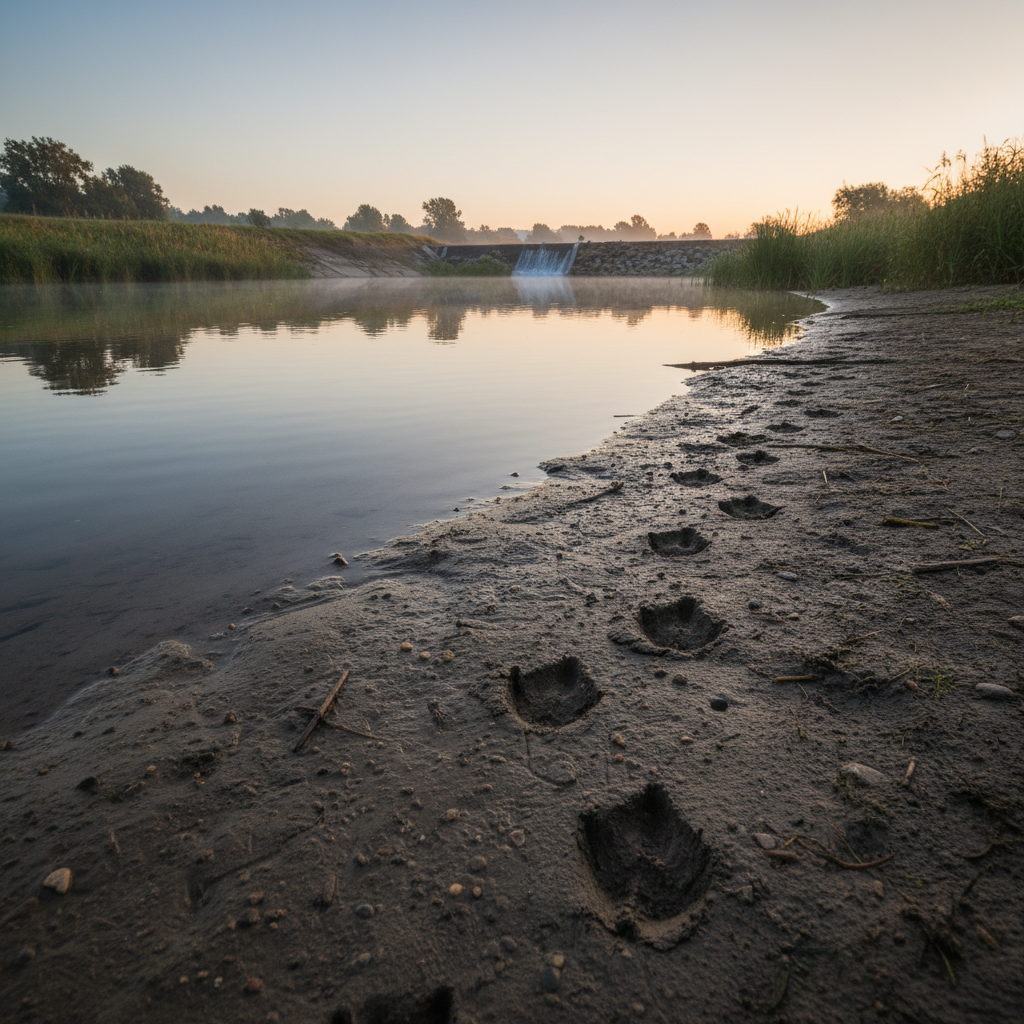
Where to look
- Boundary Waters Canoe Area, Minnesota
- Lakes, ponds, and wetlands throughout Canada
How to recognise the track
- Large, webbed hind feet with smaller, clawed front feet.
- Look along muddy pond edges, dam sites, and well-used slides into the water.
13. River Otter
Where to look
- Wetlands and marshes in Florida
- Coastal estuaries and river mouths in Oregon and Washington
How to recognise the track
- Webbed feet with five toes and claw marks.
- Tracks may show tail or belly slides down riverbanks and snow-covered slopes.
14. Weasel
Where to look
- Northern forests across Canada
- Mountain valleys in Montana and Wyoming
How to recognise the track
- Small, oval prints with five toes.
- Tracks usually appear in bounding pairs, often near stone piles, fallen logs, and rodent burrows.
15. Mink
Where to look
- Northeastern United States wetlands and river corridors
- Lakeshores and marshes in central and eastern Canada
How to recognise the track
- Small, semi-webbed feet similar to a miniature otter track.
- Found close to water, especially under overhanging banks and around logjams.
16. Skunk
Where to look
- Urban parks, golf courses, and suburban greenbelts
- Rural farmyards and open grasslands
How to recognise the track
- Five toes on each foot, with noticeable claws on the front feet.
- Hind prints are larger than front prints; look along fence lines, garden edges, and den entries under sheds or porches.
17. Opossum
Where to look
- Wooded regions of the southern and eastern United States
- Mixed farm and forest zones, especially near water
How to recognise the track
- Hand-like tracks with five toes; the hind foot has an opposable “thumb.”
- Often seen near compost bins, creeks, and brush piles.
18. Porcupine
Where to look
- Forests of New England and eastern Canada
- Rocky slopes and conifer stands in the northern Rockies
How to recognise the track
- Rounded prints with five toes and clear claw marks.
- Sometimes accompanied by tail drag marks and a dotted line of quill impressions in snow.
19. Muskrat
Where to look
- Wetlands and marshes of the Mississippi River corridor
- Slow-moving streams, ponds, and ditches across much of North America
How to recognise the track
- Small, webbed hind feet and four-toed front feet.
- Look for tracks on muddy banks, often with a tail drag between them.
20. Wild Canids and Cats Abroad
Where to look
- Costa Rican rainforests for coatis, jaguars, tapirs, and pumas
- African savannas for lions, leopards, and hyenas
- Patagonian steppe for pumas and guanacos
How to recognise the track
- Big cats show round, clawless prints; wild canids show narrower, clawed prints.
- In tropical and savanna environments, you will rely heavily on soft mud around waterholes and sandy game trails.
Pro Tips for New Wildlife Trackers

As your eye improves, you will realise that tracking is less about memorising pictures and more about noticing patterns.
1. Use edges and transition zones
Wildlife prefers moving along edges: the line between forest and meadow, the margin of a river, or the edge of a wetland. Walk these boundaries slowly and scan ahead.
2. Carry a simple scale reference
A small ruler, measured card, or coin in your photos makes a big difference when you compare tracks later. Note both length and width of prints.
3. Take multiple photos
Photograph the clearest individual print, a group of tracks, and the broader trail. Include the surrounding habitat so you remember the setting.
4. Read the freshness of the trail
Crisp edges, undisturbed debris, and no overlapping human or dog tracks usually mean the track is recent. Wind-softened edges and flattened details point to older prints.
5. Respect distance, especially with predators
Treat a fresh bear or big-cat track as a sign to slow down, make noise, and stay aware, not as an invitation to get closer. If tracks look very fresh and you feel uneasy, turn back or choose another route.
Best Destinations for Wildlife Tracking Around the World
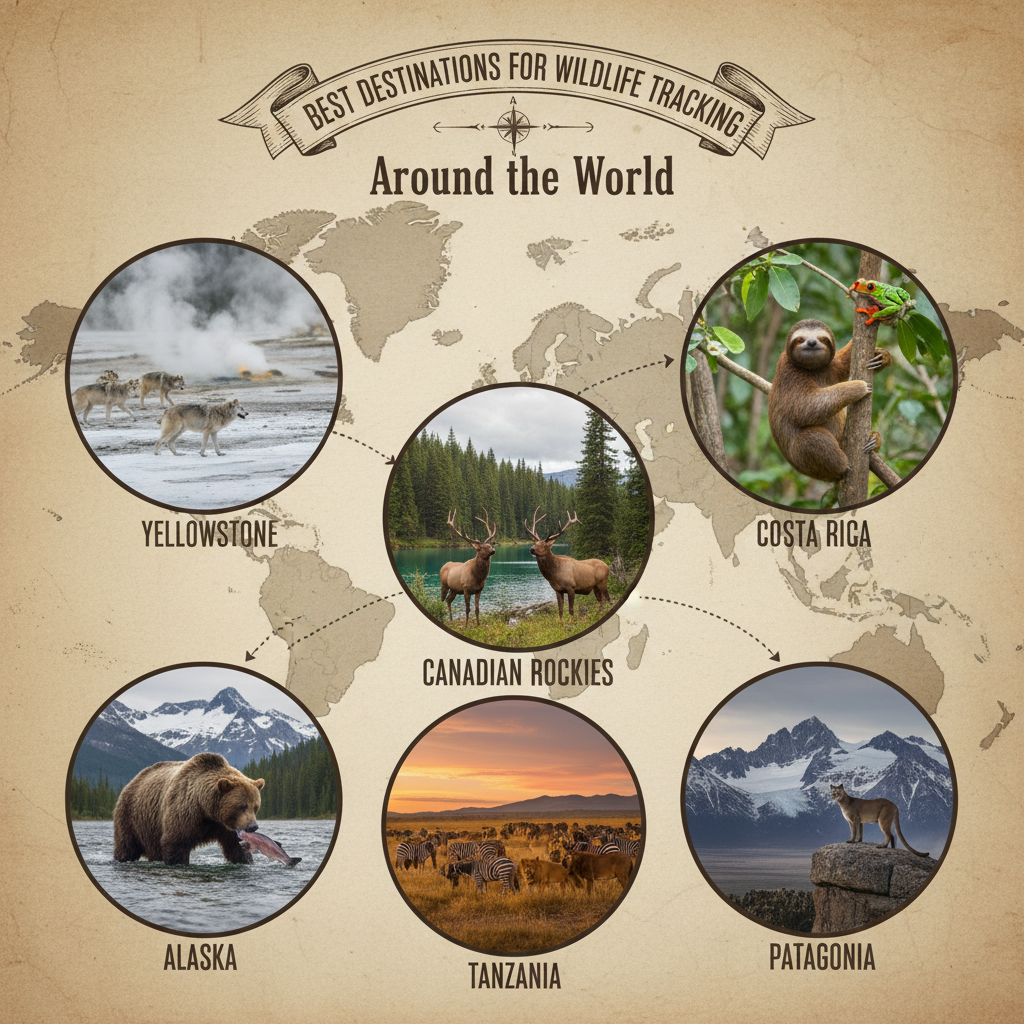
If you want to plan a trip around learning these skills, some destinations lend themselves particularly well to tracking.
Yellowstone National Park, USA
Tracks to look for: wolves, coyotes, bears, elk, and bison.
Why it works: open valleys and snow-covered winters give you long lines of tracks and clear behaviour patterns.
Denali National Park, Alaska
Tracks to look for: grizzly bears, moose, lynx, and sometimes wolverine.
Why it works: vast, lightly traveled landscapes mean you often see wildlife sign long before you see the animal.
Costa Rican rainforests
Tracks to look for: tapirs, jaguars, pumas, coatis, and ground-dwelling birds.
Why it works: dense jungle demands slower, more attentive travel and teaches you to combine tracks with claw marks, scat, and disturbed vegetation.
The Canadian Rockies
Tracks to look for: mountain lions, wolves, elk, and bighorn sheep.
Why it works: snow, mud, and remote valleys make it easy to see how animals move up and down entire watersheds.
Serengeti National Park, Tanzania
Tracks to look for: lions, leopards, hyenas, elephants, and antelope.
Why it works: open savanna means guides can read tracks over long distances and show how they connect to real-time behaviour.
Patagonia, Argentina and Chile
Tracks to look for: pumas, guanacos, and foxes.
Why it works: windswept steppe and mountain basins hold prints in sand and dust and reward patient observation.
Turning Tracking into a Guided Experience
If you would rather learn directly from an expert, consider building a trip around guided tracking days or wildlife walks.
Many parks and reserves offer small-group tracking tours that focus on reading footprints, scat, and other sign rather than chasing sightings alone. For example:
- Join a dedicated wildlife tracking day tour through a platform such as Viator , where local guides specialise in teaching field skills.
- Look for walking safaris and naturalist-led excursions on GetYourGuide that emphasise animal behaviour, tracks, and signs rather than just driving from viewpoint to viewpoint.
- Once you have chosen your destination, reserve cabins, eco-lodges, or small hotels near key wildlife corridors through Booking.com so you can step outside and start reading tracks at first light.

Gear and Resources for Learning Animal Tracking
You do not need an entire new gear closet to start tracking, but a few thoughtful items make the experience easier and more comfortable.
Field guides and reference material
- A regional field guide to animal tracks helps you narrow down possibilities to the species that actually live where you are traveling.
- Digital guides and PDFs allow you to zoom in on print shapes and compare them in the field.
Mobile apps
- Apps such as iNaturalist or Seek allow you to upload photos, compare them to an image library, and crowdsource identification.
- Offline note-taking apps or a simple notes file are useful for recording locations, weather conditions, and what you think you saw.
Notebook, camera, and casting kit
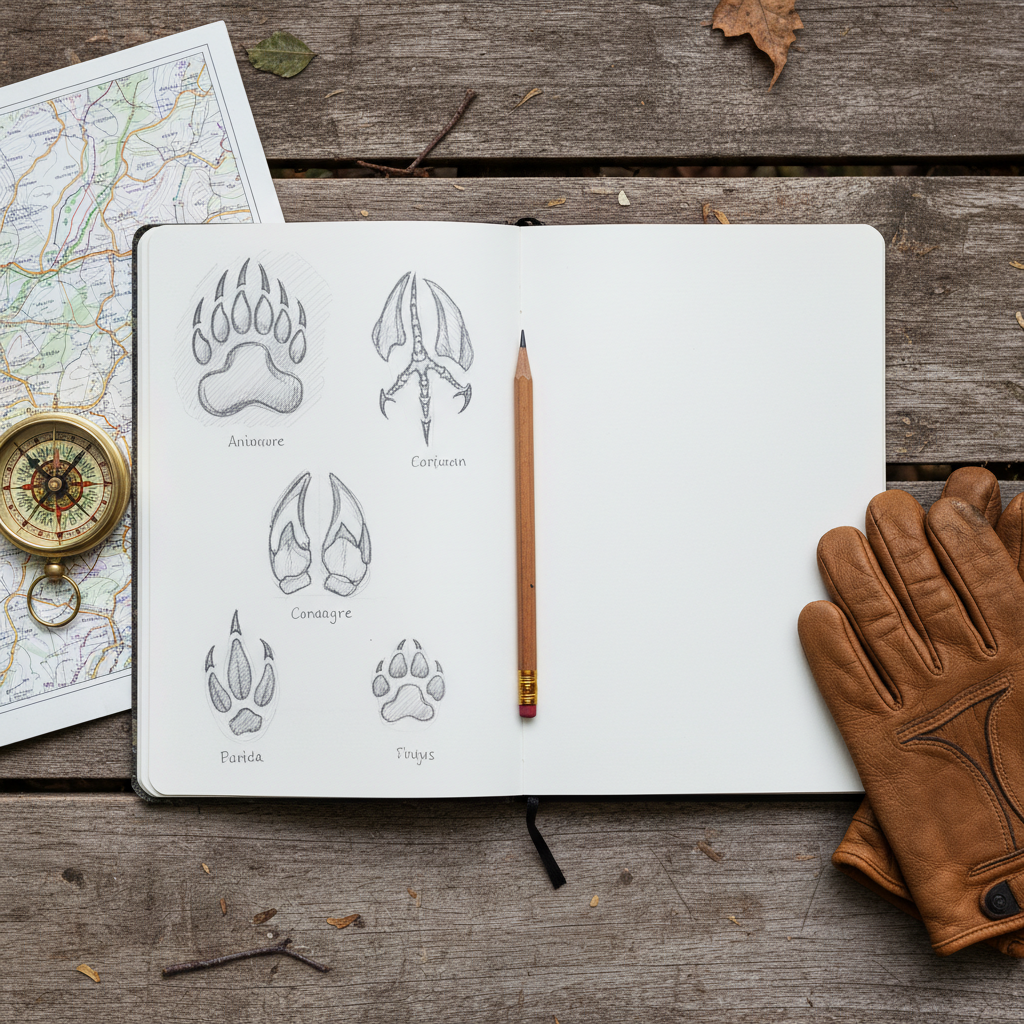
- A small waterproof notebook or field journal lets you sketch prints, jot down measurements, and log each find.
- Your phone or a compact camera can capture both close-up tracks and wider habitat shots.
- A basic casting kit using plaster or similar material lets you take home a three-dimensional record of especially clear prints.
Clothing and footwear
- Waterproof boots with good traction make it easier to walk muddy shorelines and wet, rooty trails.
- Layered clothing, gloves, and a brimmed hat help you stay outside longer at dawn and dusk, when tracks and wildlife activity are most obvious.
- A headlamp or good flashlight is invaluable for early starts and late finishes.

Frequently Asked Questions About Animal Tracking
What is the easiest way to start identifying animal tracks?
Pick three to five common animals in your local area and learn their tracks first. Focus on the number of toes, overall shape, and whether claws are visible. Practice by visiting the same creek, beach, or trail several times and seeing how the tracks change.
Where is the best place to see clear animal tracks?
Look along natural travel corridors: riverbanks, muddy shorelines, snow-covered logging roads, game trails through meadows, and the edges of wetlands. Soft, damp ground records tracks far better than dry, hard soil.
Is it safe to follow predator tracks?
You can safely observe predator tracks if you give the animal space, make your presence known with sound, and avoid dense cover where visibility is poor. If the tracks appear fresh, combine what you see with other signs such as scat, scent, or recent kills. If anything makes you uncomfortable, change direction or turn around.
Do I need special gear to begin tracking?
You can start with simple basics: sturdy boots, weather-appropriate clothing, a notebook, and your phone camera. As you progress, invest in a regional field guide and consider a lightweight casting kit for preserving exceptional prints.
Can I book guided wildlife tracking tours when I travel?
Yes. Many destinations with strong wildlife populations offer guided tracking walks and safaris. Working with an experienced guide not only keeps you safer, it accelerates your learning and helps you see subtle signs you might otherwise miss.
Final Thoughts: Turning Every Trail into a Tracking Lesson
Learning to read animal tracks changes how you experience the outdoors. Instead of just walking through a landscape, you begin to notice who moved through it overnight, where they fed, and how they interact with the terrain around you.
Your next steps:
- Choose a nearby park or nature reserve and spend a morning walking slowly along the edges of water, forest, and meadow.
- If you are planning a bigger trip, consider adding a guided tracking or wildlife walk through a provider such as Viator or GetYourGuide.
- Reserve a basecamp cabin or eco-lodge near prime wildlife areas so you can step outside and start reading tracks at first light.
Every footprint is a clue. Once you start paying attention, no hike ever feels empty again.




Leave a Reply