
Last Updated on January 3, 2026 by Jeremy
Knots might not be the first thing that comes to mind when planning an outdoor trip, but they can be the difference between a smooth adventure and a serious headache.
I’ve spent years on the road, from hauling machinery across the Yukon to navigating rugged trails in B.C., and I can tell you firsthand: knowing a few reliable knots saves gear, saves time, and prevents the kind of dumb problems that show up when the weather turns.
Whether you’re camping in the Rockies, fishing in Costa Rica, or building a backcountry setup that actually holds, these essential knots help you stay secure, prepared, and a lot less stressed when things get real.
Quick note: this isn’t a full step-by-step knot school. It’s a practical travel skills guide—what to know, when to use it, and why it matters. If you want animated tie instructions, I’ll point you to a solid authority resource below.
Why Knot-Tying Matters for Outdoor Travel
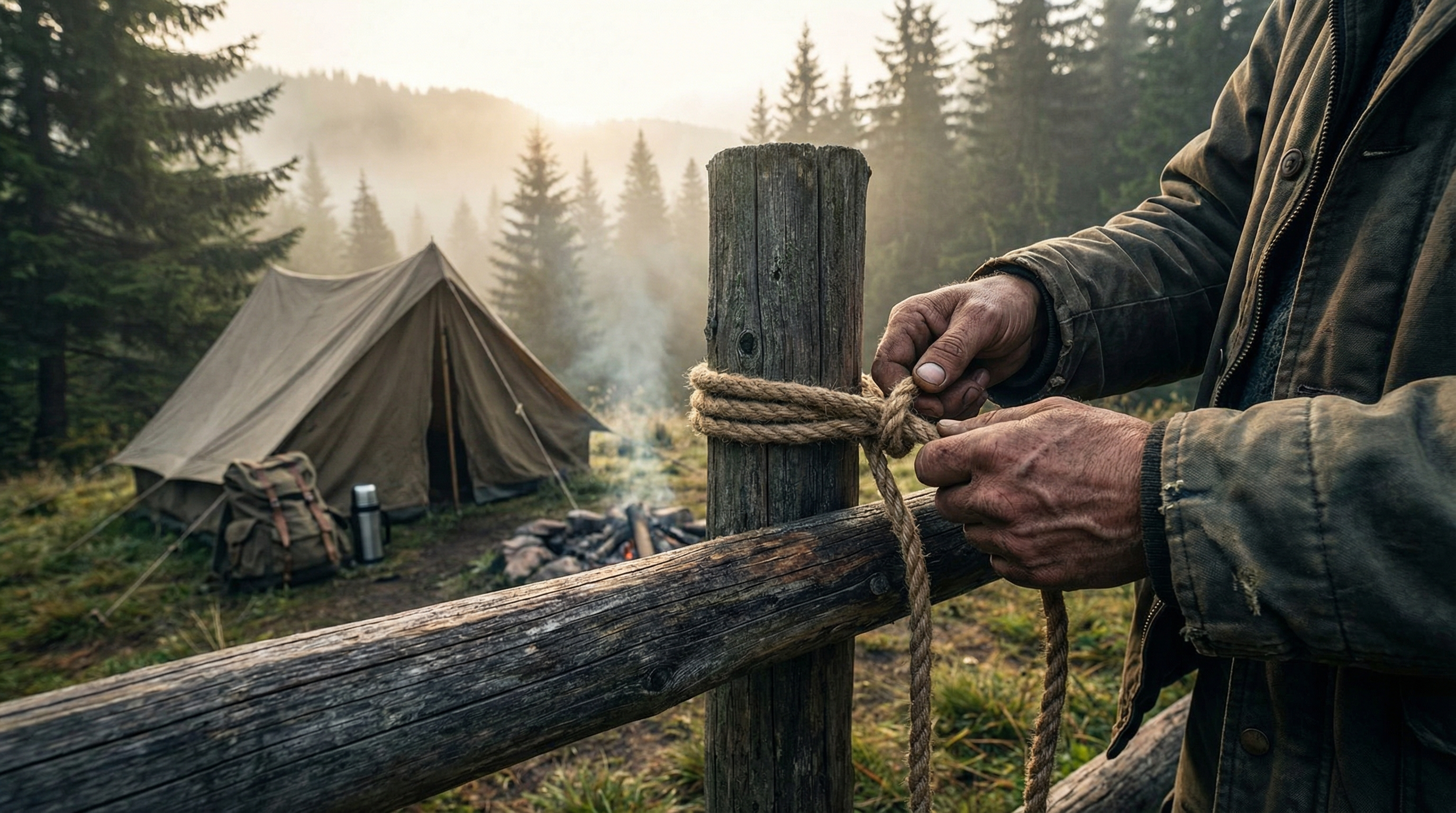
Knot-tying isn’t a party trick. It’s a small skill that quietly carries a lot of weight outdoors. The right knot keeps your shelter from turning into a parachute, keeps your line from slipping, and keeps your gear from becoming “that thing you used to own.”
More importantly, knots help you adapt. Outdoors rarely gives you perfect conditions—wind shifts, rain rolls in, terrain changes, and suddenly your setup needs to be smarter. A couple dependable knots lets you solve problems without needing extra hardware or a last-minute run to town.
Related travel skill you’ll actually use
If you’re building out your “basic outdoor competence” list, pair this with: How to Start a Campfire in Wet Conditions . Knots + fire covers a surprising amount of real-world camping chaos.
Where Knots Show Up on Real Trips
Camping & Hiking: The Backbone of a Secure Campsite
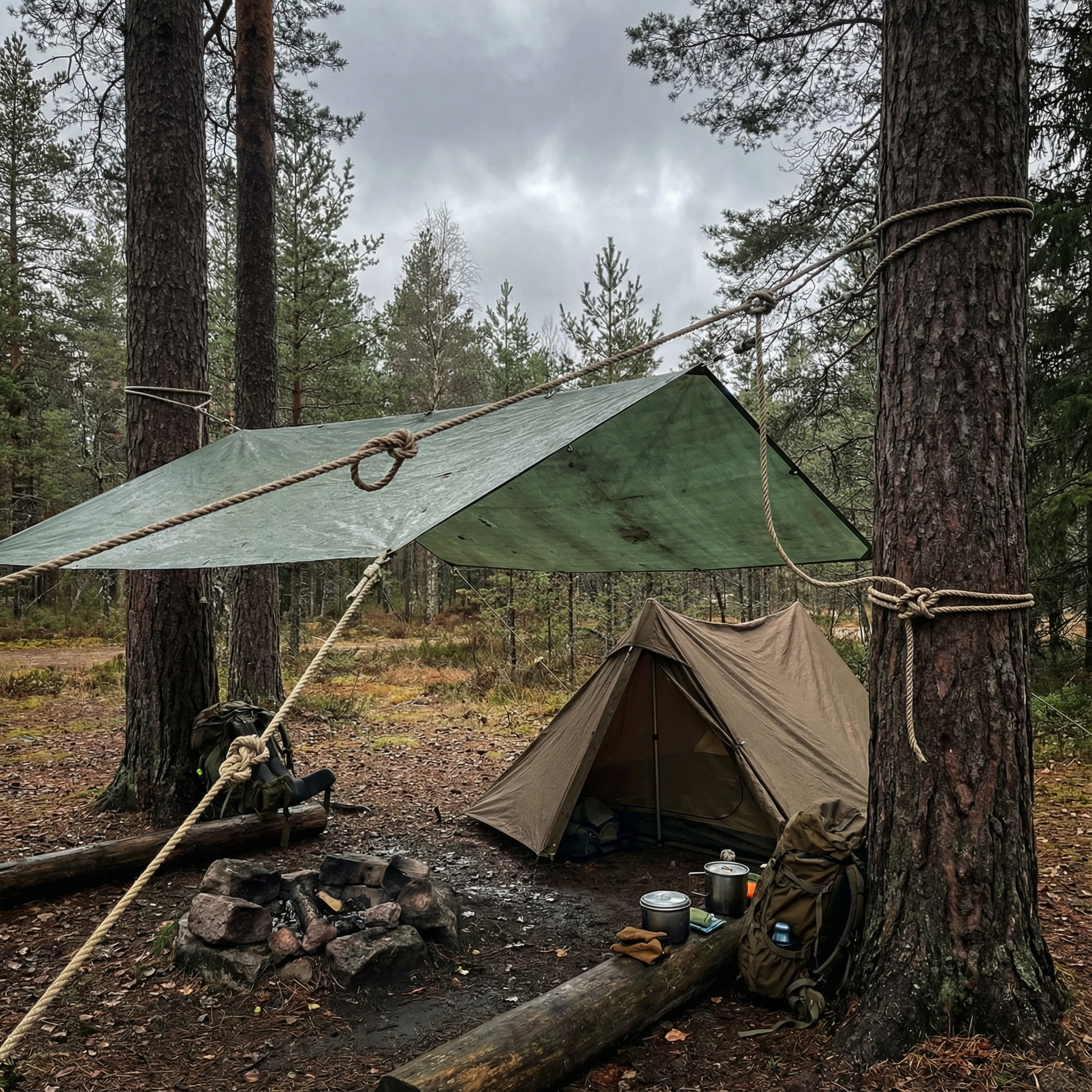
I’ve camped in everything from remote B.C. parks to dry desert wind tunnels, and the lesson is always the same: if your knots aren’t solid, your setup is toast. Most campsite failures aren’t dramatic. They’re annoying. A tarp loosens, a guyline slips, gear gets wet, and suddenly you’re improvising in the dark.
- Guy lines & tent tension: secure your shelter so it holds shape through wind and rain.
- Tarp rigs: keep rain coverage tight so it sheds water instead of sagging and pooling.
- Strapping gear: keep loose items from shifting, bouncing, or disappearing down a slope.
Fishing: The Knot Between You and Your Catch
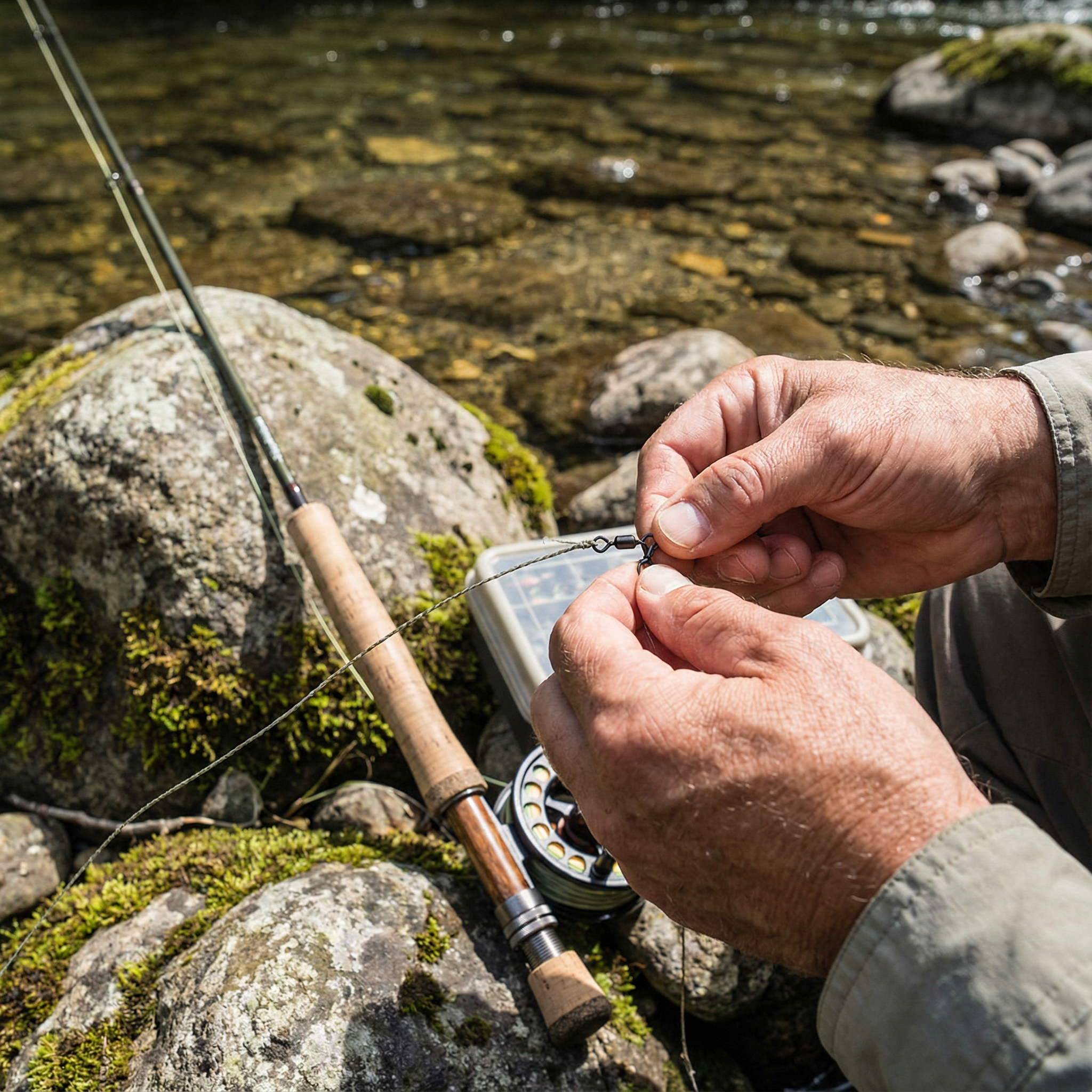
If you fish long enough, you learn this the hard way: the knot is usually the weak link. Not the rod, not the reel, not the lure. The knot. And the moment you tie it in a hurry, with cold fingers, or with poor light… that’s the moment a good fish decides to test your confidence.
- Hooks, lures, swivels: you want a knot that holds under sudden load and repeated tugs.
- Consistency matters: a “pretty good” knot tied perfectly beats a “perfect” knot tied poorly.
Survival & Emergency Scenarios: When Knots Stop Being Optional
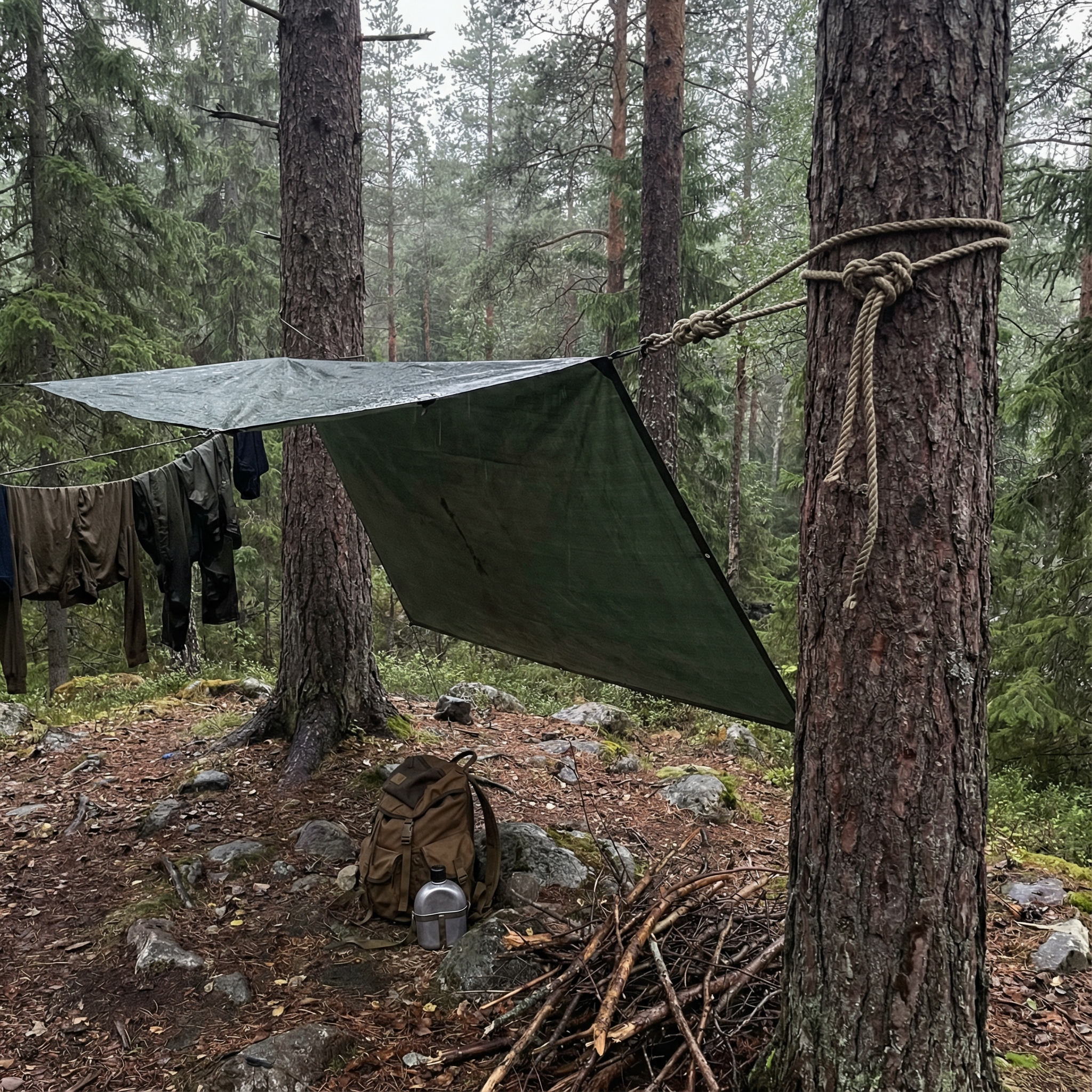
Living off-grid and working around remote sites taught me that knots aren’t just “nice to have.” They’re part of your problem-solving toolkit. If something breaks, you don’t always get a second chance—or a quick run to a hardware store.
- Emergency shelter: a reliable loop knot and a solid stopper knot can make a tarp setup stable fast.
- Food storage in bear country: proper rope work helps keep your camp cleaner and safer.
- Basic rope safety: you want knots that don’t slip and don’t jam permanently under load.
The 4 Essential Knots That Cover Most Outdoor Situations
You don’t need a massive knot encyclopedia to be competent outdoors. You need a small set of knots you can tie cleanly, repeatably, and under mild stress. These four cover a surprising amount of real-world camping, fishing, and travel problem-solving.
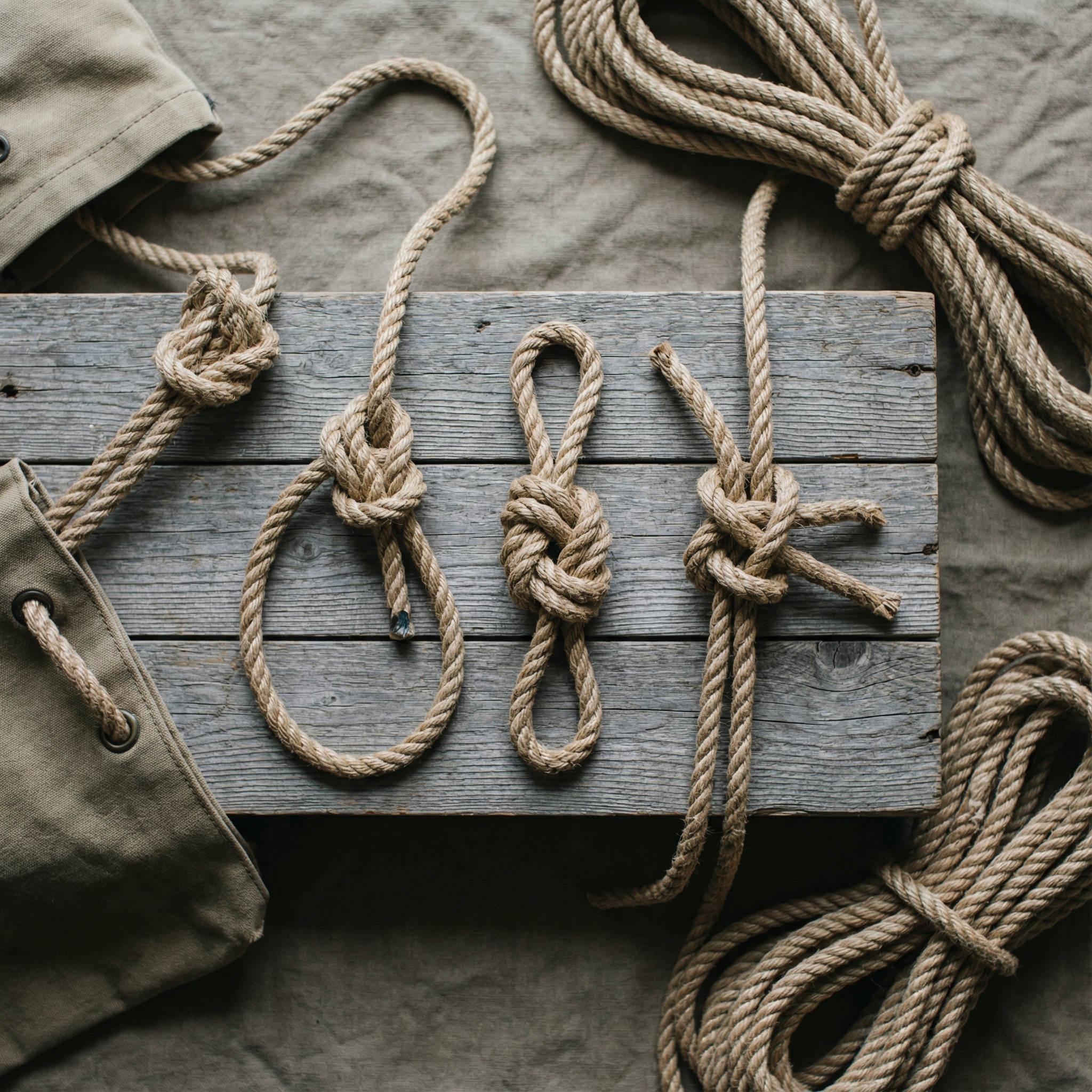
Square Knot (Reef Knot)
Best for tying two ends together when the load is even and predictable. Think bundling gear, light lashings, or quick campsite fixes. (Not the knot for critical safety loads.)
Palomar Knot
A dependable fishing knot for hooks and lures. Simple, strong, and one of the easiest to tie correctly when you’re tired or rushing.
Figure-Eight (Stopper)
A classic “stopper” that helps prevent rope from slipping through hardware or hands. Great for rope management, and it’s widely used in climbing contexts.
Bowline
Creates a strong, fixed loop that’s useful for shelter lines, securing gear, and general rope work. It’s a favorite because it holds well and is usually easier to untie after load.
Want the “how to tie it” visuals?
For animated, step-by-step knot tying (the kind that’s actually easy to follow), this is a reliable reference: Animated Knots by Grog .
How to Learn Knots Without Overcomplicating It
The trick isn’t learning dozens of knots. The trick is making a few knots automatic. Outdoors is not the place for “I think this is right.” It’s the place for muscle memory.
- Practice under mild friction. Try tying them with cold hands, low light, or light wind. That’s closer to real life.
- Use the same rope type you travel with. Paracord and slick line behave differently than thicker camp rope.
- Do a quick load check. Pull, inspect, and re-tie if it doesn’t look clean. Better now than later.
- Keep it simple. Four knots done well beats fifteen knots done poorly.
Final Thoughts: Small Skill, Big Payoff
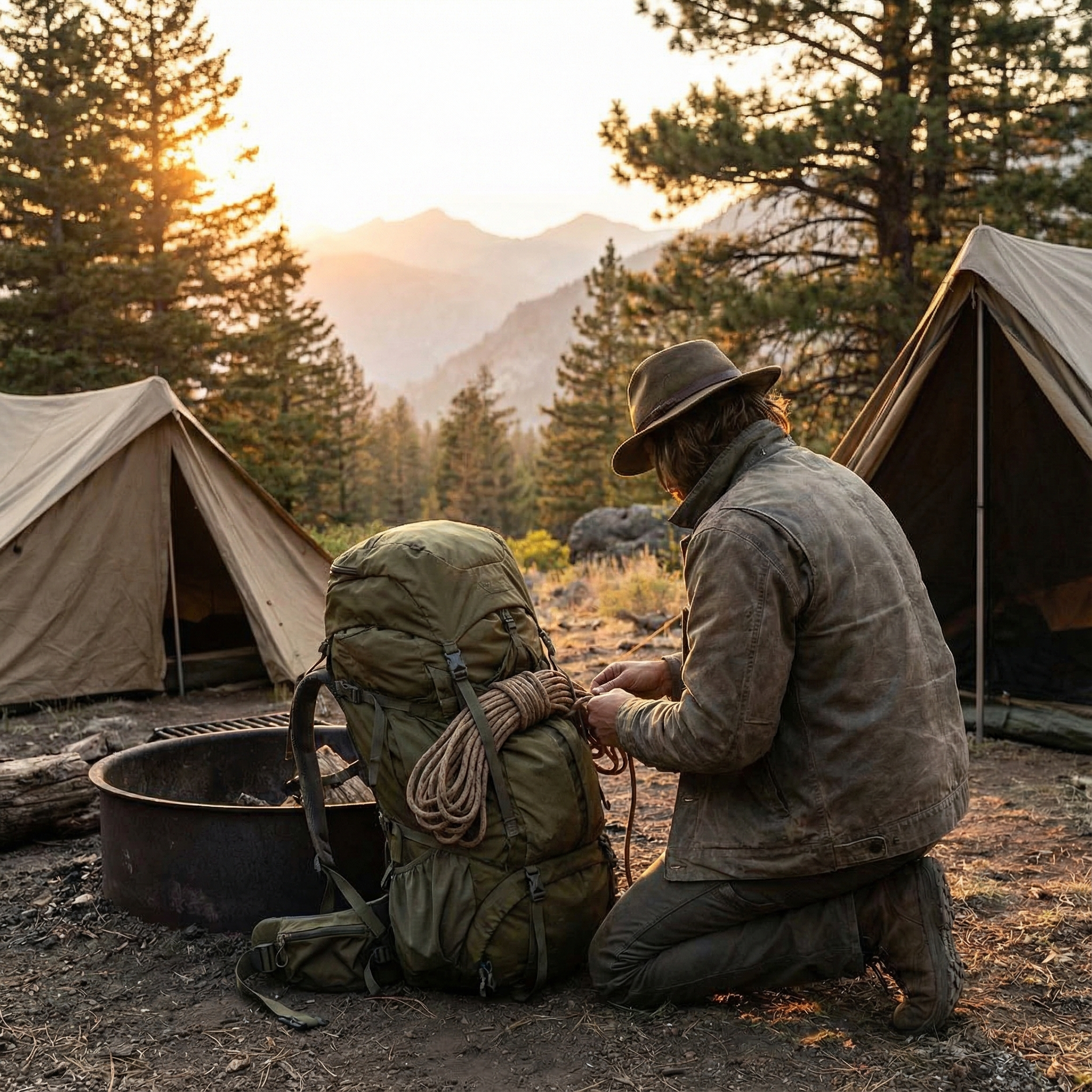
Knowing a few essential knots isn’t about being hardcore. It’s about being prepared enough that your trip stays enjoyable when conditions shift. The outdoors will always throw little curveballs. Knots are one of those simple skills that keeps the curveballs from turning into problems.
If you’ve got a favorite knot you rely on (or a hard lesson learned from a bad one), that’s the kind of travel wisdom worth sharing. What’s your go-to?



Leave a Reply