
Last Updated on February 24, 2026 by Jeremy
Let’s be real. Between the pings, scroll fatigue, and the “just one more thing” mentality, most of us aren’t overdue for a vacation.
We’re overdue for a reset that actually sticks. Not a beach trip where you still answer emails. Not a retreat where the phone detox is “optional.”
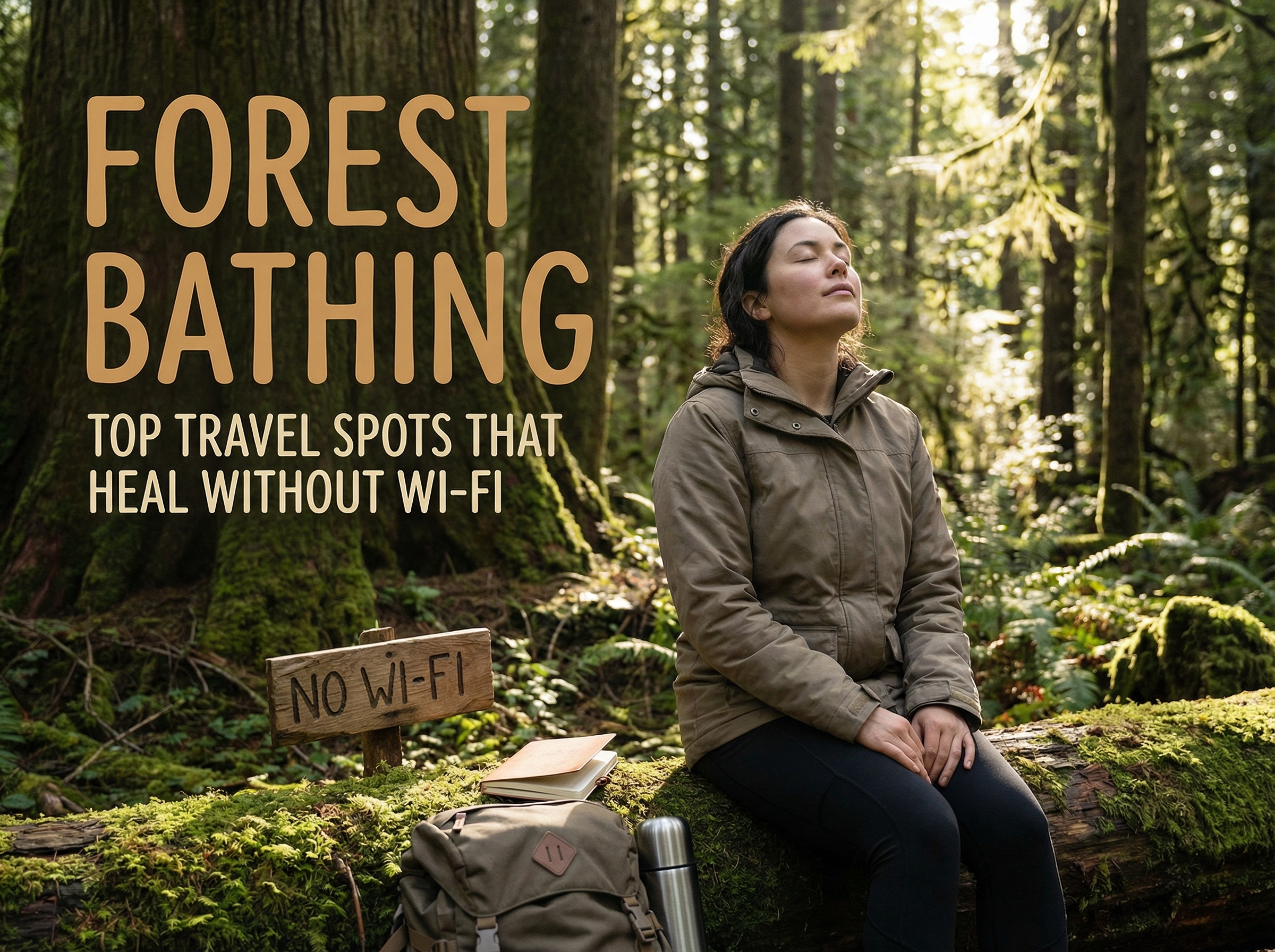
That’s why forest bathing matters in 2026. It’s not a fad, and it’s not a fitness challenge. It’s a deliberate shift into quiet, sensory nature — the kind that slows your nervous system down without you having to earn it.
What Forest Bathing Actually Is
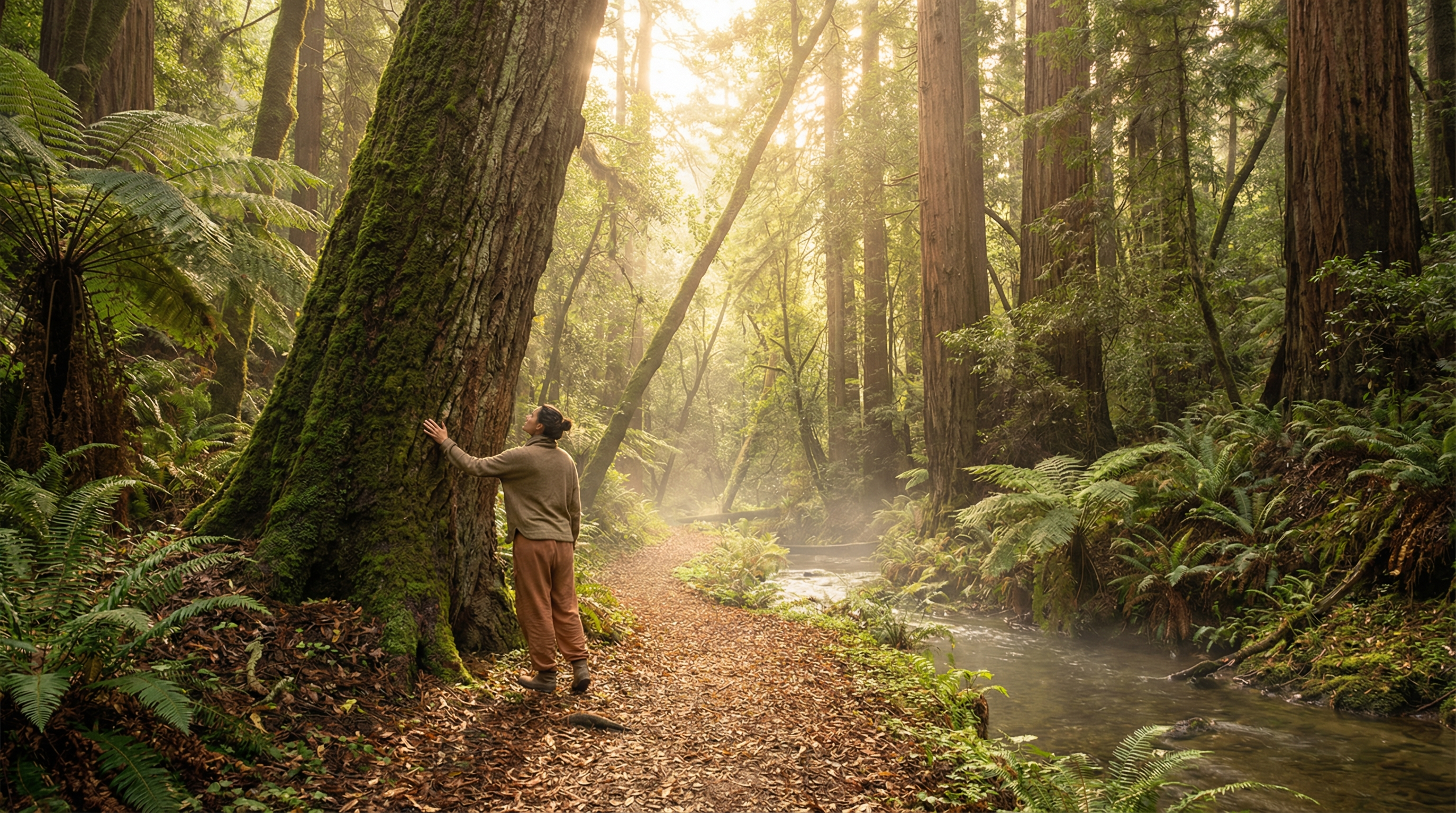
Forest bathing (shinrin-yoku) started in Japan as a public health practice. It’s not hiking, and it’s not about chasing views.
You’re “bathing” in the forest atmosphere — light, scent, texture, sound — long enough for your body to downshift.
If you only skim one thing: choose the forest first, then build the trip around it (timing, access, and where you sleep).
The Traveler Problem
Most people don’t fail at “unplugging” because they lack willpower.
They fail because they pick a destination that’s technically nature… but practically crowded, noisy, and built for fast tourism.
Forest bathing only works when the environment supports it. That means the right season, the right trail type, and usually staying closer to the canopy than you think.
What Works in 2026
- Pick timing before location. Shoulder seasons give you quiet + better pricing.
- Stay close to the forest. The best reset is often morning + dusk, not mid-day.
- Use guided sessions strategically. Especially if you’ve never done it — pacing is the whole point.
- Plan access realistically. Remote forests can be simple… or a logistical mess.
Top Travel Spots to Forest Bathe Without Wi-Fi
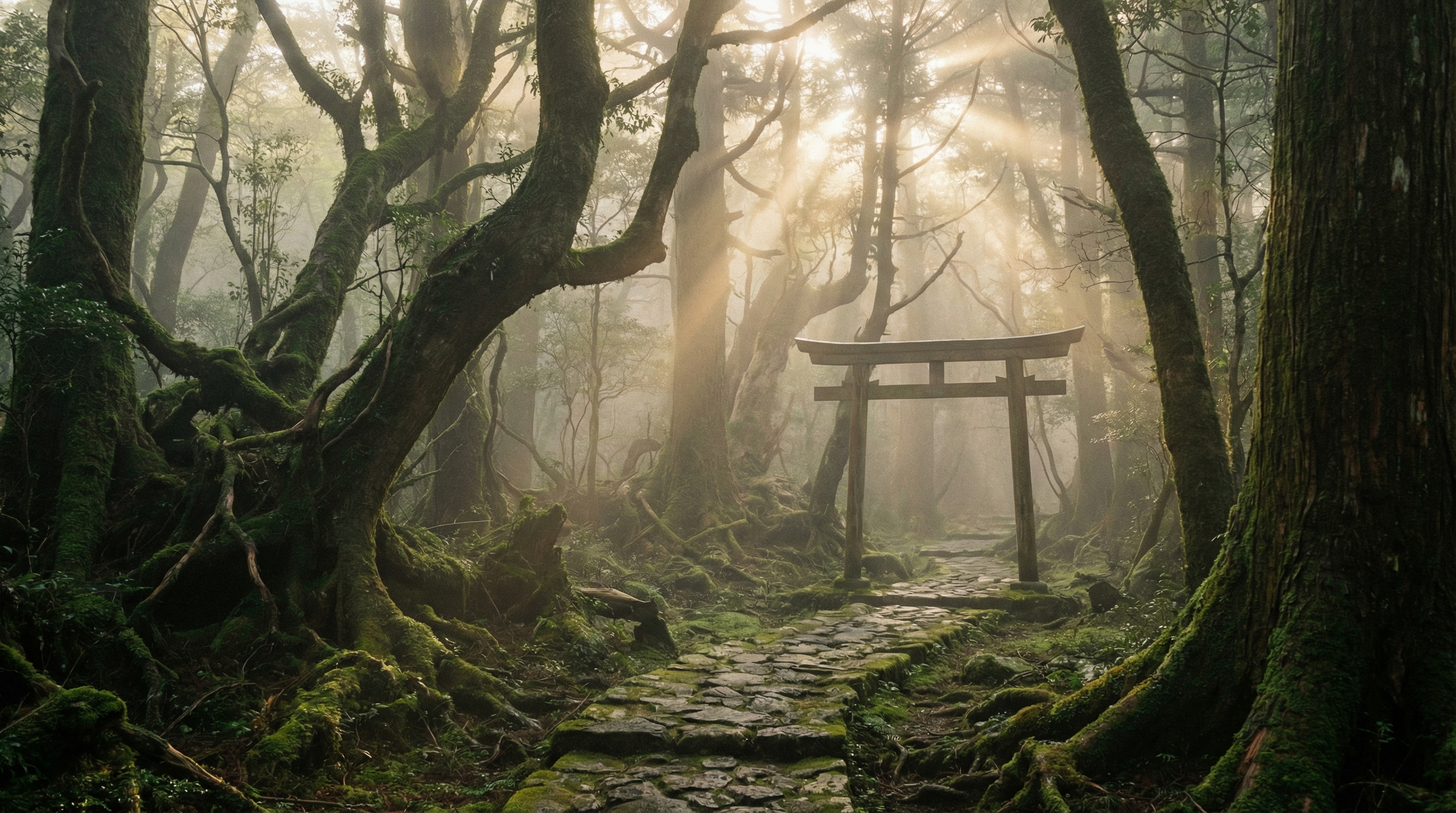
Yakushima is the real deal. Ancient cedar forests, misty trails, and a climate that makes everything feel alive.
Best timing: April–June and October. Summer humidity can hit like a wet blanket.
Book a guided forest experience
Use Klook to browse bookable nature experiences (ideal for first-timers who want pacing and structure).
Stay close to the canopy
For a real reset, choose a quiet cabin or eco-stay near the forest edge, not a loud hub.
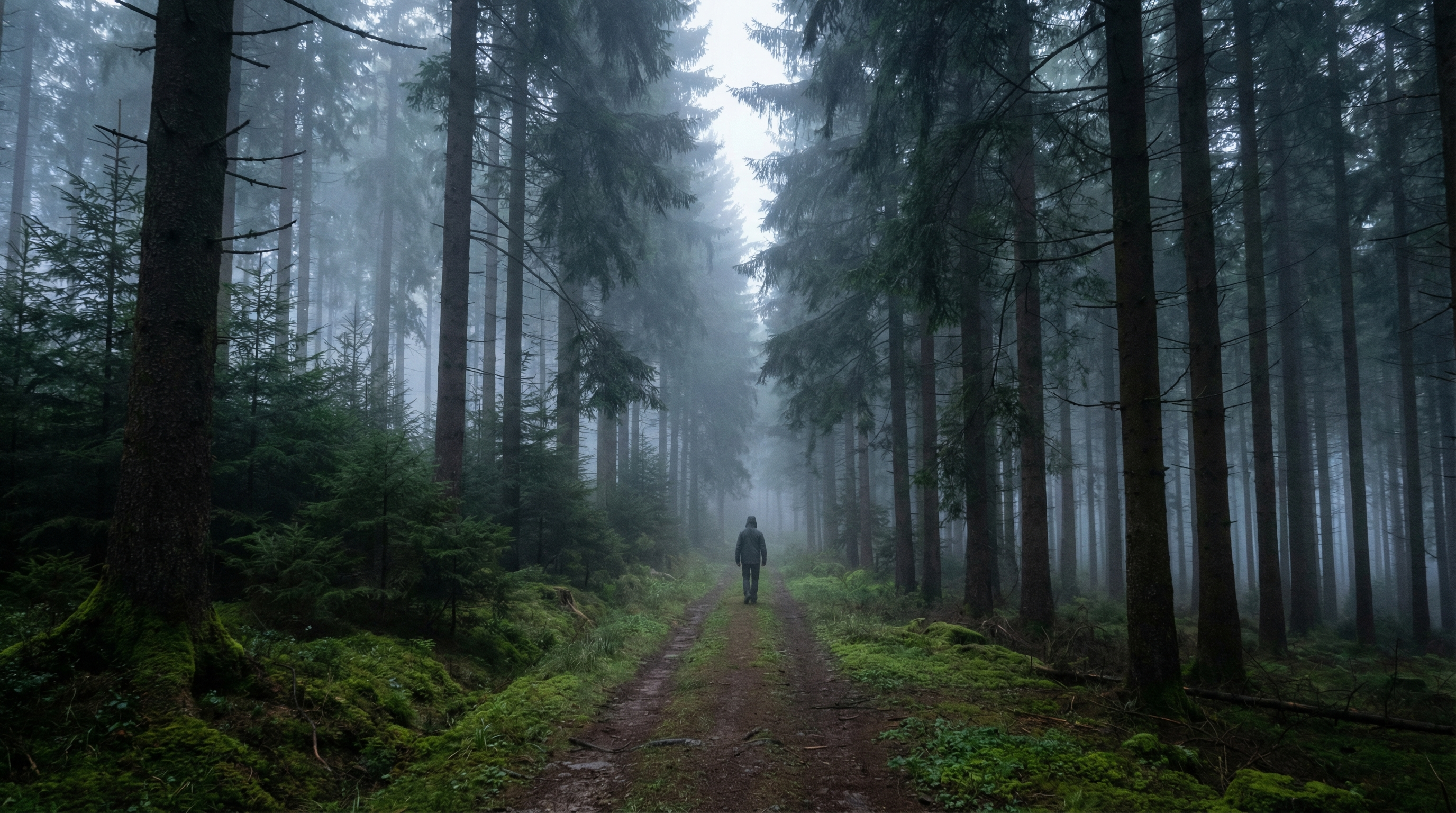
The Black Forest feels like a fairytale until you realize it’s also one of Europe’s best “quiet” regions if you plan it right.
Best timing: late May–June or September–early October for a calmer trail rhythm.
Guided day trip from Strasbourg
Full-day trip to the Black Forest with an English-speaking guide. Practical for travelers who want “plug-and-play” structure.
Stay rural, not central
If your goal is stillness, book outside the main tourist nodes so mornings start quiet.
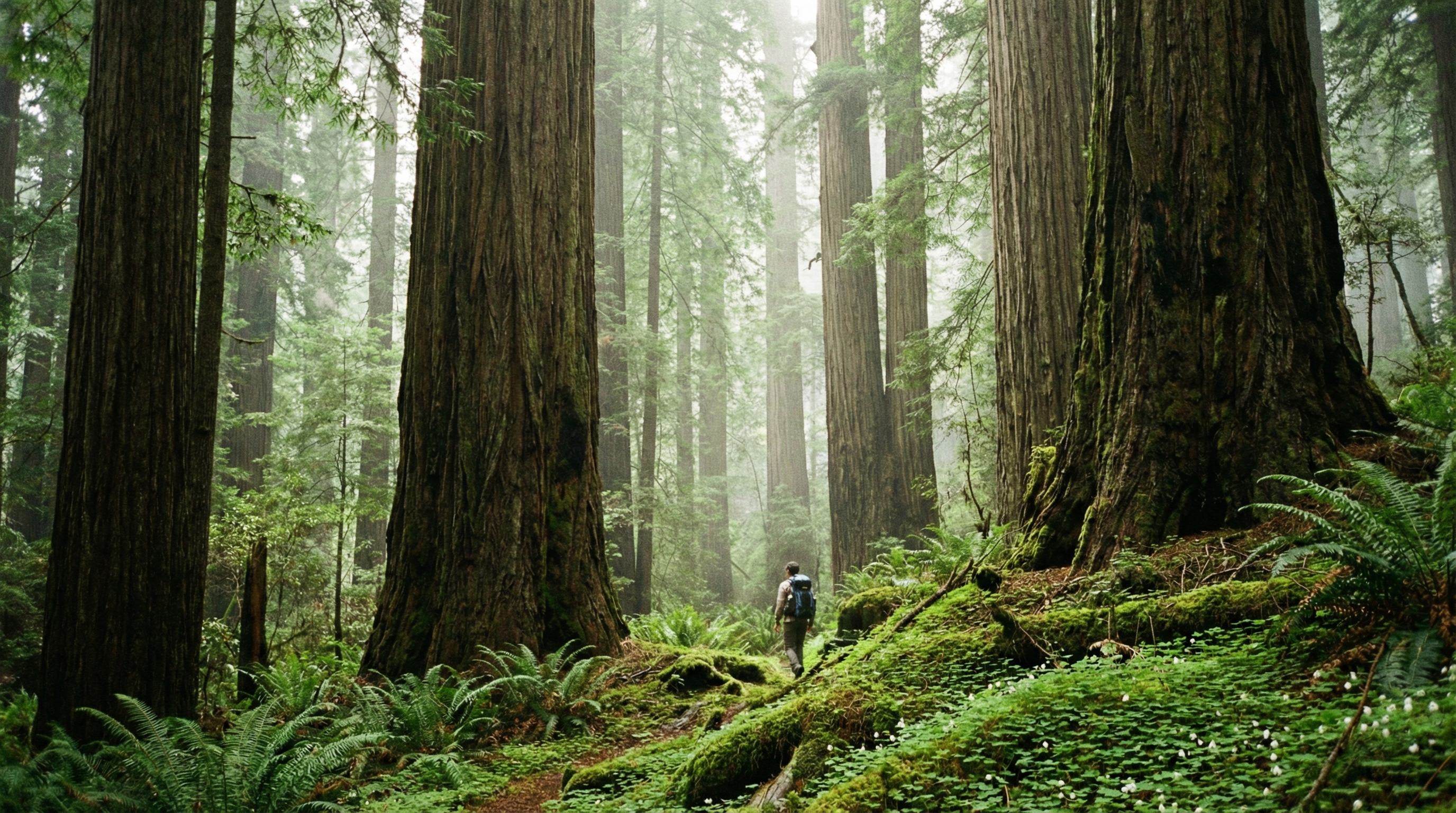
The redwoods don’t just tower. They quiet everything. Even people who don’t “do wellness” feel it here.
Best timing: May (midweek) or September to dodge peak summer traffic and get softer light.
Book a cabin near the forest
Forest-edge stays make early mornings possible — and early mornings are where this place shines.
Execution tip
Avoid noon. Aim for sunrise-to-mid-morning or late afternoon when sound and light are calmer.
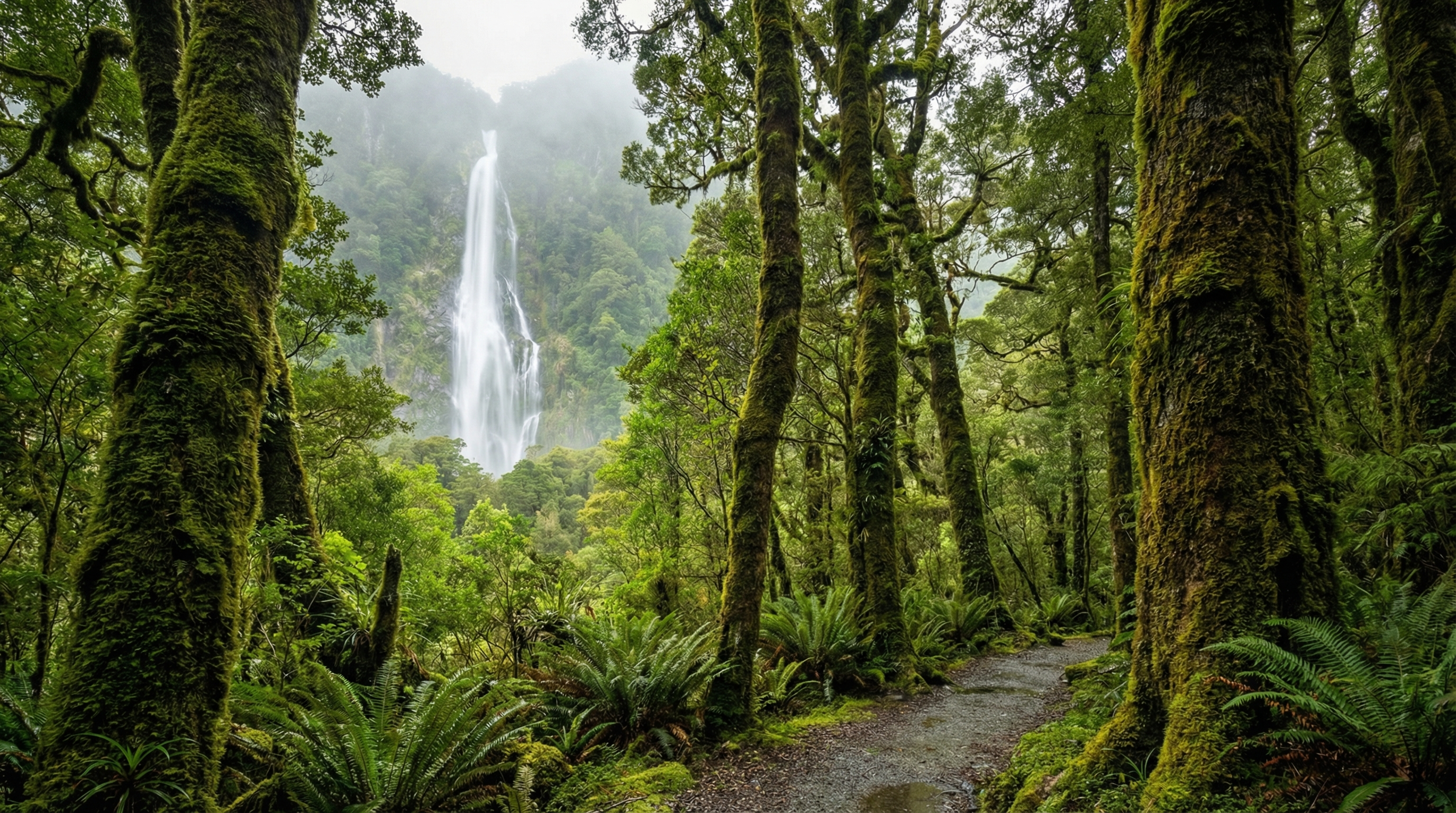
Fiordland is where you go to feel small in the best way. Moss, water, rainforest density, and a silence that doesn’t feel manufactured.
Best timing: November–March for longer daylight and easier trail access.
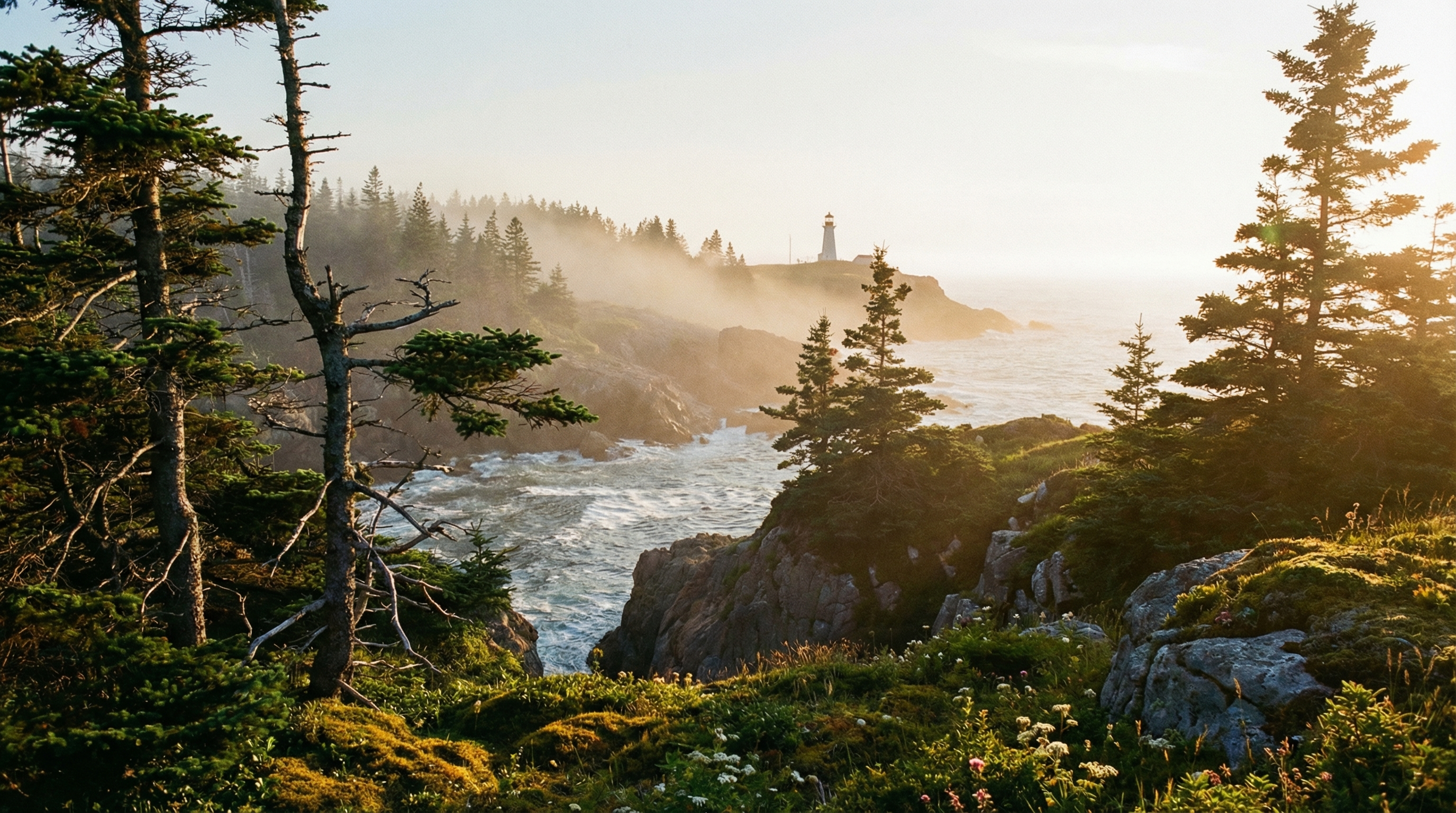
Cape Breton is the underrated reset most people skip because it isn’t screaming for attention online.
Forest meets ocean cliffs. Wind through spruce. Quiet trails, especially off-season.
Best timing: late May–June for fresh greens, or early October for fewer crowds and cooler hiking temps.
Find a quiet base
Cabins and nature stays keep this simple. Pick the forest/ocean edge and let the area do the rest.
Execution tip
Build your day around one slow forest block (2–3 hours). Don’t “optimize” it into a checklist.
Ready to plan a real reset (without overthinking it)?
Start with our Booking Tools to compare stays and experiences that fit your season and pace.
If you want a human-built itinerary that matches your timing and comfort level, use Curated Travel.
FAQ: Forest Bathing Travel Planning
Is forest bathing the same as hiking?
No. Hiking is distance or elevation focused. Forest bathing is about slow sensory immersion and downshifting your nervous system.
How long should a forest bathing session be?
A practical starting point is 2–3 hours with no pressure to “cover ground.” Multi-day retreats work well when you want the reset to deepen.
What’s the best season for forest bathing?
In most regions, late spring and early fall offer the best mix of mild weather and fewer crowds. Summer can still work if you plan for early mornings and quieter bases.
Do I need a guide?
Not always, but guides help first-timers avoid turning it into a hike. If you’re short on time, a guided session can make the practice click fast.
What should I bring?
Comfortable shoes, water, a light layer, and something to sit on. If insects are common, bring repellent. The goal is comfort so you can stay present.
How do I keep it “no Wi-Fi” without stress?
Choose stays that are naturally quiet and plan your transport ahead of time. The less logistical friction you have, the easier it is to actually disconnect.
Final thought: Forest bathing isn’t a wellness trend. It’s a return to something your brain recognizes instantly — green light, quiet sound, and time that doesn’t need optimizing.
Affiliate disclosure: Some links on this page may earn a commission at no extra cost to you.

Leave a Reply