
Last Updated on October 2, 2026 by Jeremy
What if you could plan an entire trip around the stories you grew up hearing?
This England folklore road trip connects the forests associated with Robin Hood, the villages linked to the Pendle witch trials, the landscapes surrounding King Arthur’s legends and the Great Hall where visitors can see Winchester’s famous Round Table.
Some of these stories are rooted in recorded history. Others have been reshaped through literature, film, tourism and centuries of retelling. That distinction does not make the legendary places less interesting—it simply changes how responsibly we should explore them.
Jessica has always shown more interest than I have in the legends of Robin Hood, King Arthur and the Knights of the Round Table. I knew many of the names through movies, books and conversations, but her interest encouraged a deeper look at the real locations behind them. We have not personally driven this route, so the itinerary is presented as a heavily researched planning framework rather than a firsthand trip report.
Image disclosure: Illustrative images in this article were created with AI to help visualize the destinations and travel-planning concepts discussed.
The Quick Answer
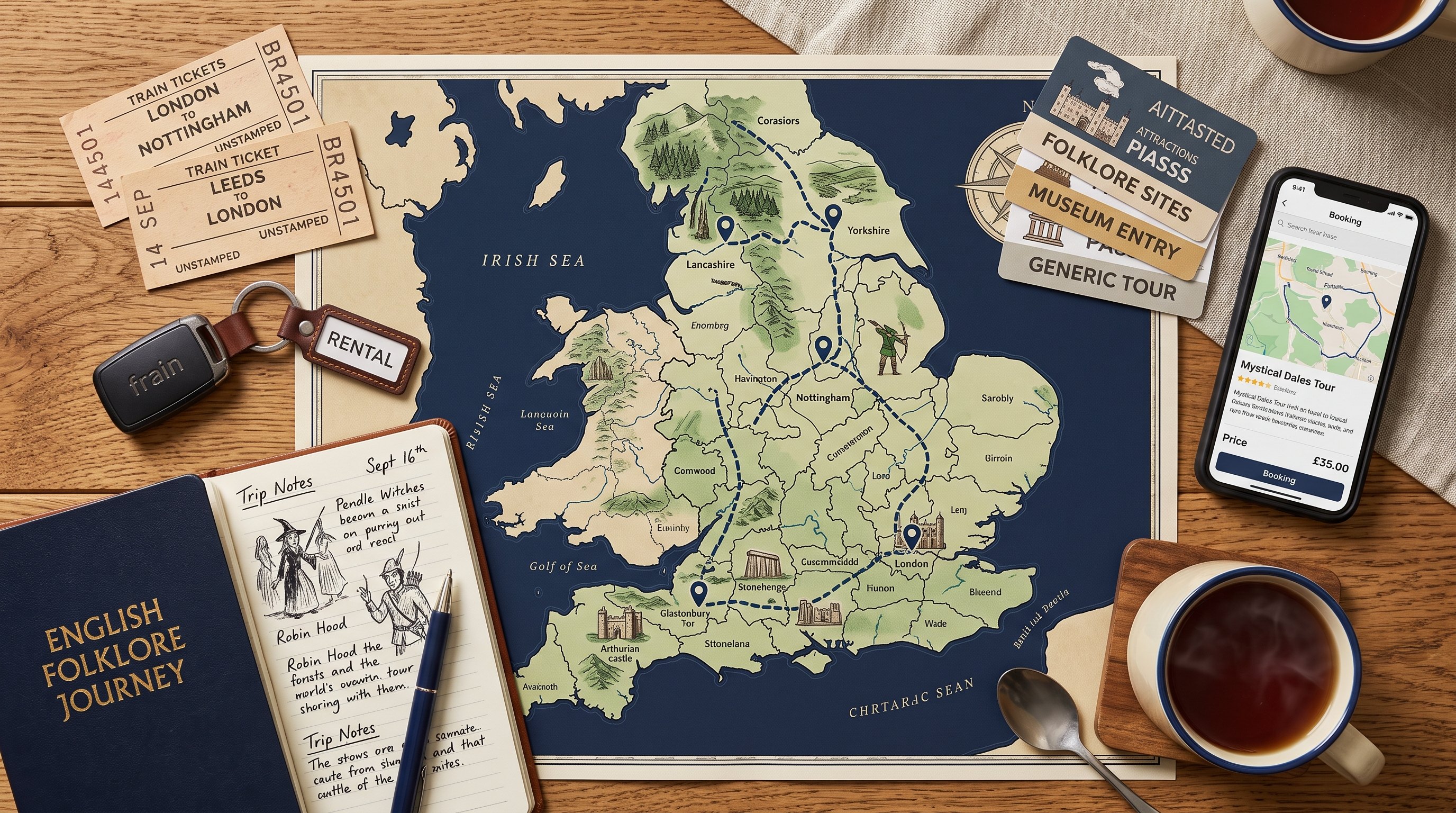
A practical 10-day folklore route begins in London, travels north to Nottingham and Sherwood Forest, continues through Pendle and Lancaster, turns south toward Glastonbury and Tintagel, and finishes in Winchester before returning to London. It is an ambitious route, so travellers who dislike frequent hotel changes should remove one region or extend the trip.
Affiliate disclosure: Some links reached through Earthbound Tours’ booking resources may be affiliate links. If you make a qualifying purchase, we may earn a commission at no additional cost to you. We recommend comparing the complete trip cost, cancellation terms and practical suitability before booking.
The 10-Day Route at a Glance
Important Route Reality
Distances in England can look manageable on a map while taking longer than expected because of traffic, narrow rural roads, parking and stops along the way. Do not judge this itinerary only by kilometres. Judge it by how many times you are comfortable packing, checking out and starting again.
Days 1–3: Robin Hood and Sherwood Forest
Day 1: Arrive in London
Use the first day to recover from your journey rather than collecting a rental car and immediately driving north. An overnight stay also gives you time to confirm road conditions, check your reservations and become familiar with local transportation.
London could support an entire folklore itinerary of its own, but this route treats the city as a practical arrival point. If you have more time, add a separate London stay before or after the road trip.
Day 2: Travel to Nottingham
Nottingham is the urban entry point into the Robin Hood story. Versions of the outlaw have changed dramatically over the centuries, moving from early ballads and regional tales into novels, television programs and major films.
No single attraction can prove that the Robin Hood familiar to modern audiences existed exactly as portrayed. The value of visiting Nottingham comes from seeing how the legend became connected to a real city, its castle, its caves and its political history.
Depending on your arrival time, consider Nottingham Castle, the city’s cave network or an established Robin Hood-themed walking tour. A knowledgeable guide can help separate medieval history from later additions to the legend.
Day 3: Sherwood Forest
Sherwood Forest is where the legend moves from city streets into the landscape most people imagine: ancient trees, narrow paths and woodland associated with Robin Hood and his band of outlaws.
The Major Oak is one of the forest’s best-known landmarks. Tradition associates the ancient tree with Robin Hood, although the story should be understood as folklore rather than confirmed biography.

Give Sherwood enough time to be more than a photograph beside one famous tree. Walk the trails, learn about the surviving ancient woodland and consider how landscape preservation allows stories to remain physically connected to a place.
Make it more than a themed stop: Combine the Robin Hood story with the forest’s ecology and conservation work. The ancient woodland deserves attention even if you are not especially invested in the outlaw legend.
Start your research with the official Nottinghamshire Robin Hood guide and the destination’s information about visiting Sherwood Forest.
Days 4–5: The Pendle Witches and Lancaster
Day 4: Follow the Pendle Witch Trail
The Pendle story is not simply a spooky legend. It concerns real people caught in a period shaped by poverty, suspicion, religious conflict and dangerous accusations.
The official Pendle Witch Trail follows a roughly 45-mile route through the Lancashire countryside toward Lancaster. It can introduce travellers to the communities and landscapes connected to the events, but the experience should not turn the accused into Halloween characters.
Allow time for Pendle Hill viewpoints, villages and interpretive stops. Weather can alter visibility and walking conditions, so maintain flexibility rather than building the entire day around one exposed hike.
Day 5: Lancaster Castle
Lancaster provides the legal and institutional side of the story. The castle is associated with the imprisonment and trial process involving those accused in the Pendle witch trials.
This is where the route becomes less about folklore and more about consequences. A guided visit can help explain the court system, prison conditions and broader historical setting without reducing the story to supernatural entertainment.
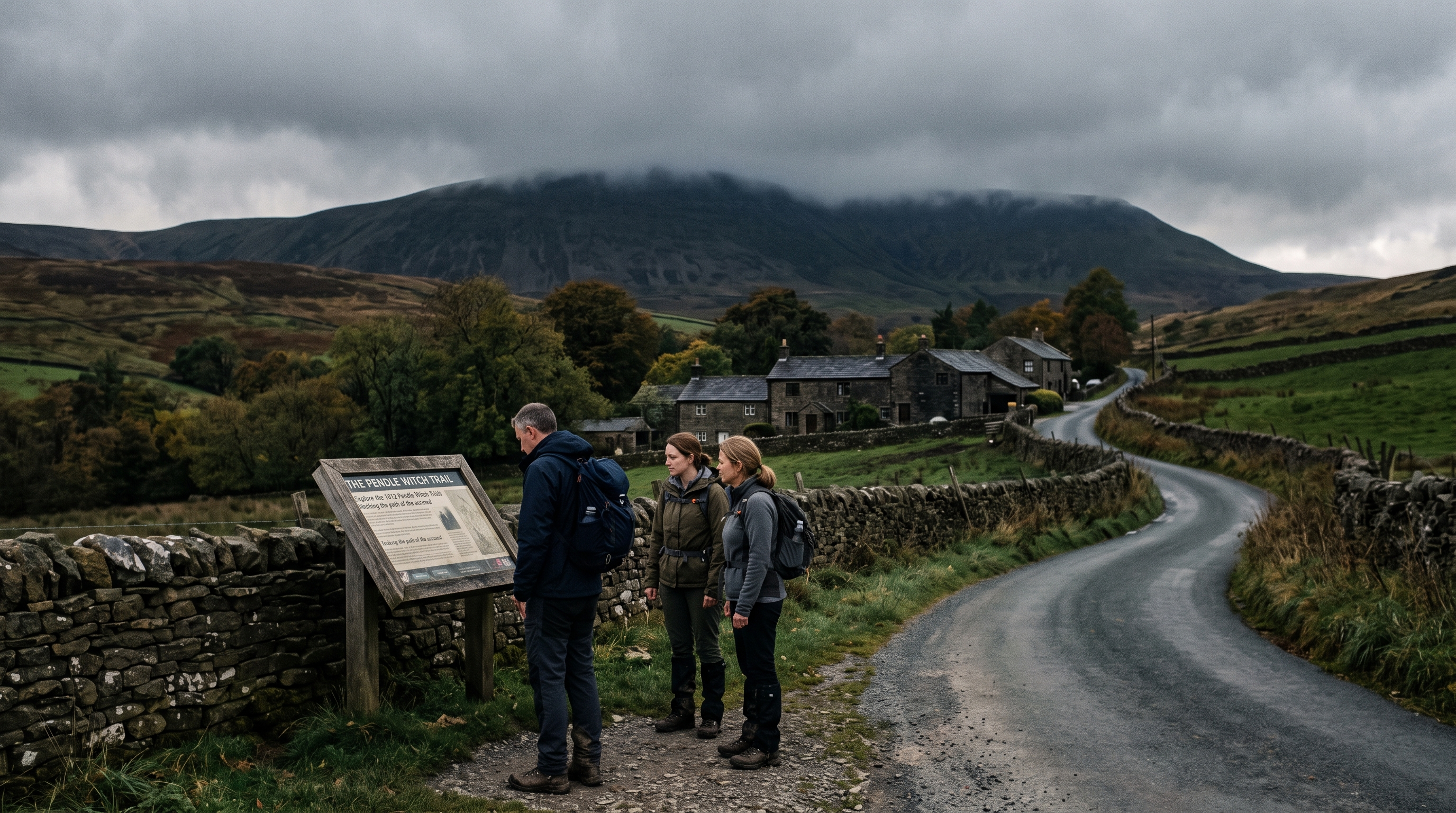
Responsible-travel reminder: Enjoying ghost stories and folklore does not require ignoring the suffering behind historical witch trials. Look for interpretation that names the accused, explains the evidence used against them and places the trials within their social and political context.
Use Visit Lancashire’s Pendle Witches resources and the official Pendle Witch Trail information when planning this section.
Days 6–8: Avalon, King Arthur and Tintagel
Day 6: Glastonbury and the Isle of Avalon Tradition
The journey from Lancashire into southwest England is one of the route’s longest transitions. If possible, complete part of the drive after Lancaster or add an overnight stop between the two regions.
Glastonbury is associated with Avalon, the legendary island connected to King Arthur’s final journey. Glastonbury Abbey also became linked to traditions surrounding Arthur and Guinevere, although travellers should approach claims of discovered royal remains cautiously.
Visit Glastonbury Abbey, walk up Glastonbury Tor if conditions and mobility allow, and explore the town without expecting every Arthurian claim to function as verified history.
Day 7: Tintagel Castle
Tintagel is one of the most visually dramatic stops on this England folklore road trip. The ruins stand on Cornwall’s rugged northern coast, where steep cliffs and changing weather already create the kind of setting from which legends grow.
The site became connected to King Arthur through medieval writing, particularly Geoffrey of Monmouth’s account. The visible castle ruins are primarily associated with Richard, Earl of Cornwall, and are considerably later than the period in which a historical Arthur might have lived.
Archaeology shows that Tintagel was significant long before the later medieval castle, but archaeological importance is not the same as proof that King Arthur lived there.
Day 8: Keep a Cornwall Buffer Day
Do not rush out of Cornwall immediately after Tintagel. Weather, traffic and timed admission can affect the experience. A buffer day gives you room to adjust if conditions interfere with the original plan.
Depending on your interests, use the day for coastal walks, another historic property or a slower exploration of Cornwall’s local legends. It can also become a recovery day after the longer drives earlier in the route.
Tintagel Access Considerations
- Expect exposed coastal conditions and changing weather.
- The site includes slopes, steps and uneven surfaces.
- Check current accessibility information before booking.
- Reserve timed admission when required.
- Wear footwear suited to the site rather than the photographs.
Verify tickets, conditions and accessibility through the official English Heritage Tintagel Castle guide.
Days 9–10: Winchester and the Round Table
Day 9: Winchester’s Great Hall
Winchester provides a memorable final Arthurian stop without claiming that its Round Table is the table used by a historical King Arthur.
The famous painted table displayed in the Great Hall is a medieval object associated with the Arthurian tradition. Its cultural importance comes from what it shows about the lasting power of the legend—not from proving the Round Table stories happened exactly as written.
Spend time in the Great Hall and then explore Winchester’s historic centre. After several days of rural driving, the city offers a more compact final destination before returning to London.
Day 10: Return to London
Return the rental car outside central London if possible and confirm fuel, mileage and return-location requirements in advance. Leave a realistic buffer between the vehicle return and any international flight.
The safest option is to spend another night near London rather than relying on a same-day drive from Winchester before a long-haul departure. If your schedule permits, this also creates space for delays without compromising the entire trip home.
Review current visitor information for the Great Hall and Winchester Round Table before arriving.
Folklore, History or Both?
You do not need to choose between enjoying a legend and caring about evidence. The best folklore travel allows both: imagination creates the interest, while history gives the journey depth.
Should You Drive or Use Trains?
Rail travel can connect London, Nottingham, Lancaster and Winchester, but it becomes less convenient when reaching Sherwood Forest, Pendle’s smaller communities and Tintagel.
A rental car provides greater flexibility for the complete route, especially in Lancashire and Cornwall. However, driving introduces its own challenges:
- Driving on the left side of the road
- Roundabouts and narrow rural lanes
- Manual-transmission vehicles being more common
- Limited parking near historic centres
- Fuel, insurance and possible one-way return fees
- Different rules for tolls, congestion zones and restricted streets
Travellers uncomfortable with driving can create a hybrid itinerary using trains between major cities and organized day tours for rural locations. This may cost more per excursion but can reduce stress.
What Should You Book First?
1. Flights
Compare arrival and departure times before locking in the first and final overnight stays.
2. Rental Car
Confirm transmission, insurance, mileage limits and return location before comparing only the daily price.
3. Limited Admission
Reserve timed castle admission, guided tours and seasonal experiences once the route is firm.
4. Accommodation
Choose properties based on parking, arrival hours and route efficiency—not simply their distance from a town centre.
Who Is This Trip Best For?
This route is particularly suitable for:
- Couples with a shared interest in history, legends or historic landscapes
- Families travelling with older children who enjoy mythology and literature
- Readers and movie fans who want to explore the origins of familiar stories
- Travellers who enjoy castles, ruins, woodland and coastal scenery
- Visitors comfortable changing accommodation several times
It may be a poor fit for:
- Travellers wanting a slow trip based in one hotel
- Anyone uncomfortable driving long distances or on narrow roads
- Visitors with mobility needs who have not verified site accessibility
- People expecting every legend to have a simple historical answer
How to Make the Route Less Rushed
Ten days is enough to connect the destinations, but not enough to investigate every regional story. If you prefer slower travel, use one of these alternatives:
Option One: Northern Legends
Focus on Nottingham, Sherwood Forest, Pendle and Lancaster. This reduces driving and creates more time for medieval history, guided tours and countryside walks.
Option Two: Arthurian England
Concentrate on Glastonbury, Tintagel and Winchester, with extra time for Cornwall and other southwest sites.
Option Three: Extend to Two Weeks
Keep the complete route but add recovery nights in Nottingham, Lancashire, Somerset and Cornwall. This is the strongest option if the journey itself matters as much as the individual attractions.
Our Final Perspective
An England folklore road trip works because it does not rely on one type of traveller.
Someone drawn to Robin Hood may care about medieval justice and the survival of Sherwood Forest. A visitor fascinated by witch stories may leave Pendle thinking more deeply about fear, poverty and false accusation. A fan of King Arthur may arrive expecting knights and castles but become equally interested in archaeology, literature and the political use of legends.
Jessica’s interest in Robin Hood, King Arthur and the Knights of the Round Table gave this itinerary its original direction. My own familiarity came more loosely through movies, books and conversations. Researching the route brought those interests together while showing how quickly familiar stories become more complicated once you visit their real settings.
That complexity is the reason to go. You are not merely chasing fictional characters across a map. You are exploring why certain stories survived, why communities continued telling them and how real landscapes helped legends outlive the people who first created them.
Build Your Folklore Road Trip
Compare flights, accommodation, rental cars, tours, connectivity and travel-protection options before committing to a multi-stop route.
Open the Booking Tools Explore Curated TravelFrequently Asked Questions
Can you visit England’s major folklore destinations in 10 days?
Yes, but the complete route is ambitious. Ten days can connect Nottingham, Sherwood Forest, Pendle, Lancaster, Glastonbury, Tintagel and Winchester, although extending the trip will provide a more comfortable pace.
Was Robin Hood a real person?
Historians have not confirmed one individual who perfectly matches the familiar Robin Hood story. The legend developed through medieval ballads, regional traditions and centuries of retelling.
Were the Pendle witches real?
The accused people and their trials were real. Claims that they possessed supernatural powers should be understood within the fear, beliefs and legal practices of the period.
Is Tintagel Castle King Arthur’s castle?
Tintagel is strongly associated with Arthurian legend, but the visible medieval castle does not prove that King Arthur lived there. The site is archaeologically significant and became linked to Arthur through medieval literature.
Is the Winchester Round Table authentic?
The table displayed in Winchester’s Great Hall is a medieval object, not a verified table used by King Arthur. Its importance lies in how it represents the lasting cultural and political influence of Arthurian tradition.
Do I need a rental car for this itinerary?
A car is the most flexible option for the complete route, especially around Sherwood Forest, Pendle and Tintagel. A hybrid trip using trains and organized tours is possible if you do not want to drive.
When is the best time for an England folklore road trip?
Late spring through early autumn generally provides longer daylight and more favourable conditions for outdoor sites. Travelling outside the busiest summer period may reduce crowd and accommodation pressure, but weather remains unpredictable.
Why Trust This Earthbound Tours Guide?
This itinerary clearly separates documented events, archaeological evidence, literary tradition and modern tourism. It does not claim that we have personally completed the route or present legendary stories as confirmed history.
The planning framework uses official tourism and heritage resources, while the route advice accounts for driving, accessibility, weather, accommodation changes and the practical limits of a 10-day trip.
Leave a Reply