
Last Updated on July 4, 2026 by Jeremy
Most people say they want a rainforest retreat. What they usually mean is they want the feeling of the rainforest without the chaos of guessing the wrong season, booking the wrong location, or arriving to find half the trails closed from rain.
A proper rainforest retreat is less about “somewhere green” and more about choosing the right ecosystem for your travel style, then building your days around the moments the forest actually comes alive.
Quick Answer: The best rainforest retreats in 2026 come down to matching the right rainforest to the right season. For peak wildlife density and guided access, the Osa Peninsula (Costa Rica) and the Peruvian Amazon (Puerto Maldonado) are top-tier. For easier logistics with strong immersion, Sarapiquí (Costa Rica) delivers. For ancient rainforest + iconic ecosystems, choose Daintree (Australia). For rainforest plus world-class caves and trekking, Gunung Mulu (Malaysia) is the move.
Below you’ll find where to base, when to go, how long to stay, what to book first, and how to avoid the common planning mistakes that turn “retreat” into “why did we do this?”
This guide includes booking links to trusted travel partners for tours, stays, and flights. Reservations are completed directly with the provider.
The Traveler Problem
Rainforest planning fails in predictable ways. The internet pushes “best rainforest lodges” like rainforests are interchangeable. They’re not. A rainforest retreat can mean cloud forest, lowland jungle, coastal rainforest, river basin, or karst forest. Each one comes with different weather, wildlife rhythms, and access constraints.
If you book the wrong place in the wrong month, you don’t just get rain. You get visibility issues for wildlife, slower river access, closed trails, canceled flights, and muddy logistics that chew up your budget and your patience.
Seasonality mattersAccess changesWildlife timing shiftsLodge quality variesGuides change everything
Why Most Rainforest Content Fails
Most “top rainforest retreats” articles leave out the parts that actually decide your experience:
- Where exactly to base: Not just the country, the gateway town and transfer reality.
- How long you need: Two nights is usually a tease. Four nights is where it starts feeling real.
- What the season does to the forest: Rain can be magical or it can shut the whole day down. Timing matters.
- How to layer tours: Without guided structure, people wander, miss peak windows, and call it “underwhelming.”
This rebuild fixes that. You’re not choosing a postcard. You’re choosing a working ecosystem with rules.
What Works in 2026
In 2026, the smart strategy is building a retreat around three anchors:
1) A clear rainforest type
Lowland Amazon river basin feels completely different than a coastal rainforest or a karst forest. Pick the ecosystem first, then pick the lodge.
2) A realistic timing window
“Dry season” is never fully dry. It’s “less disruptive.” Plan around it, then accept weather as a feature, not a betrayal.
3) A guided structure with breathing room
One guided day plus one flexible day is a better retreat rhythm than trying to schedule every hour. The forest runs the timetable.
If you want the clean route: book stays first, then tours, then flights. The rainforest is one of the few travel categories where that order saves real headaches.
Five Rainforest Retreat Lanes Worth Planning Around
1) Osa Peninsula, Costa Rica
Best for: high biodiversity, guided wildlife access, coastal jungle energy, photographers who want density not “maybe.”
Where to base: Osa is typically approached via Drake Bay or the Puerto Jiménez corridor (your lodge choice will dictate which makes sense). What matters is that you treat Osa like its own trip segment, not a casual day trip.
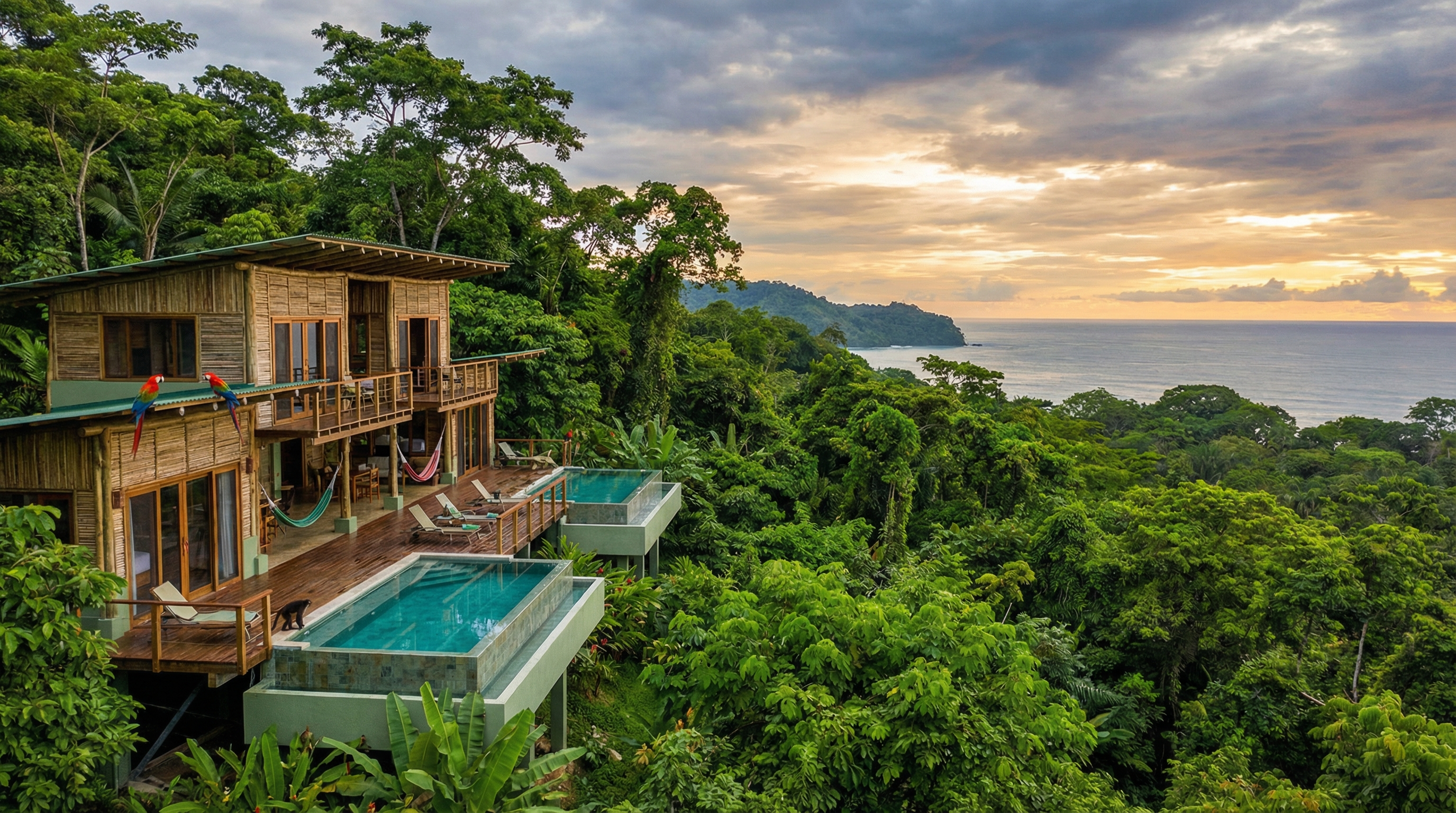
Season timing: The classic “easier access” window is roughly December through April. You can still go outside that window, but plan for slower logistics. In wetter months, the payoff can be dramatic greenery and fewer crowds, but you need a lodge that’s built for it.
Stay length that actually works: 3–5 nights. Anything shorter and you spend your time transferring instead of retreating.
Experience approach: Treat guided wildlife walks as the core. Osa is one of those places where a strong guide doesn’t just improve your trip, it changes what you see.
2) Sarapiquí, Costa Rica
Best for: rainforest immersion without remote logistics, birding, easy add-ons, travelers building a broader Costa Rica itinerary.
Where to base: Sarapiquí works well when you want rainforest days while still keeping road access reasonable. It’s the “I want rainforest, but I’m not trying to disappear for a week” option.
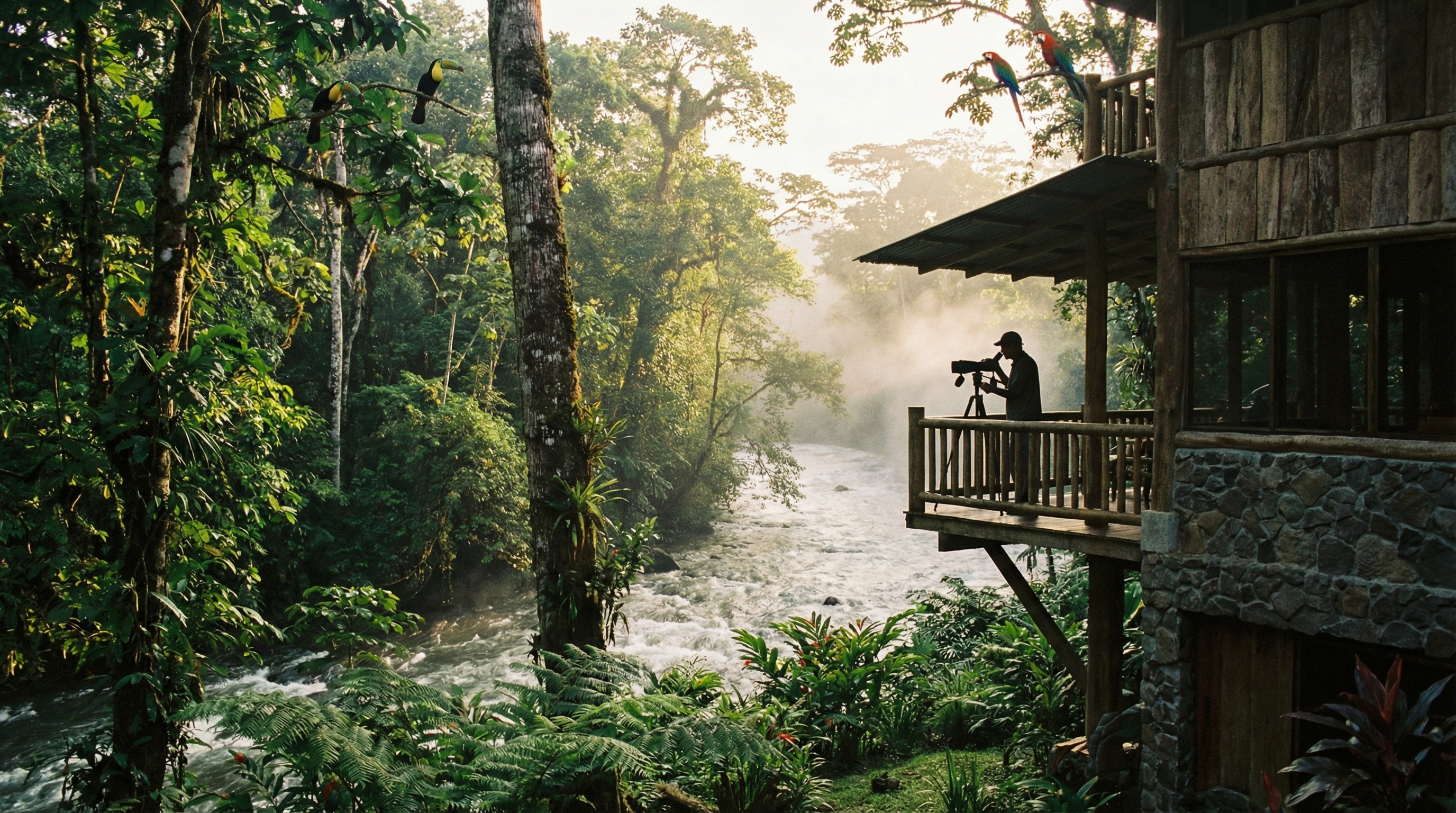
Season timing: Sarapiquí is viable year-round. Expect rain spikes in parts of September and October. If you’re flexible, shoulder periods often give you that sweet spot: lush forest, manageable schedules, fewer crowds.
Stay length that actually works: 2–4 nights. This is the easiest rainforest lane to “plug into” a bigger route.
Experience approach: Pair one adventure day (rafting or river-based activity) with one slow day (birding trails, cacao, nature walks). The retreat vibe comes from not over-scheduling.
3) Peruvian Amazon via Puerto Maldonado (PEM)
Best for: classic Amazon river basin energy, canopy towers, nocturnal wildlife, clay licks, deep immersion that still has a clean gateway.
Where to base: Puerto Maldonado is the access point. Your lodge is the real “base,” but the flight route matters because it controls how smoothly you enter the rainforest.
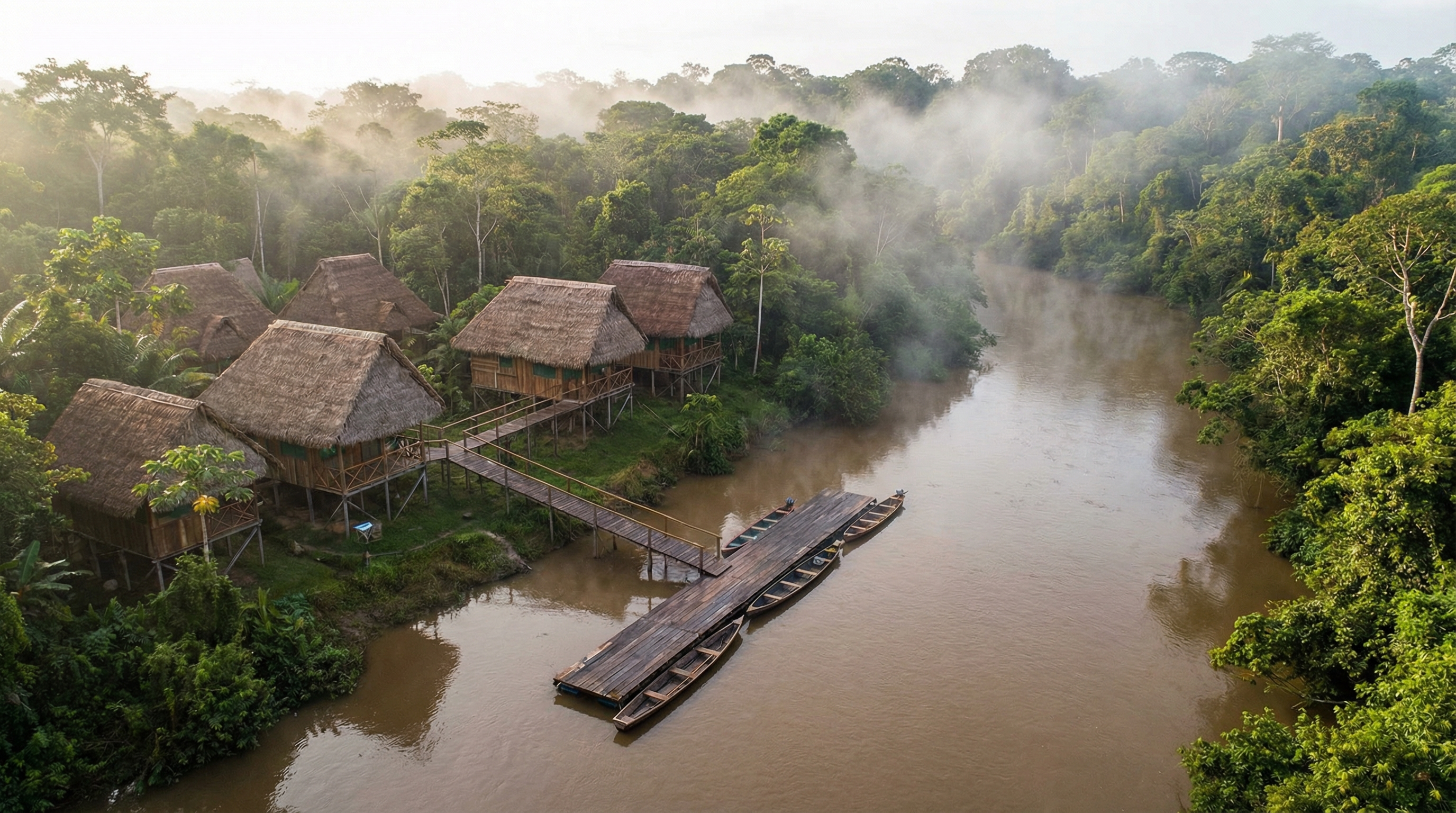
Season timing: The commonly easier window is May through September. Higher water periods can open different river routes and change what’s accessible. The better way to think about it is this: dry months often improve trail access, while higher water months can improve certain river experiences.
Stay length that actually works: 4–6 nights. The Amazon rewards time. Your first day is orientation, your second is “okay, I get it,” and then it starts delivering.
Experience approach: Plan for one night activity and one early-morning activity. This is where the rainforest shows you it’s running a different clock than you are.
4) Daintree Rainforest, Australia
Best for: ancient rainforest ecosystems, easy pairing with coastal itineraries, guided night walks, travelers who want rainforest without a full expedition build.
Where to base: Daintree works best when you’re already in Queensland routes. It layers cleanly with other coastal experiences, which is why it’s so effective for people who want variety.
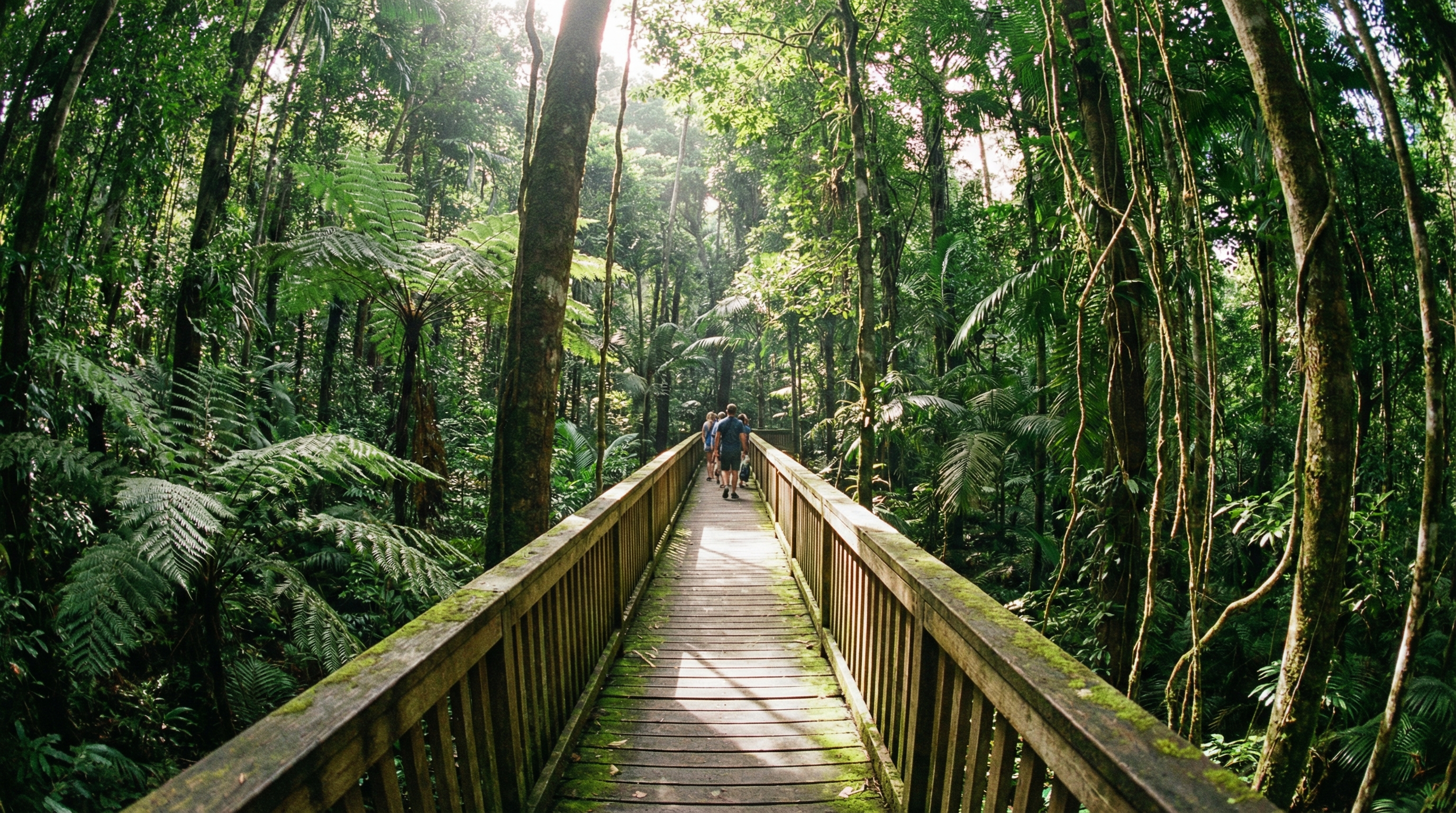
Season timing: May to October is the more comfortable planning window. You get fewer weather disruptions and a smoother “retreat” feel day-to-day.
Stay length that actually works: 2–3 nights. Daintree is powerful, but it’s often best as a concentrated segment rather than a week-long deep base.
Experience approach: Build around a guided night walk plus a canopy or river segment. You’ll see more by accepting that the rainforest isn’t a midday-only experience.
5) Gunung Mulu National Park, Malaysia
Best for: rainforest trekking with a unique hook: massive cave systems, karst landscapes, and structured guided access.
Where to base: Mulu requires intentional planning. That’s not a negative, it’s the price of admission. Once you’re there, the experience feels very distinct from “standard jungle lodge” itineraries.
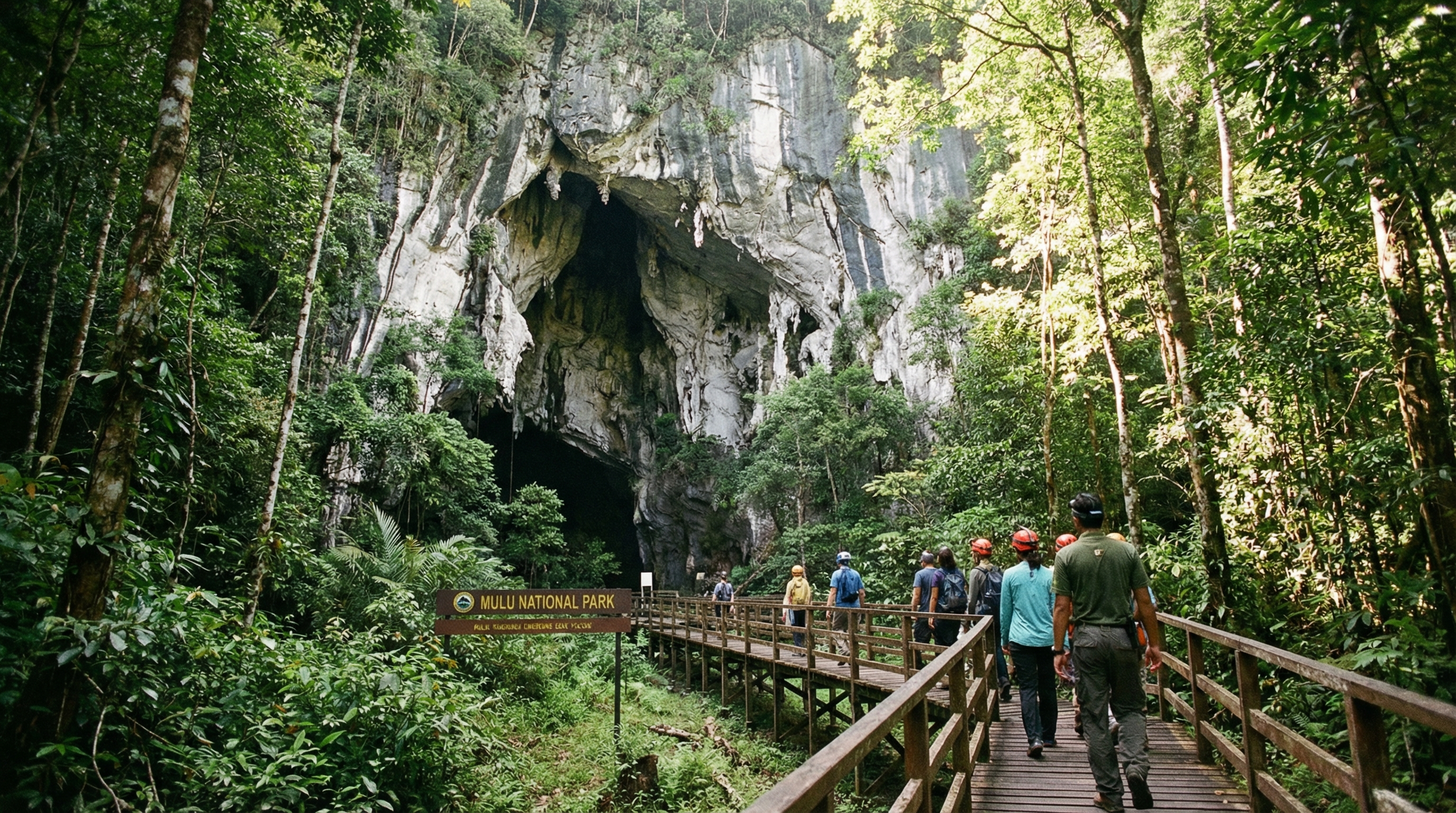
Season timing: A commonly easier planning window is March through October to reduce monsoon disruption. Expect humidity regardless. That’s part of the deal.
Stay length that actually works: 3–4 nights. One cave day, one trekking day, one buffer day. That buffer saves trips.
Experience approach: Don’t treat caves as “the one thing.” The contrast between rainforest trails and karst caverns is the point.
Execution Plans That Actually Feel Like a Retreat
Here are three planning frameworks that work across the five lanes above. Use these to avoid the classic mistake of trying to “see everything” and ending up with a trip that feels like transit.
Plan A: The 3-Night Reset
- Day 1: Arrive, settle, short sunset walk.
- Day 2: One guided core tour (wildlife walk, river segment, or night walk).
- Day 3: Flexible day with light structure (easy trails, birding, local cultural stop if nearby).
Best for Sarapiquí and Daintree, also works for Osa if transfers are clean.
Plan B: The 5-Night Deep Immersion
- Two early mornings (wildlife is honest before crowds and heat).
- One night activity (nocturnal rainforest changes the whole feel).
- One recovery day (you’ll want it, even if you pretend you won’t).
Best for the Peruvian Amazon and Osa Peninsula.
Plan C: Rainforest + Contrast (4 Nights)
- 2 nights rainforest base + 2 nights contrast base (coast, city, or cultural region).
- One guided rainforest day, one slow day, then shift environments.
Best for Daintree and Mulu. Also great for travelers who get restless staying in one zone.
Bookable Blocks
This is where you turn planning into bookings without juggling ten tabs. Use the tour block to compare guided options, then lock in stays, then handle flights if your rainforest lane requires it.
Build Your Rainforest Retreat Without Guesswork
If you want a clean plan (stays + experiences + logistics) built around your dates and travel style, start here. If you prefer to assemble it yourself, compare options first.
Start with Curated TravelWhat to Pack and What to Stop Underestimating
Rainforest comfort is rarely about toughness. It’s about friction control. Small planning choices decide whether you feel calm or constantly damp and annoyed.
- Footwear: One pair that can handle mud and still dry. If it never dries, you’ll feel it by day three.
- Light layers: Humidity is constant, but mornings and boats can feel cooler than expected.
- Rain strategy: A real rain shell beats a plastic poncho once you’re walking more than 20 minutes.
- Electronics: Dry bags matter. Not “nice to have.” Matter.
- Expect bugs: The goal isn’t “no bugs.” The goal is “bugs don’t control my day.”
Frequently Asked Questions
How many nights do I need for a rainforest retreat to feel real?
Three nights is the minimum where it starts feeling like a retreat. Four to six nights is where you gain flexibility for weather, guided timing, and slow mornings that don’t feel rushed.
Is rainy season a dealbreaker?
No. Rain is part of the rainforest. The decision is whether rain becomes a feature or a disruption. In some regions, wetter periods can reduce crowds and intensify forest life, but you need lodging and logistics built for it.
Which destination is best for wildlife density?
The Osa Peninsula and the Peruvian Amazon are strong choices for travelers who want high biodiversity and guided wildlife access. Sarapiquí can also deliver, especially for birding, with easier logistics.
What’s the most “beginner-friendly” rainforest retreat?
Sarapiquí and Daintree are often easier introductions because they combine immersion with more straightforward access and shorter stay frameworks.
Should I book tours before I book my lodge?
Usually the opposite. Your lodge base decides your access to trails, rivers, guides, and timing windows. Book your base first, then layer tours that match your location and stay length.


Leave a Reply